Autumn Gyeongju is the season when foliage paints another layer over the historic scenery of this thousand-year capital. From mid-October to mid-November, the autumn leaves at Bulguksa and Daereungwon reach their peak, while the Cheomseongdae area adds pink muhly grass and nighttime media art, showing a completely different face by day and night. This article gathers viewing information for each of Gyeongju’s autumn foliage spots, recommended routes, and transport tips all in one place.
Bulguksa: When the Foliage Is at Its Peak
The first place mentioned when people talk about Gyeongju’s autumn leaves is Bulguksa. A UNESCO World Heritage Site, Bulguksa sits at 385 Bulguk-ro, and when autumn leaves overlap the scene before the main hall — where Dabotap and Seokgatap pagodas stand facing each other — it’s fair to call it the essence of autumn Gyeongju. Peak foliage is generally known to fall from mid-October to early November, though it varies by one to two weeks each year, so checking season information just before you depart is a good idea.
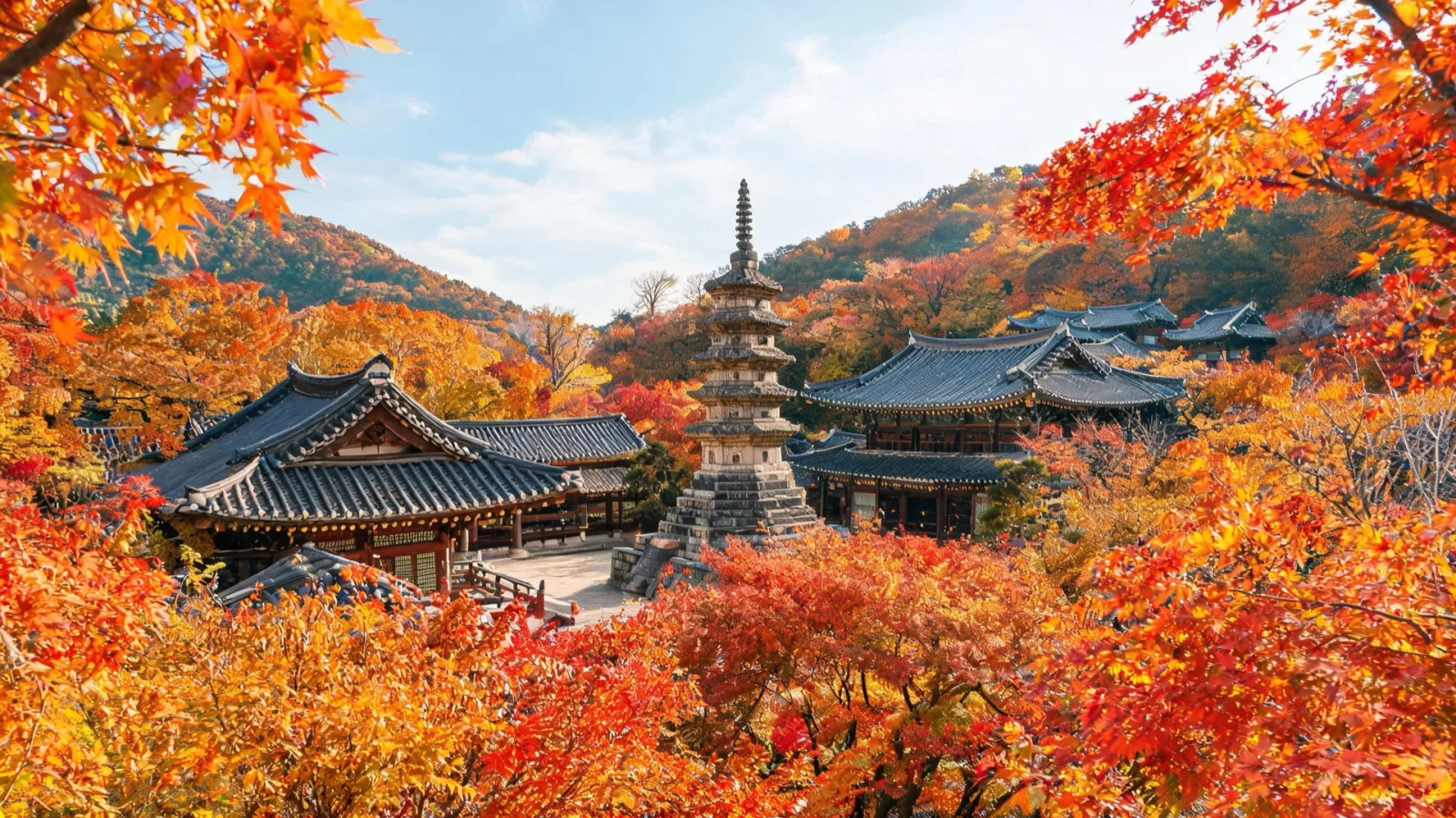
Opening hours are often listed as 09:00–18:00 on weekdays, with doors opening from 08:00 on weekends and public holidays, and ticket sales closing around 17:30 (some sources list an 18:30 close, so understanding it as roughly around 18:00 is safe). Many sources say admission is currently free, though records of a past paid period also exist, so check the latest information before you visit. During peak foliage season, many reviews say just entering the parking lot can take 30 minutes, so arriving early in the morning is the surest tip.
A Half Day from Bulguksa to Seokguram
If you have time, continue to Seokguram on the mid-slope of Mount Bulguk. The grotto enshrining the main Buddha is a UNESCO World Heritage Site, reachable from Bulguksa by bus or car. Admission is free (parking is paid), and some sources say it closes at 17:00 in winter, so if you’re visiting in late November, arriving early in the afternoon is better.
Cheomseongdae: Pink Muhly by Day, Media Art by Night
Cheomseongdae is a place where you can capture both day and night on an autumn trip to Gyeongju. In September and October, pink muhly grass colors the area around Cheomseongdae, and it has even been selected by the city of Gyeongju as an official “autumn attraction.” At night, from after sunset until around 22:00, eight-colored lighting comes on, and a media art show of about seven minutes runs. Showtimes vary by season, but many reviews say aiming for the slot around 20:30 gives high satisfaction. There’s no admission fee and it’s always open, making it easy to schedule.
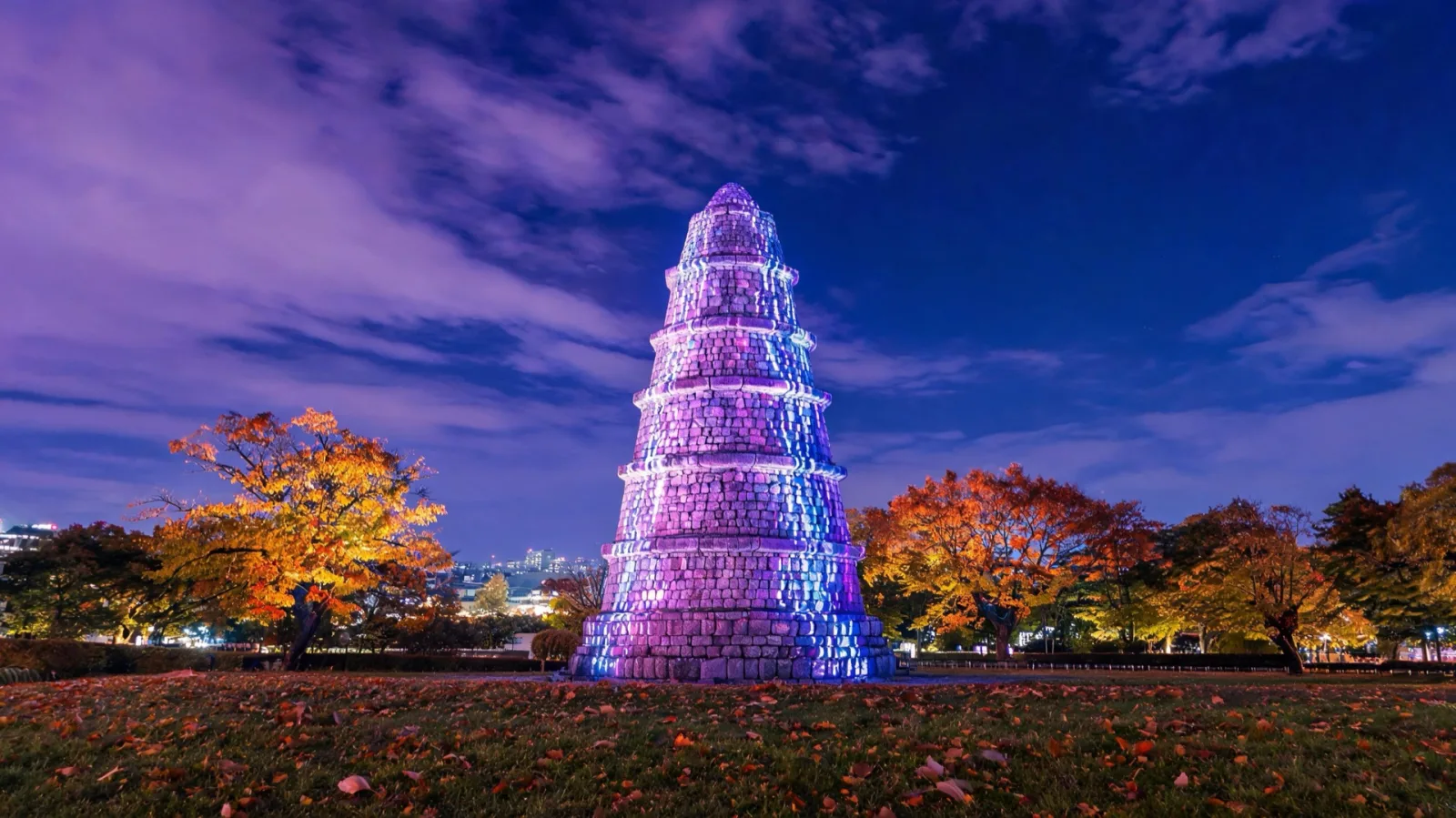
In November, Gyeongju’s lows drop quickly from 8°C to 2°C. Even if the days are cool, an outer layer is essential for a night walk.
Daereungwon’s Stone-Wall Path: A Foliage Walk Among the Tombs
Daereungwon is home to 23 Silla tombs, and admission to the garden has been free since May 2023 (only the interior of Cheonmachong is paid). The main gate is open 09:00–22:00, with last entry at 21:30. By mid-November the ginkgo and maple trees between the tombs reach their peak, and the scene of walking along the stone-wall path is counted among Gyeongju’s classic autumn photo moments.
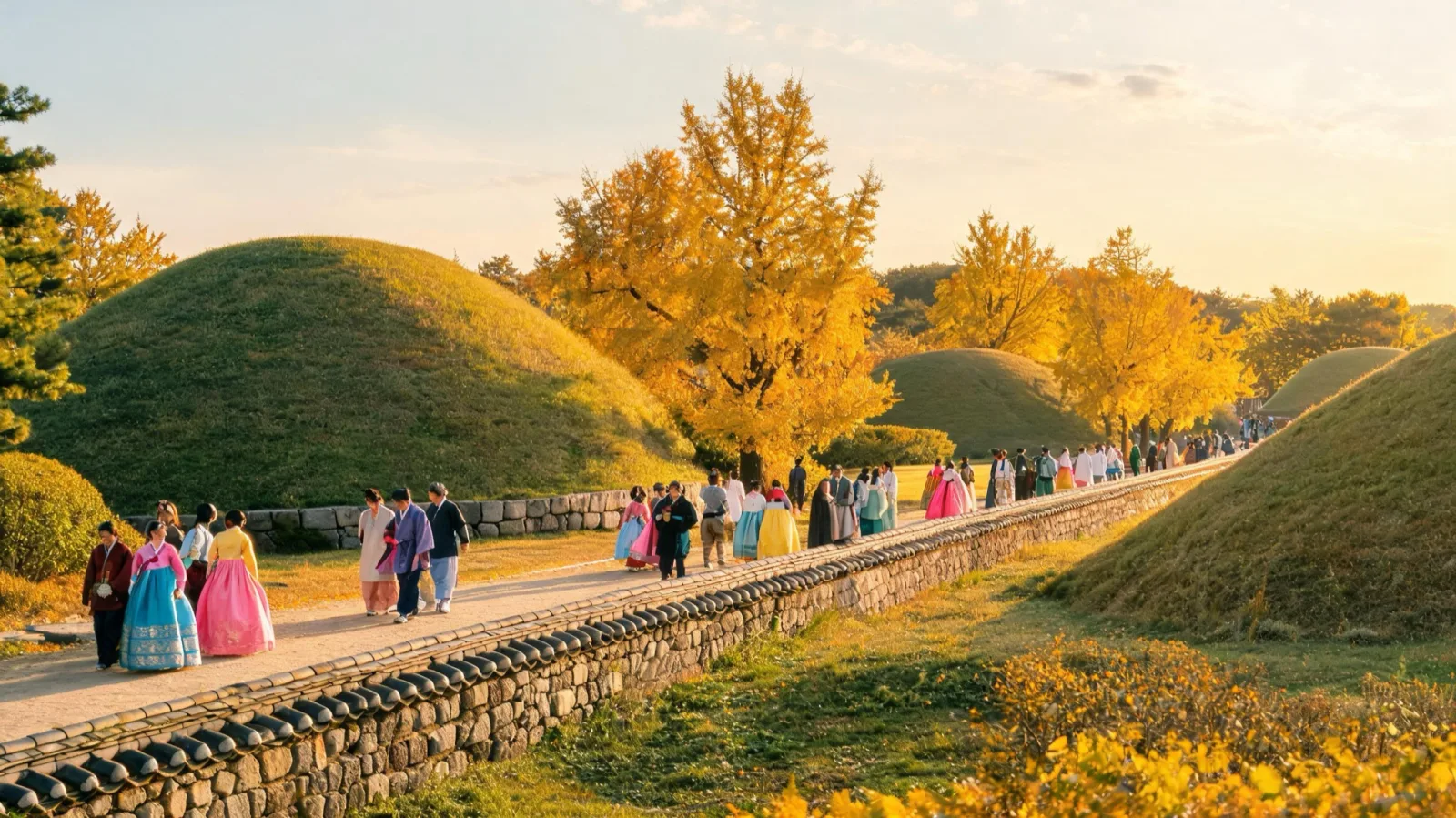
On weekend afternoons during foliage season, roads and parking can become gridlocked, so visiting early in the morning or using public transport is more comfortable. In the walkable area of Hwangnidan-gil, hanbok rental shops are clustered together, and renting for Silla hanbok at about 25,000 won for two hours, or Gyeongju Hanbokpan at 10,000 won for one hour, then strolling Daereungwon and Cheomseongdae, is a popular route too.
Adding Bomun Complex and Expo Grand Park
If you have leisure time, extend your route to the Bomun Tourist Complex. The Bomunho lakeside path is open for free, and nighttime scenic lighting and media art are being enhanced. The nearby Gyeongju Expo Grand Park operates from late March to late November each year, open 10:00–23:00 (exhibition and experience halls close at 19:00), and in autumn hosts busking and regular performances. Park admission is free, with only some exhibition halls, such as Gyeongju Tower, charging separate fees.
Transport and Schedule: Helpful Tips
- From Seoul, the KTX to Singyeongju Station takes about 2 hours 10 minutes, around 49,300 won per adult in standard class.
- From Singyeongju Station to the city center takes 25–35 minutes by bus, or 18–20 minutes by taxi (15,000–20,000 won).
- Toward Bulguksa and the Bomun Complex, seat bus No. 700 connects the area, but departures aren’t frequent, so checking the timetable in advance is essential.
- October’s average temperatures are 19°C/12°C, so a cardigan is enough, but by late November you’ll need early-winter clothing.
- Around Daereungwon and Hwangnidan-gil, parking is difficult on weekend afternoons, so look for a public parking lot first (up to 10,000 won per day).
If the infrequent No. 700 bus and weekend parking are the sticking points, a one-day Gyeongju bus tour at 33,800 won covers Bulguksa, Cheomseongdae, Hwangnidan-gil, Gyochon Village, Woljeonggyo, and Donggung and Wolji, with pickups at the Gyeongju KTX station and the intercity bus terminal, and it carries 33 reviews at a 4.6 average. One caveat is worth stating plainly: it departs at 12:30 and drops off near 21:40, so it cannot give you the early-morning Bulguksa arrival recommended above, which makes it the car-free alternative rather than the ideal one. Admission fees and lunch are not included, and the tour, the listing and the booking page all run in Korean.
Frequently Asked Questions
Q. When is Gyeongju’s foliage at its peak? A. Bulguksa peaks from mid-October to early November, and Daereungwon peaks in mid-November. It varies by one to two weeks each year, so checking a foliage map and local reviews just before departing is a good idea.
Q. How much is Bulguksa’s admission fee? A. Based on recent sources, it’s currently free. However, there are records of paid operation in the past, so it may vary by period; check the latest information on the official page before visiting.
Q. What time can I see the Cheomseongdae nighttime media art? A. The lighting is on from after sunset until around 22:00, and a show of about seven minutes runs at set times each season. Showtimes change year to year, so check recent notices or reviews, and aiming for around 20:30 is reasonable.
Autumn Gyeongju is full of free attractions, and you can fit both foliage and night views into a single itinerary. Plan a day starting early in the morning at Bulguksa, moving to Daereungwon by day, and continuing to Cheomseongdae and Donggung Palace and Wolji Pond by night. A thousand years of autumn will unfold in a single day.
Sources & verification
A source-based guide. Check the linked operator information again before you travel.
- Gyeongju City Culture and TourismSources checked:
- Korea Heritage ServiceSources checked:
- Gyeongju City Hall Official WebsiteSources checked:
Images are illustrative examples to aid understanding, not photographs of the actual facilities.
Continue planning
Bulguksa and Seokguram without a car: when to take the bus, taxi or skip one
Plan Bulguksa and Seokguram without a car using central Gyeongju and station bus routes, the seasonal Bus 12 timetable, last entry and stair access.
A Practical Half-Day Walk Through Central Gyeongju
Walk from Hwangnidan-gil through Daereungwon and Cheomseongdae to Woljeonggyo, with clear stopping and accessibility decisions.
Seoul to Gyeongju by KTX: day trip or one night?
Choose between a focused central Gyeongju day trip and an overnight plan that gives Bulguksa Temple its own morning.
Help us keep this note useful
A quick response helps us decide what to clarify or recheck. No account or email is needed.