
When two parents and an adult child stay at a ryokan, begin with one room if anyone may need help at night. A second room earns its cost when privacy or incompatible sleep routines are the real problem. Choose it only after confirming that the inn sells a genuine single-occupancy room, can seat all three guests together for meals, and can place the rooms close enough to work.
The occupancy number will not answer the bedding question. Gekkoju Yufuin, for example, describes a room with two beds in the bedroom and futons in the Japanese-style room for additional guests, up to four people. “Sleeps three” can still mean that one person sleeps near floor level.
Decide who can sleep and rise from a futon
A futon is not a minor detail when a parent has knee, hip or balance concerns. In a completed Shizuoka family trip posted in March 2017, yawenla wrote that her father found it difficult to rise from a Japanese-style room and swapped into her Western-style room. In a completed Kyoto trip posted in January 2016, aqns13 said her father barely slept through a night on a tatami futon because he was not used to it.
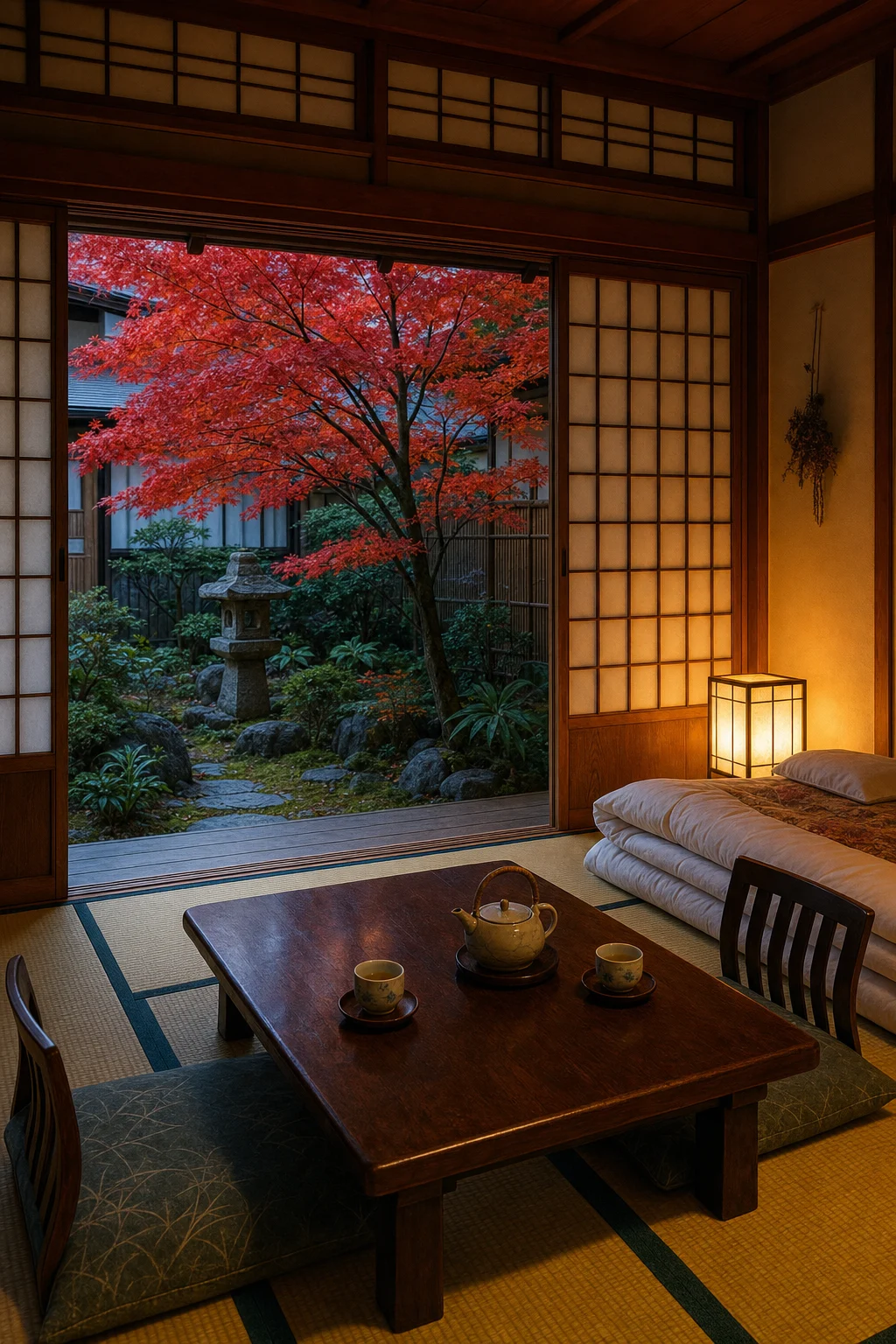
Before comparing room prices, assign the sleeping places:
| Guest | Sleeping surface | Night-time need | Can sleep alone? |
|---|---|---|---|
| Parent 1 | Raised bed or futon | Toilet access, medication or assistance | Yes / No |
| Parent 2 | Raised bed or futon | Toilet access, medication or assistance | Yes / No |
| Adult child | Remaining bed or futon | Is this person the night-time helper? | Yes / No |
A room with beds may still have a step or raised platform. One KAI Yufuin account describes beds placed on a raised section of the floor. Ask about the room floor, lift access, steps between the entrance and bed, and whether the toilet is inside the room. A bed icon alone is not enough.
If a parent needs help getting to the toilet, with medication or after a bath, one shared room usually protects the trip better than extra privacy. If everyone can manage the night independently but one person snores, sleeps much earlier, or needs private changing space, a 2+1 split can solve something concrete.
A second room does not automatically add a private bath
Yufuin Iyotomi offers a useful real-world example because its current compact-single listing replaced the old tatami single in March 2026. The renovated room is Western-style, with one 100 cm bed and a refrigerator. It has no bath, toilet or washbasin; the toilet and washbasin are shared. Single occupancy, a raised bed, an en-suite toilet and an in-room bath are separate filters.
Iyotomi says all its hot-spring baths are used privately, one party at a time. Its half-board plan also warns that guests may have to wait at busy times. Booking two sleeping rooms therefore does not create two in-room baths.
Completed stays show why the wording matters. In an August 2026 comment, blancheflors described a Morizuya stay in late September of the previous year: the family used two private-use baths and also had access to Kinosaki’s seven public bathhouses. In December 2023, animalpanties wrote about a completed Hakone Kyuan stay with an in-room bath, ten-course dinner and large breakfast. In May 2026, chloe_1024 said after a completed Kakurean stay that the reservable private-use baths would have been enough without the in-room bath.
When an English booking page says “private bath,” determine whether it is attached to the room, reserved for a timed slot, or simply used by one party whenever vacant. Then ask whether all three family members may use it together. Room count and bathing privacy are related decisions, but they are not the same purchase.
Keep the meal together even when the rooms split
The shared dinner is often the part worth preserving. After a June 2017 stay, zhao1991 posted a Yufuin ryokan account in September 2017 that joined a 12-course dinner, large restaurant breakfast and family bath into the overnight experience. In a July 2026 comment, DianeSTP remembered an October stay at Hakone Airu for both its in-room bath and dinner.
Iyotomi’s jidori hot-pot half-board plan serves both dinner and breakfast in the dining area. Dinner begins at 18:00 or 18:30, subject to the property’s booking conditions, and the preferred time may not be available. Before payment, contact Iyotomi and ask whether both rooms can use the same sitting and table, and whether the rooms can be placed close together. If the rooms were booked separately, provide both reservation numbers.
At an inn with room dining, ask a different question: which room will host the meal, and may the single-room guest join the other booking there? A traveler who stayed at Mozumo had breakfast and dinner served in the room. That experience does not establish another inn’s policy, but it shows why “same meal plan” is insufficient without a dining location.
Current starting-price models change with the meal plan
The current breakfast-only plan is the cleanest same-plan comparison. It lists SUO, a six-plus-eight-tatami room with a toilet, from ¥13,500 per adult based on three guests. A low-cost twin with a shared toilet starts at ¥12,500 per adult based on two, and the compact single starts at ¥14,500.
| Breakfast-only configuration | Calculation | Displayed starting total |
|---|---|---|
| One SUO room, three guests | ¥13,500 × 3 | ¥40,500 |
| Low-cost twin plus compact single | ¥12,500 × 2 + ¥14,500 | ¥39,500 |
| Two-room model difference | ¥39,500 - ¥40,500 | -¥1,000 |
The two-room model is ¥1,000, or about 2.5%, lower. This is not the same room divided in two. SUO provides two tatami rooms and an in-room toilet; the split uses a low-cost twin and a compact single with shared toilet and washbasin. The figures are displayed starting prices, not simultaneous inventory or a quote for one stay date.
Dinner changes the comparison again. The standard jidori half-board plan starts at ¥42,000 for three in one room. The current official solo half-board route is a ¥21,000 plan that adds a whole Seki-aji sashimi course to the jidori dinner. Adding that to the ¥30,000 two-person standard plan gives a ¥51,000 split model, ¥9,000 above one room. The dinners differ, so ¥9,000 is not a privacy surcharge.
For actual dates, search once for three adults in one room and again for two adults plus one adult in two rooms. Decide whether breakfast is enough or dinner is part of the ryokan experience. Compare final totals only when the stay dates, meal content, cancellation deadline, taxes and payment currency match. If all three guests want the standard jidori dinner, ask Iyotomi before payment whether the solo guest can book that same plan.
The compact single is in annex SOU and has no in-room toilet or washbasin. Unless the property confirms nearby placement, the single guest and the parents may end up in different parts of the inn. A solo room can therefore provide sleeping privacy while making night-time movement less convenient.
Choose the room count by the problem it solves
Choose one room when a traveler needs night-time assistance, the party keeps similar hours, and everyone has agreed who will use the low futon. Confirm the third sleeping surface, the route to the toilet and any level changes before paying.
Choose two rooms when all three travelers can manage the night independently and separate sleep or changing space will materially improve rest. Before payment, obtain four answers:
- Is a single-occupancy room actually for sale on the stay date?
- Can both bookings use the same meal plan and sitting?
- Can all three guests dine at one table?
- Can the rooms be assigned on the same floor or close together?
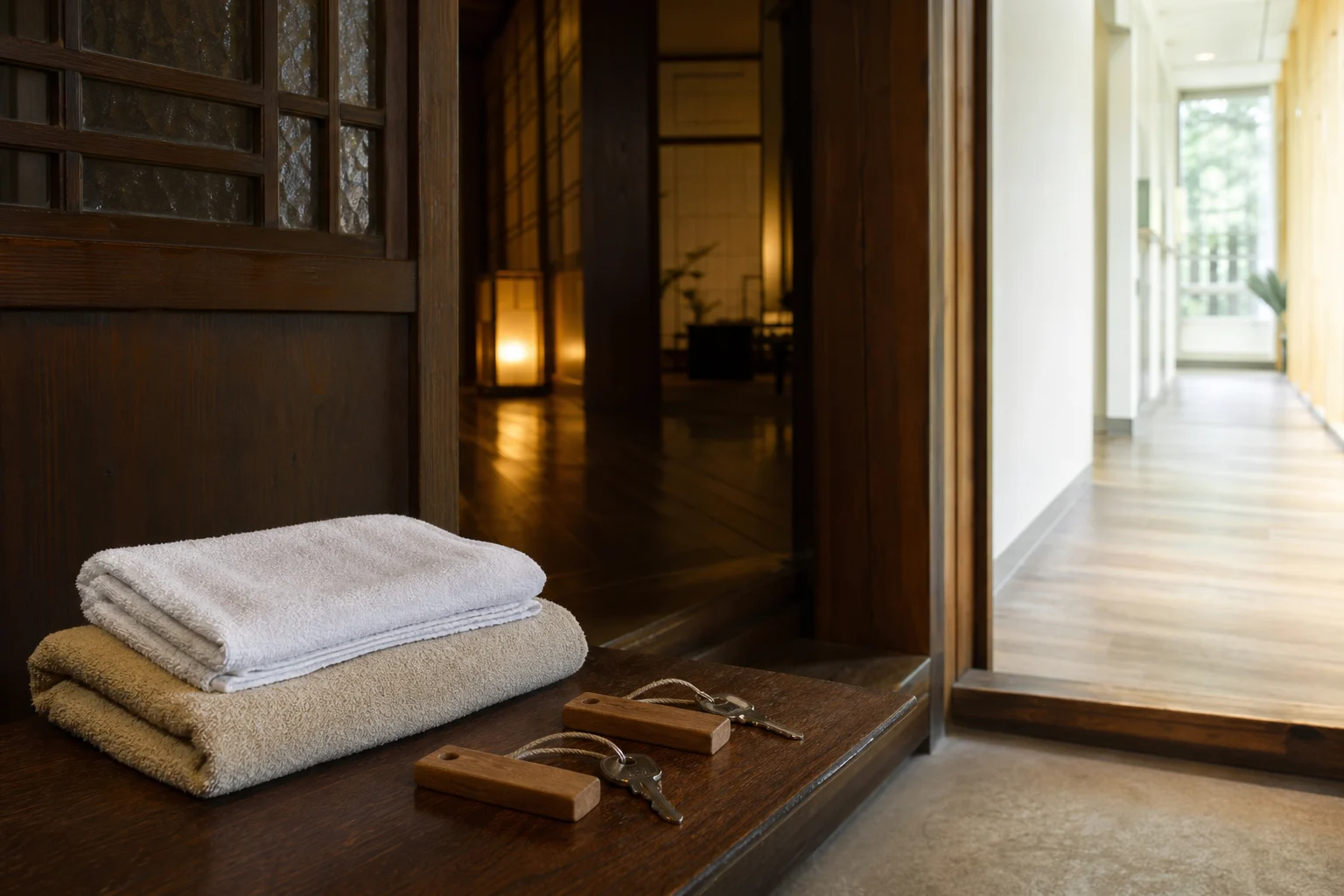
The order matters. Settle the futon and night-assistance question first. Preserve the shared meal and bathing plan next. Buy the second key only when the added room fixes a sleep or privacy problem that one room cannot.
Last checked: 2026-10-19
Sources & verification
A source-based guide. Check the linked operator information again before you travel.
- Yufuin Iyotomi: RoomsSources checked:
- Yufuin Iyotomi: Jidori hot-pot half-board planSources checked:
- Yufuin Iyotomi: Breakfast-only plan and current compact singleSources checked:
- Yufuin Iyotomi: Solo Seki-aji half-board planSources checked:
- Yufuin Iyotomi: Hot springsSources checked:
- Gekkoju Yufuin: Room configurationSources checked:
- PTT: Completed Shizuoka trip with parentsSources checked:
- PTT: Completed Kyoto trip with parentsSources checked:
- Reddit: Completed Morizuya family staySources checked:
- Reddit: Completed Hakone ryokan staysSources checked:
- PTT: Completed Yufuin ryokan meal staySources checked:
- Reddit: Completed Hakone Airu staySources checked:
- Reddit: Completed Kakurean staySources checked:
Images are examples to aid understanding.
Help us keep this note useful
A quick response helps us decide what to clarify or recheck. No account or email is needed.