
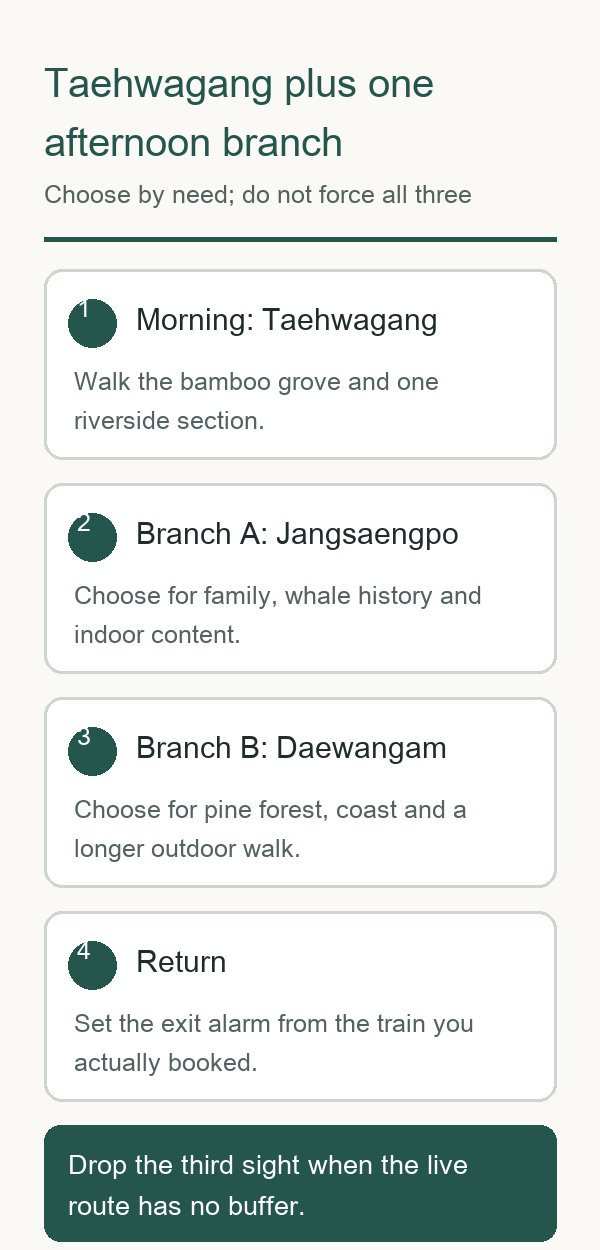
Choose Taehwagang National Garden plus one afternoon branch. Pick Jangsaengpo for whale history, indoor exhibits or a family day. Pick Daewangam Park for pine forest, sea cliffs and a longer outdoor walk. Ordinary public transport can connect all three, but the transfers leave little margin for museum ticket cutoffs and the return to Busan. Add the third sight only if a live route check and a taxi fallback leave a comfortable buffer.
Start with the river, then make the branch decision
Taehwagang National Garden is the stable morning anchor. Ulsan’s official pages list a 4 km bamboo grove, free access around the clock, and separate hours for individual facilities. That makes the outdoor bamboo and riverside walk usable before a timed museum or bridge visit.
A practical order is:
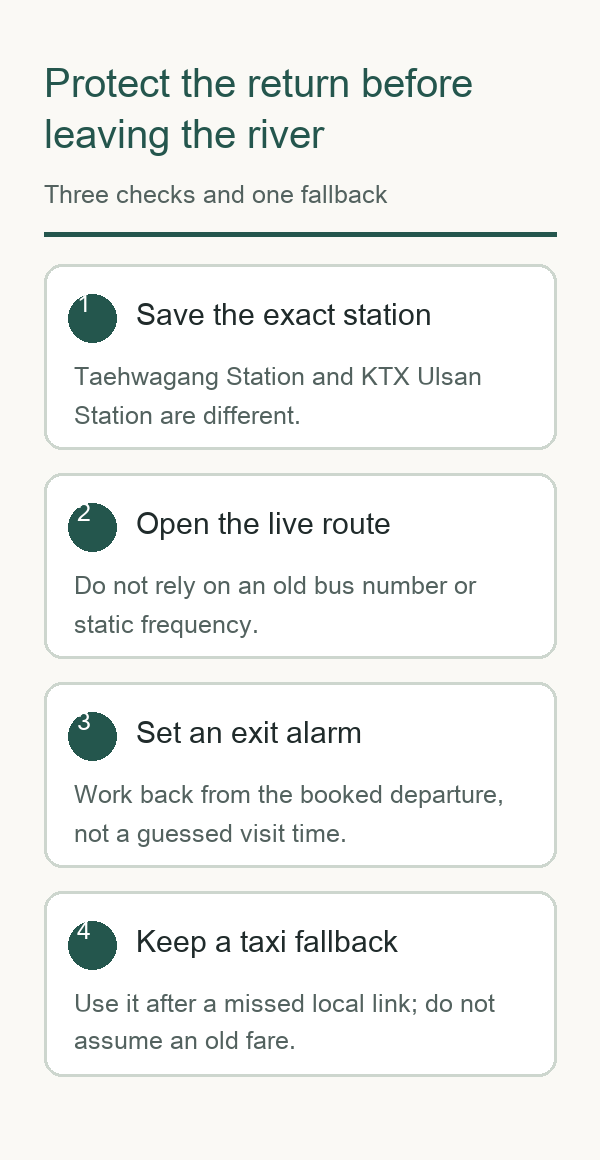
- Arrive at Taehwagang Station or in central Ulsan and save the exact station for the return. Taehwagang Station and KTX Ulsan Station are different places.
- Walk the Simni Bamboo Grove and one riverside section. Do not try to cover every themed garden on a day trip.
- At lunch, open the live local route for the chosen afternoon branch. If the next connection would erode the attraction window, take a taxi or drop the branch.
- Leave the branch with enough time for the train you have actually booked. Static bus numbers and taxi prices are deliberately omitted because they can change and were not verified against a date-specific operator result.
This is a decision route rather than a promise that one timetable works every day. Weather, maintenance and local traffic can change the useful order.
Branch A: Jangsaengpo for families and a weather backup
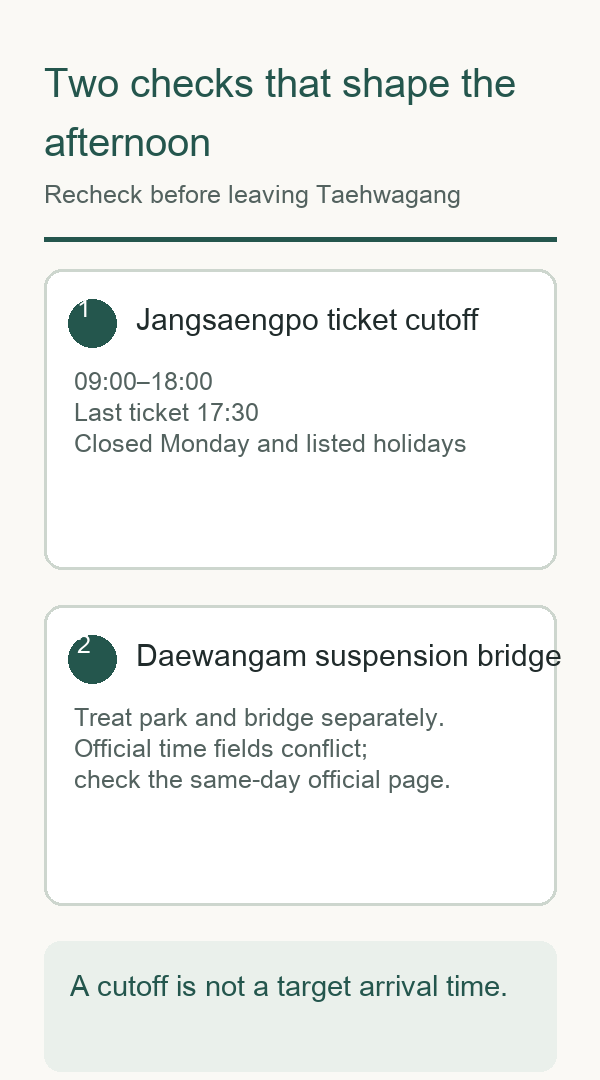
Jangsaengpo Whale Culture Village currently lists 09:00–18:00, with ticketing ending at 17:30, plus Monday and listed holiday closures. Treat 17:30 as an entry cutoff, not an arrival target. The branch works best when you want museums, the reconstructed culture village and a mix of indoor and outdoor stops.
The cutoff changes the day in two ways. First, a long lunch or a full sweep of Taehwagang can cost the last admission. Second, arriving on a closure day does not create a usable rainy-day fallback. Open the official attraction page before leaving the garden.
Choose this branch when children or rain make indoor content more valuable. If the culture village is the main reason for the trip, go there first and move Taehwagang later; the garden itself does not have the same ticket deadline.
Branch B: Daewangam for the coast
Daewangam Park itself has free admission. The suspension bridge is a separate facility with separate hours and closure rules that can vary. A park visit can still work when the bridge is closed, so treat the bridge as optional rather than the whole purpose of the trip.
This branch suits readers who would rather spend the afternoon on the pine and coastal trail than inside a museum. Choose a turnaround point before starting the longer walk. Wind, rain or a late arrival are reasons to shorten the route and protect the return connection.
What completed trips add
Three completed accounts help with scope, without turning one person’s route into a timetable:
- A 2023 Korean-language visit log concentrated on Simnidae rather than the whole national garden and described local-bus movement as the tiring part of the day.
- A September 2025 solo-trip video completed Daewangam Park and Taehwagang National Garden in one day, with a meal and cafe between them. It supports the two-stop coast branch, not a three-stop public-transport promise.
- A September 2025 South Korea road-trip diary combined Daewangam Park and Taehwagang National Garden by car. It shows why a car can absorb the cross-city movement more easily, while offering no evidence for bus frequency.
These accounts agree on the value of limiting the day. They do not establish today’s bus departure, ticket cutoff or bridge status; those come from current official pages.
Protect the return
Save the exact return station, booked train and a live route before leaving Taehwagang. At the afternoon branch, set an exit alarm from the booked departure rather than from an estimated attraction duration. Keep a taxi fallback for a missed local connection, but do not rely on an undated fare estimate.
The concise choice is: Jangsaengpo for families, museums or rain; Daewangam for coast and walking. Taehwagang plus either branch is a complete day. A third sight is an optional upgrade after a live route check, not the base itinerary.
Last checked: 2026-10-20.
Sources & verification
A source-based guide. Check the linked operator information again before you travel.
- Ulsan official Taehwagang National GardenSources checked:
- Ulsan tourism Taehwagang National GardenSources checked:
- Ulsan official barrier-free tourismSources checked:
- Ulsan official Taehwagang National Garden directionsSources checked:
- Ulsan tourism Jangsaengpo Whale Culture VillageSources checked:
- VisitKorea accessible Daewangam Park listingSources checked:
- Dongsang Review completed Ulsan tripSources checked:
- 한입봉봉 completed solo Ulsan tripSources checked:
- Andover Connection South Korea road trip day 7Sources checked:
Images are examples to aid understanding.
Help us keep this note useful
A quick response helps us decide what to clarify or recheck. No account or email is needed.