For a car-free Ulsan trip with a night’s stay, the split that holds up best against the sources is Taehwagang National Garden plus Jangsaengpo on day 1 and Daewangam Park on day 2. The course-planning guide starts from the premise that Taehwagang National Garden, Jangsaengpo, and Daewangam Park are hard to cover properly in a single day, and an actual traveler’s record of linking the Jangsaengpo Whale Museum, Daewangam Park, and Taehwagang Station by sightseeing bus follows the same axis. The sections below line up, in one pass, the visiting order, the transport between sights, where to stay, and the way in from Seoul.
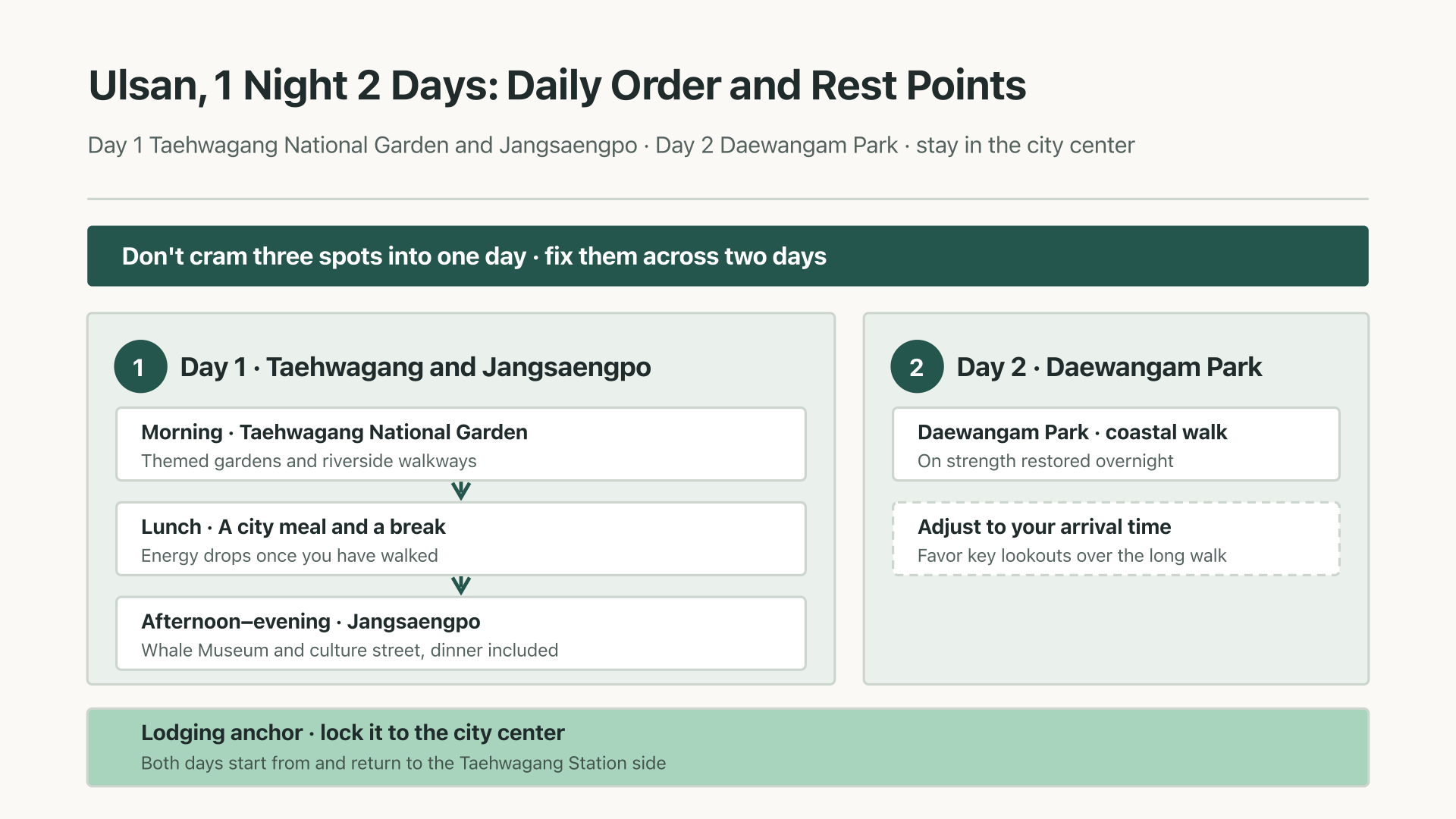
Order: Taehwagang and Jangsaengpo on day 1, Daewangam on day 2
Forcing all three spots into a single day means none of them gets proper time. The same guide says to stretch the plan into a one-night Ulsan itinerary or move the departure earlier if you want to see Daewangam Park properly, and it also points out the trade-off that adding Jangsaengpo shortens the Daewangam Park time. This one-night arrangement reflects that advice as it is.
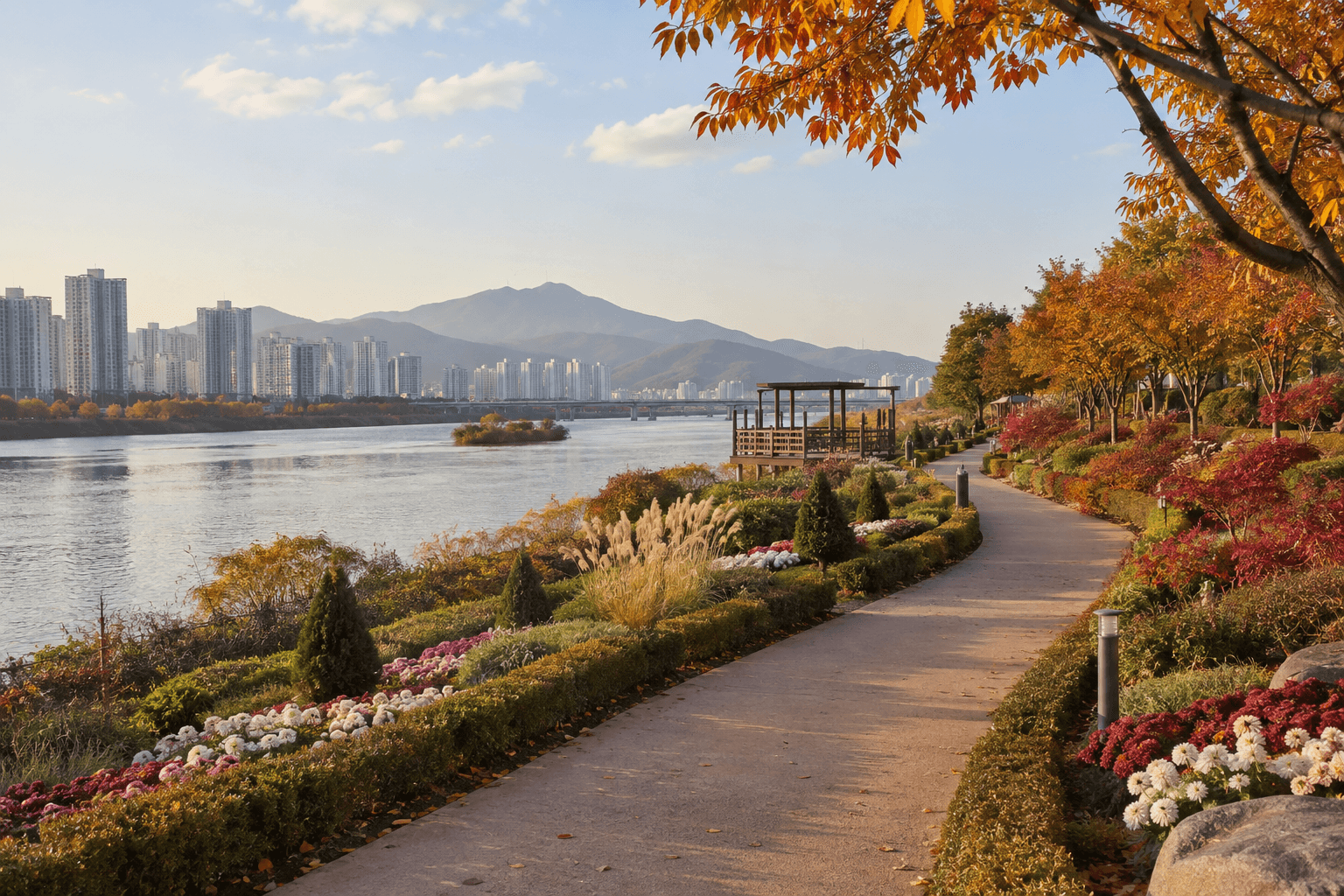
Day 1 starts in the morning at Taehwagang National Garden. It was designated South Korea’s second national garden in 2019, and six themed gardens, walking trails, and an observatory line the Taehwagang River, with the grounds open 24 hours year-round. The course advice is that energy drops more than expected after a morning walk there, and that lunch plus a rest fit better after the garden, so the middle of the day stays free for a meal in the city and the afternoon moves to Jangsaengpo.
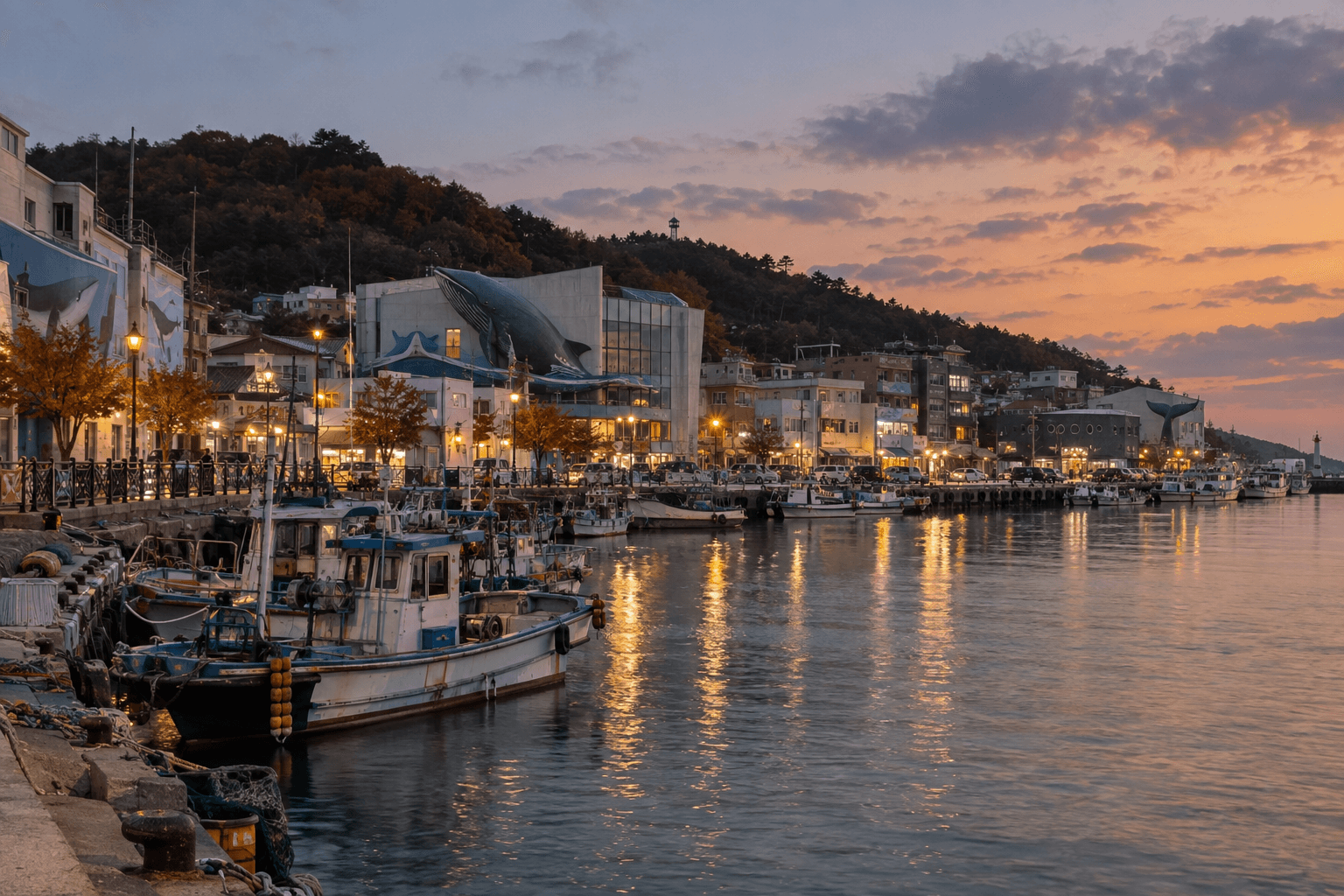
The afternoon in Jangsaengpo is the whale culture segment. Jangsaengpo is a small harbor district north of downtown Ulsan that was the region’s primary whaling port until commercial whaling ended in 1986, and the guide describes that memory as carried on in a museum and a cultural street. The Jangsaengpo Whale Museum is the only museum in Korea dedicated to whale hunting culture. Because meals slot easily before or after the museum and the cultural village visits in this neighborhood, dinner works well here too.
Day 2 goes to Daewangam Park. The core of the scenery is a wave-carved rocky headland at the southeastern tip of the city, covered with an old forest of pines leaned seaward by the coastal wind, and the site is tied to the legend connecting Queen Munmu of Silla with the sea dragon. The gain from the overnight stop is that the walk happens on recovered legs. The same guide notes that if you arrive in the late afternoon, a short pass over the main viewpoint sections beats one long walk, so let your arrival time set how far you walk.
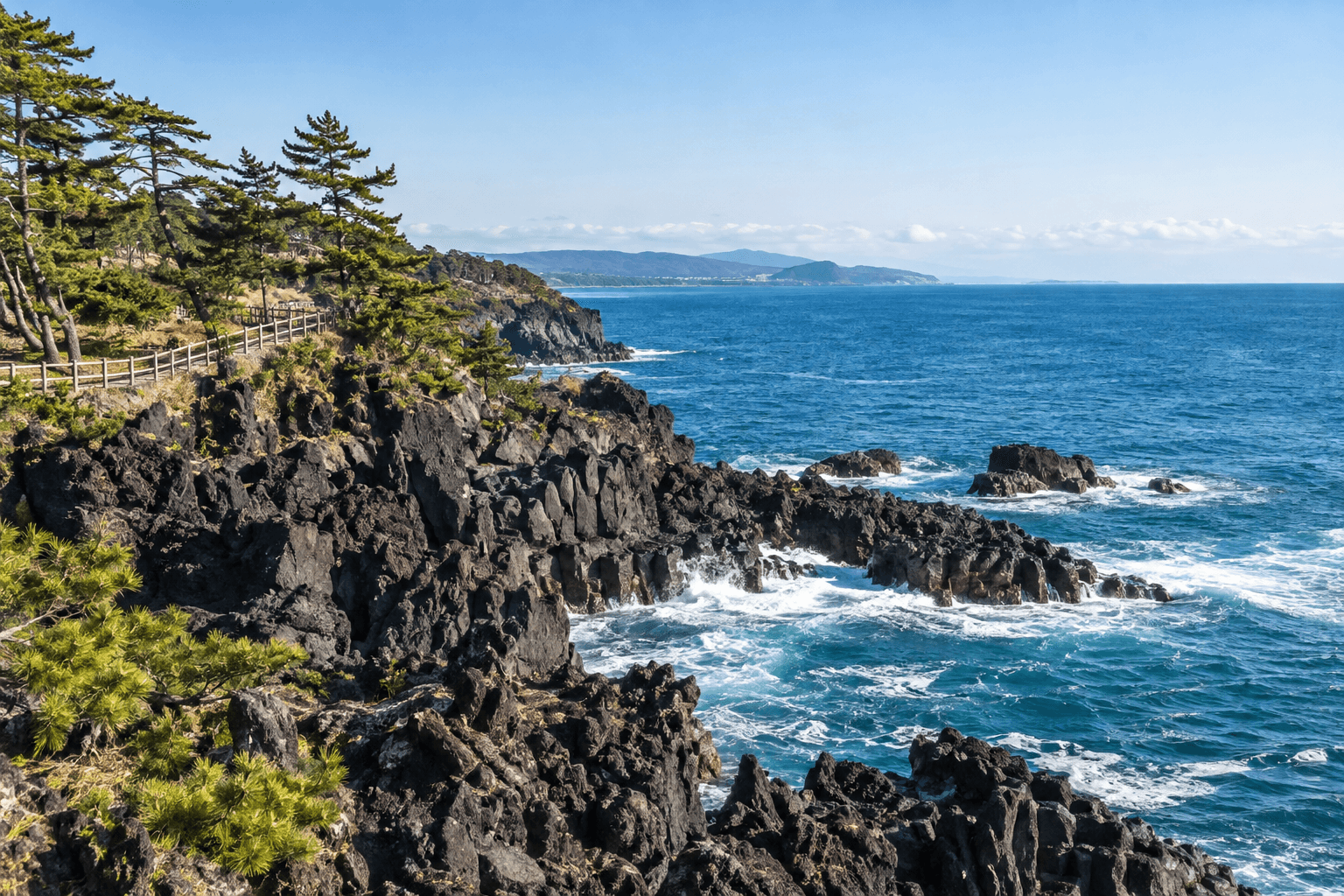
Per the page listing, Daewangam Park is open 24 hours year-round with free entry (checked September 2026). Arriving early for an unhurried walk is one option; coming near sunset for the night view is the other. A writer who visited on an April evening recorded that the bridge has night lighting, so it did not get too dark to walk but the lights were dazzling, and that nights there are quieter than expected. The same writer adds that the Simnidae Forest trail side gets very dark in the evening and can feel intimidating alone, so keep movement near sunset to the lit sections.
The weight inside the order shifts with your party. With children, the Taehwagang National Garden and Jangsaengpo combination is the better pick and Daewangam Park is better shortened to a short coastal walk to cut fatigue; if photos are the goal, hold a long block of Daewangam Park time for a clear day and switch to Jangsaengpo and indoor stops when rain is in the forecast. On days with a strong-wind forecast, skip the coastal walk and move indoors.
Getting between the sights inside Ulsan
The sightseeing bus links Jangsaengpo and Daewangam even without a car. One traveler’s record covers the Ulsan Sightseeing Bus leaving from Taehwagang Station, passing the Jangsaengpo Whale Museum and Daewangam Park, and returning to Taehwagang Station; at the time of that record the first bus left at 9:30, and the same source notes that the Taehwagang sightseeing bus accepts credit cards only (checked September 2026). That record covered Jangsaengpo and Daewangam inside a summer day trip, so a one-night schedule with a full day to spend carries even more slack.
Ordinary city bus access checks out too. The listing has Bus 126 from KTX Ulsan Station taking about 40 minutes to Daewangam Park, and buses 124 or 401 from the Ulsan City Bus Terminal taking 20–30 minutes (checked September 2026). Set that beside the separate note that the urban bus network covers the main tourist sites, Kakao Maps handles routing well, and taxis are plentiful and inexpensive. Add the advice that linking all three spots by public transit stretches transfers and waits, so mixing taxis into some segments is the realistic move, and the stuck segments gain a fallback.
Before and after a visit to the Jangsaengpo Whale Museum, the same guide carries the caution that opening hours, closing days, hands-on programs, and boat-ride status need official confirmation before the visit. When planning, match the sightseeing bus timetable against the museum’s opening hours first.
Why the city center is the better base
This course starts and ends near Taehwagang Station on both days. KTX Ulsan Station, however, sits in Ulju-gun about 12 km north of downtown, and the comparison on record is that Ulsan Station works well for KTX rides but sits far from Taehwagang National Garden and the Dong-gu coast, while Taehwagang Station is often the easier jump into the city center. A room right by Ulsan Station means the trip back into downtown on both days. Booking the night in the city center is the choice that cuts wasted movement.
There is a price anchor too. The listing describes a full range of business hotels and guesthouses in the city center, at about ₩60,000–120,000 per room per night for mid-range options (checked September 2026). Hotel-by-hotel room reviews and facility comparison material did not get secured this time, so judge a specific hotel by the reviews and cancellation terms on its booking screen. Both days’ routes pass through downtown, so locking a downtown room with confirmed cancellation terms first is the safe move.
Seoul to Ulsan: KTX, Donghae Line, bus, car
From the capital area, arriving at KTX Ulsan Station is the default axis. A car-free traveler who made the capital-area run toward Ulsan recorded that KTX Ulsan Station is the stop to reach, and that an early-morning KTX is what gets you there before lunchtime. No Seoul–Ulsan travel-time figure appears in the checked sources, so none is placed here; match actual departures and travel times on the booking screen.
Coming via Busan, the choices split three ways.
Fares and times below are as checked in September 2026.
| Mode | Segment | Time · frequency | Fare as listed |
|---|---|---|---|
| KTX | Busan Station → Ulsan Station | 24–35 minutes, every 30–60 minutes | ₩10,100 one-way standard class |
| Donghae Line | Bujeon → Taehwagang | no time listed | transit card max ₩2,500 |
| Express bus | Busan Nopo → Ulsan | 50–70 minutes, every 15–30 minutes | ₩4,700–5,800 one-way |
The Donghae Line’s appeal is the arrival station. Ride the Donghae Line from Bujeon Station to Taehwagang Station and continue by sightseeing bus, as in the traveler’s record, and the day 1 starting point is waiting at the arrival station. The Donghae Line transit card fare is ₩1,300 within 10 km, rising by ₩200 per additional 10 km, with another ₩200 added for crossing the boundary between Busan and Ulsan, up to a maximum of ₩2,500.
Off at KTX Ulsan Station, one more link to downtown is needed. The listing has the local bus from Ulsan Station to downtown at ₩1,500, or a taxi at 15–20 minutes and roughly ₩10,000–14,000 (checked September 2026). Weighing the day 2 route as well, it pays to shrink the station-to-downtown leg in advance through the lodging choice.
With a car, parking terms join the decision. The official listing for Taehwagang National Garden parking is ₩500 per 30 minutes, ₩200 per additional 10 minutes, and a maximum of ₩10,000 per day (checked September 2026). One visitor recorded wandering for the Daewangam parking lot entrance in the dark at night, so an arrival near sunset is better skipped.
On timing, March–May and October–November show up as the noted visiting window for Ulsan. If the plan is October, note the adjustment as well: on rainy days cut the outdoor time and raise the share of Jangsaengpo and indoor stops in the city.
Wrap-up
Day 1 pairs Taehwagang National Garden with Jangsaengpo and slots lunch and dinner between them. Day 2 walks Daewangam Park at length on recovered legs, with the range scaled to the arrival time. Book the night in the city center rather than by Ulsan Station, and coming via Busan, pick between the Donghae Line and KTX by arrival station (Taehwagang Station vs Ulsan Station).
Images are examples to aid understanding.
Last checked: 2026-09-13
Sources & verification
A source-based guide. Check the linked operator information again before you travel.
- Korplaylist, Ulsan day-trip course guide covering Taehwagang, Jangsaengpo, DaewangamSources checked:
- Trip.com traveler record, Ulsan sightseeing bus from Taehwagang StationSources checked:
- VisitKorea, Taehwagang National Garden introductionSources checked:
- Busan Trip, Ulsan transport and stay comparisonSources checked:
- Dongsang Review, Daewangam night walk recordSources checked:
- th-study blog, Donghae Line Busan–Ulsan ride recordSources checked:
- Busan Metropolitan City, public transportation guideSources checked:
Illustrations are examples to aid understanding, not photographs taken on site. Actual photographs have separate source credits.
Continue planning
Ulsan Day Trip Itinerary: Taehwagang National Garden, Jangsaengpo, and Daewangam in One Day
A Ulsan day trip that holds together: Taehwagang National Garden in the morning, then Jangsaengpo or Daewangam Park in the afternoon, with transport choices.
The Complete Guide to Autumn Fruit-Picking Experiences — Pears, Persimmons, Chestnuts & Sweet Potatoes, Farms Near Seoul, and a Gift Guide
When pears, persimmons, chestnuts and sweet potatoes are picked, which farms near Seoul run harvests, what they cost, and how to store the haul.
Chuseok Day Trips with Kids in the Seoul Capital Area: Picking Less Crowded Options
Which Seoul capital area places open over the Chuseok holiday, how crowds usually run by place type, and the transit axis and booking order that hold a kids' day trip together.
Help us keep this note useful
A quick response helps us decide what to clarify or recheck. No account or email is needed.