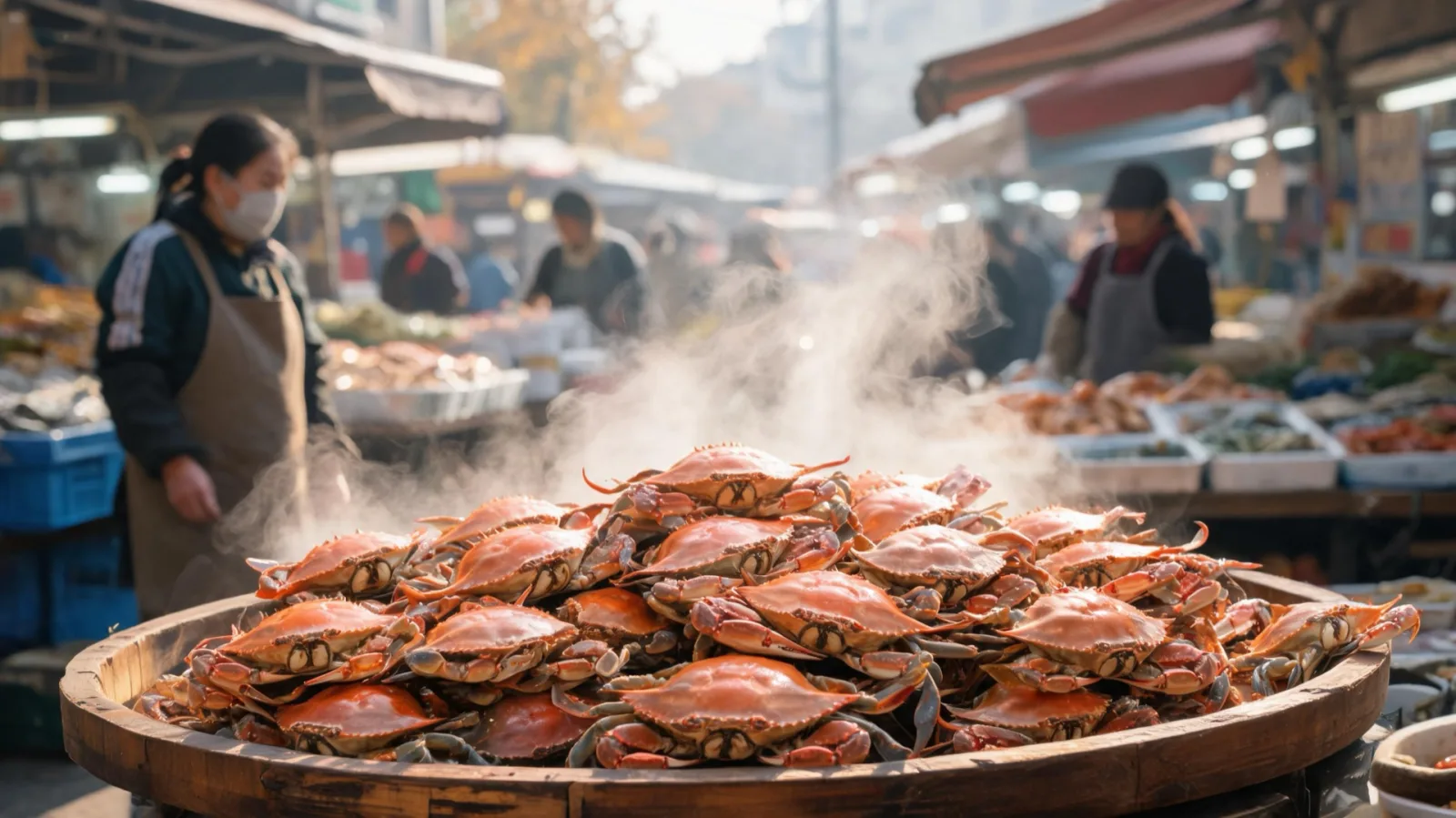
When autumn comes, a season arrives when you suddenly crave gejang (marinated crab). But when you look into it, there’s a lot to wonder about. Exactly when is flower crab in season, how do you tell male from female crabs apart, what’s the difference between soy-marinated gejang and spicy gejang, and should you go to Sinsa-dong’s Gejang Alley or Ganghwa Island? This article covers it all in one place: the flower crab season, gejang price ranges, restaurant areas, and how to eat down to the crab-shell bibimbap.
Flower Crab & Soy-Marinated Crab: The Key Points First
- Flower crab season is September–November. Autumn is all about the plump, meaty male crab. Spring (April–June) is the season for female crabs packed with roe.
- From November, male and female are enjoyed alike. September–October is mostly the male crab, and from November the female crab also puts on meat and produces roe, so both are eaten.
- Soy-marinated gejang is the original gejang. The very name “ganjang gejang” is said to be a term coined in the 1990s to distinguish it from spicy gejang.
- The classic “rice thief.” This signature Korean dish — raw crab marinated in soy sauce and full of umami — calls for rice, and it has become a must-do course in Seoul for international tourists too.
Flower Crab Season & Gejang Price Range Information
| Category | Details |
|---|---|
| Flower crab season | September–November (male crab) / spring April–June (roe-filled female crab) |
| Main producing areas | West Sea coast (Incheon·Taean·Gunsan), Mokpo crab, etc. |
| Gejang baekban (set meal) | 15,000–25,000 won per person (based on 2024–2025 reports and reviews) |
| Budget set meal | Bongsun Jeongsik 21,000 won per person (soy + spicy + shrimp gejang, based on a 2025 review) |
| Mid-range set meal | Jinmi Sikdang 45,000 won per person; Keun Giwajip soy gejang 59,000 won |
| Premium | Sinsa-dong Pro Ganjang Gejang: medium 2 crabs 92,000 won / extra-large 2 crabs 136,000 won (as of 2024) |
Prices vary greatly by establishment, grade, and timing. The figures above are based on reviews and reports from a particular time, so it’s best to check the latest prices before visiting or buying.
Soy-Marinated vs. Spicy Gejang, and the Best Gejang Restaurants
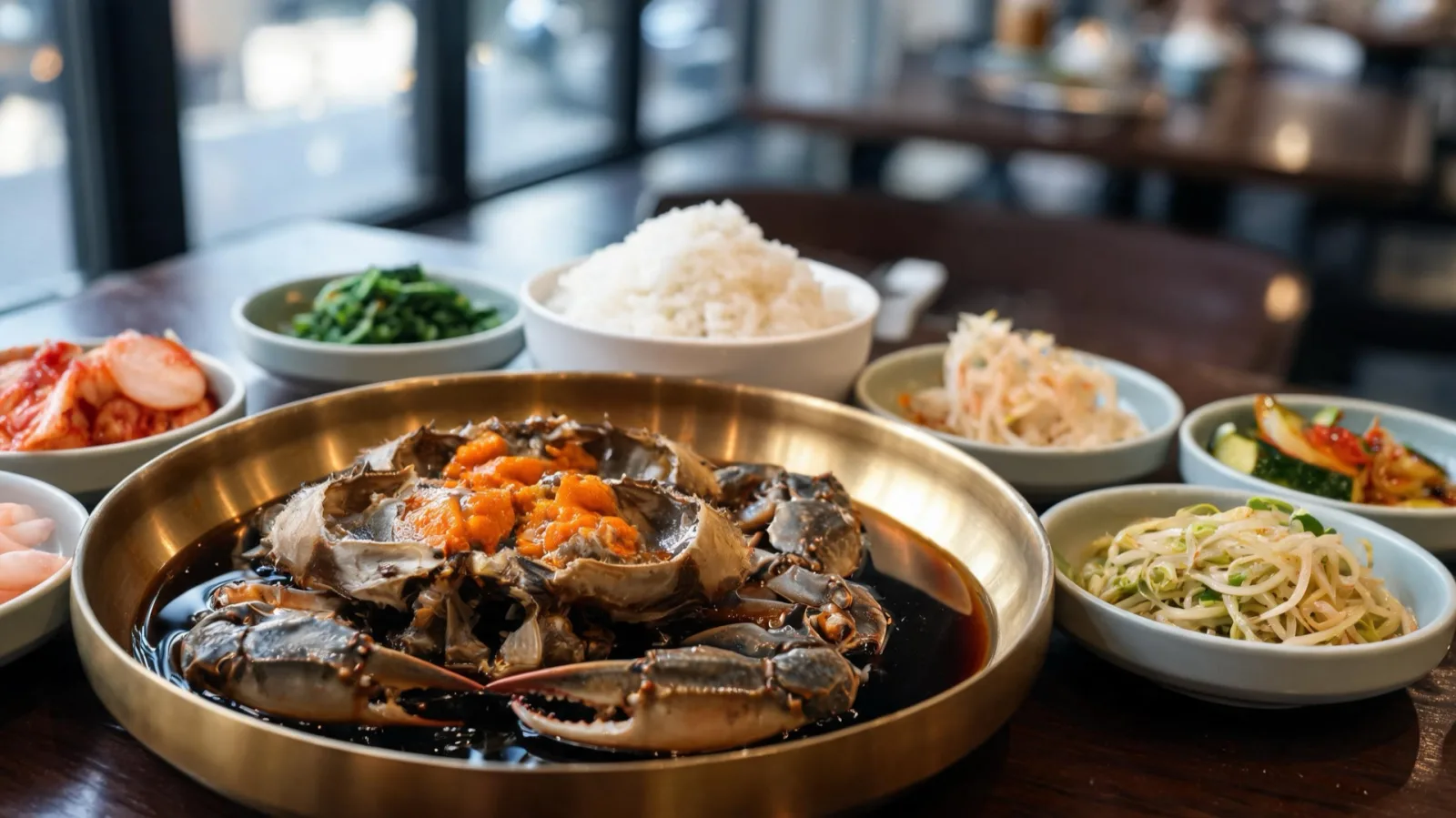
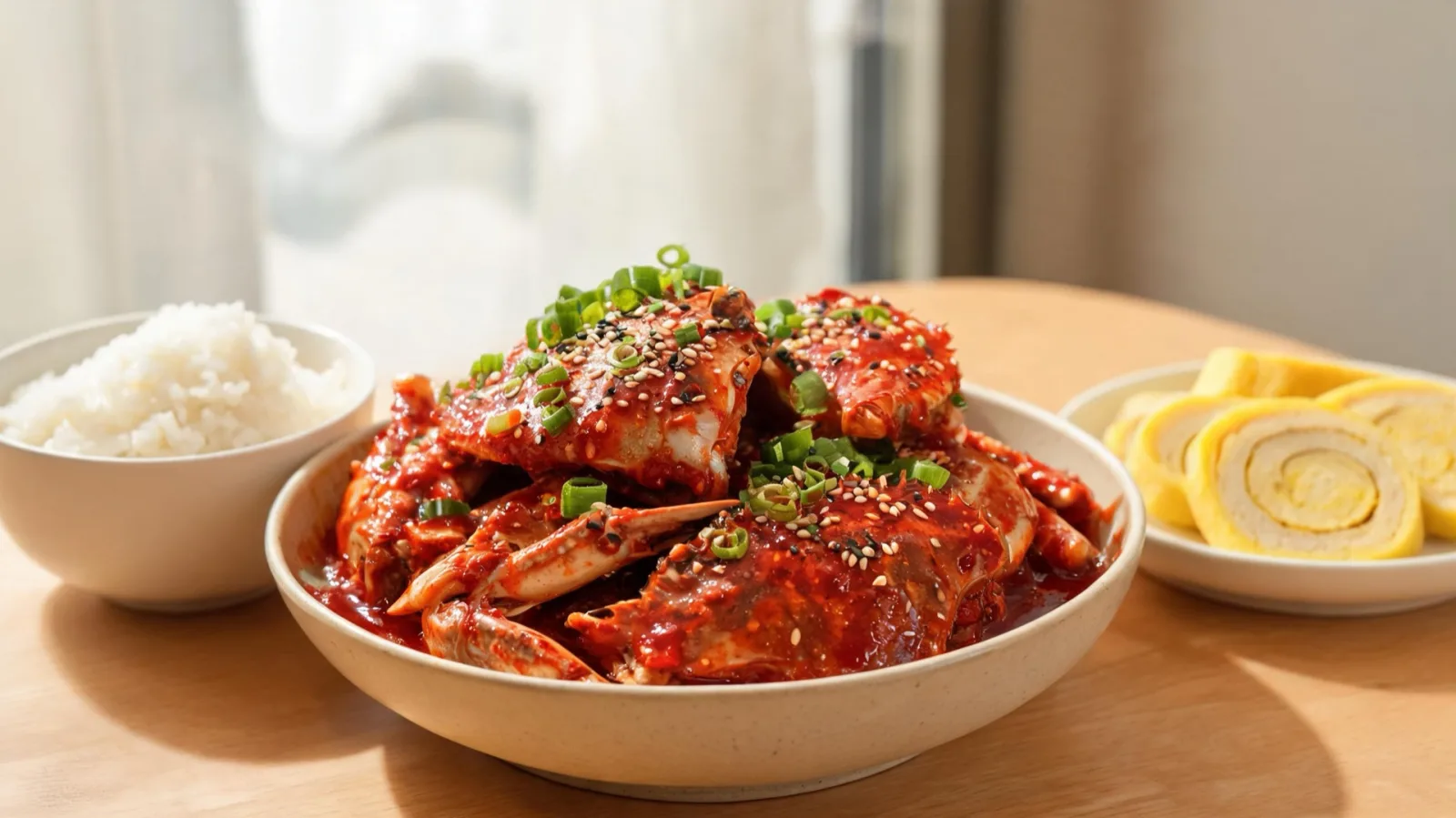
Soy-marinated gejang is a dish made by aging flower crab in soy sauce to bring out a salty, rich, creamy umami from the innards, while spicy gejang is a modern style seasoned with gochugaru (red chili powder) and the like for a spicy kick. What they share is that both flavor the crab without cooking it.
Ganghwa Island (Incheon) — Known as a holy land of soy-marinated crab. Famous spots include Ilosam Ganjang Gejang (featured in a late-2025 gourmet article), Pyeongane Doenjang, which has carried on its sauce flavor for four generations, and Banseon, the old establishment that first sold crab dishes on Ganghwa Island.
Sinsa-dong Gejang Alley, Seoul — A prime area for high-end gejang, with places like Pro Ganjang Gejang and Jinmi Sikdang. Adjacent to Express Bus Terminal Station on subway lines 3, 7, and 9, it’s ideal for international tourists’ itineraries too.
Bukchon·Jongno — There are places like Keun Giwajip where you can enjoy gejang in a hanok, making it a popular course for international tourists.
Mokpo — A region where Mokpo flower crab is recognized as a premium brand, letting you experience both the ingredients and the dishes at markets and raw-fish restaurants.
How to Choose Flower Crab & How to Eat Gejang
Choosing flower crab at the market — If the belly flap (abdomen) is pointed, it’s male; if it’s round and broad, it’s female. Female crabs are said to be full of roe the redder the belly flap is. A good specimen feels firm and weighty when you touch the legs, and has a hard belly flap.
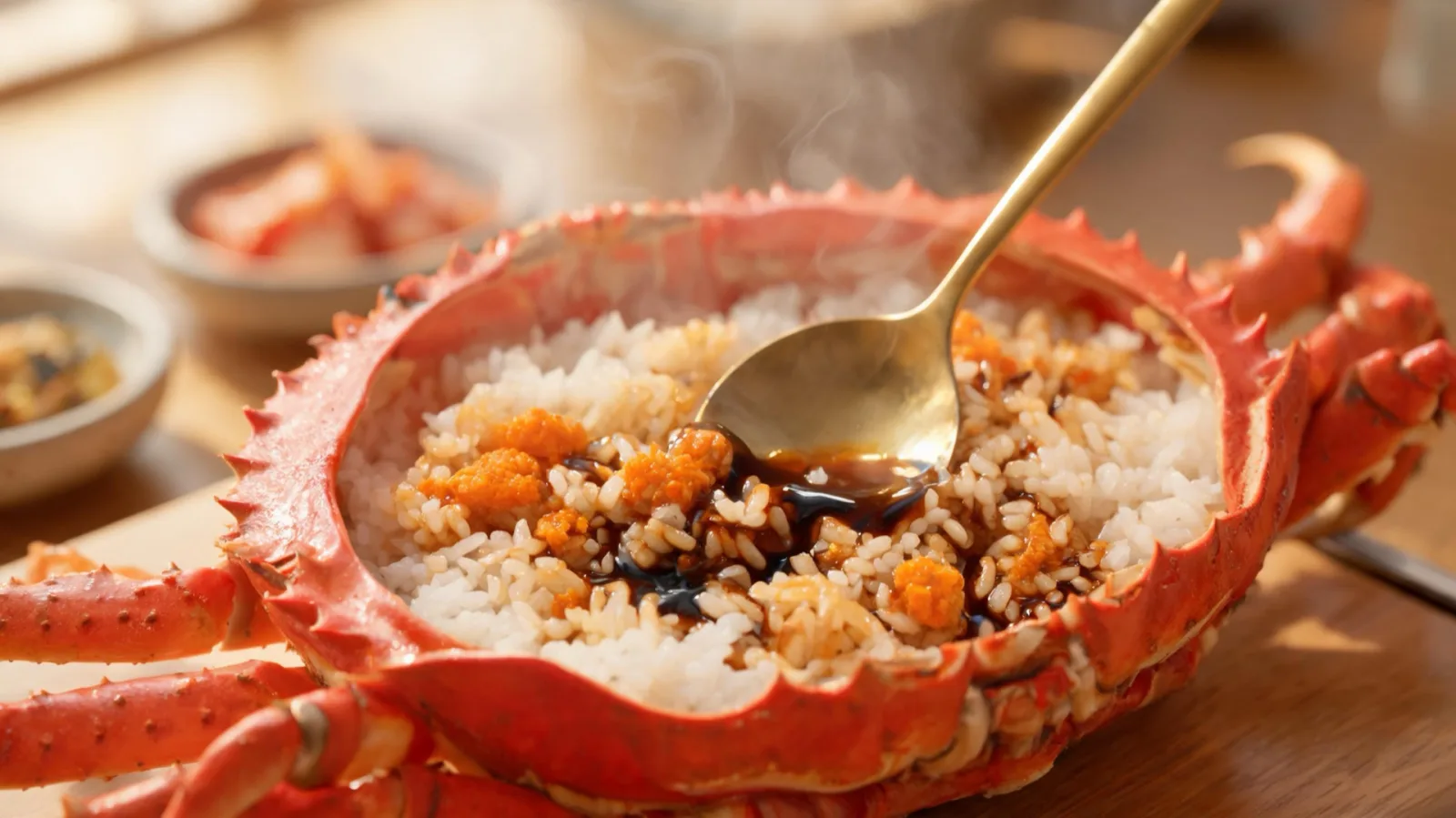
Order for eating soy-marinated crab — ① Remove the legs and the top shell. ② Scoop out the crab meat and put it over rice. ③ Put soy sauce into the innards (the “heo”) to make bibimbap. ④ Top the bibimbap with crab roe.
Crab-shell bibimbap (bolmel) — To finish, there’s a culture of mixing warm rice, crab meat, and soy sauce into the remaining crab shell. In some regions, eating rice mixed in a crab shell is said to be called “bolmel.”
Good dishes to pair — Restaurant regulars like crab stew (kkotge tang); at home you can expand to steamed crab, butter-grilled crab, or crab ramen.
A Day-Trip Gejang Tour from Seoul (+ Tips for International Visitors)
- Sinsa-dong Gejang Alley: Within walking distance of Express Bus Terminal Station. Waits of 30–60 minutes outside of lunch hours are common, so a reservation or waiting strategy is needed.
- Ganghwa Island: 1.5–2 hours by car from Seoul, doable as a day trip. There are also buses to Ganghwa from Sinchon and Hapjeong. Combining it with the Ganghwa pilgrimage route, Manisan, and Geogeun Island completes a full-day course.
Tips for traveling with international visitors — First explain that gejang is a Korean pickling and fermentation food culture in which raw crab is marinated in soy sauce. The first bite brings a salty sweetness and savory ocean umami. The trick of telling male and female crabs apart by their belly flap becomes fun interactive content at the market. Anyone with a shellfish allergy must avoid it.
The hardest version of this is taking a foreign guest to a gejang table and explaining raw marinated crab before they taste it, and for that you can book an English-guided K-Food private and custom tour for 90,000 KRW, where the course is explicitly rearranged around the guest’s preferences and allergies. MyRealTrip lists no gejang-specific experience in Korea, so a customisable food day with a licensed English-speaking guide is the closest honest match. The standard course is seolleongtang, the Kimchi Museum, traditional tea and a Korean set dinner, so gejang is not included by default and has to be requested when booking, and meal costs of roughly 57,000 KRW per person are excluded from the tour price. There are only four reviews so far, shellfish allergies rule this out entirely, and the booking page is in Korean.
Tips & Cautions
- Choose an establishment with good hygiene management. Since soy-marinated crab is an uncooked crab dish, it’s safer to use a systematic establishment that ages fresh crab.
- Prices differ by the time. Gejang ranges widely, from 20,000 to over 70,000 won per person depending on the grade and set-meal composition.
- The soy sauce calls for rice. You may end up mixing more rice into the gejang soy sauce than expected, so come hungry.
- Watch for allergies. If someone in your party has a shellfish allergy, recommend other dishes.
- Photo etiquette, not churros. Photo policies differ by store, so checking before you shoot is good manners.
Frequently Asked Questions (FAQ)
Q. When is flower crab in season? Autumn September–November is the meaty male crab, and spring April–June is the roe-filled female crab. From November both males and females put on meat, making them highly worthwhile.
Q. What’s the difference between soy-marinated and spicy gejang? Soy-marinated gejang is the original, aged in soy sauce, while spicy gejang is a modern style seasoned spicy with gochugaru and the like. Both are made from uncooked crab.
Q. Where are the best soy-marinated crab restaurants in Seoul? Sinsa-dong Gejang Alley (Pro Ganjang Gejang and Jinmi Sikdang) and Bukchon’s Keun Giwajip are representative. The range is wide, from budget set meals per person to a premium course with 2 crabs at around 90,000 won.
Q. How do I get to Ganghwa Island for gejang? It’s 1.5–2 hours by car from Seoul, so a day trip is possible. For public transport, take the bus to Ganghwa from Sinchon or Hapjeong. For famous restaurants like Ilosam Ganjang Gejang, we recommend confirming they’re open before visiting.
Q. How do you eat crab-shell bibimbap? Put warm rice, crab meat, and soy sauce into the remaining crab shell and mix it all together. In some regions such as Jeju, this is said to be called “bolmel.”
Final Checklist
- Checked the flower crab season (autumn male crab, spring female crab)
- Decided on your preference for soy-marinated vs. spicy gejang
- Decided on a destination among Sinsa-dong, Ganghwa Island, and Bukchon
- Checked the per-person price range (20,000–70,000 won) and the latest prices
- Checked whether anyone in the party has allergies
Sources & verification
A source-based guide. Check the linked operator information again before you travel.
- Ganghwa County Culture & Tourism — official portalSources checked:
- Ganghwa County Tourism — Places to VisitSources checked:
- National Institute of Fisheries Science (NIFS) — fisheries resource informationSources checked:
Images are illustrative examples to aid understanding, not photographs of the actual facilities.
Continue planning
Chuseok Day Trips with Kids in the Seoul Capital Area: Picking Less Crowded Options
Which Seoul capital area places open over the Chuseok holiday, how crowds usually run by place type, and the transit axis and booking order that hold a kids' day trip together.
An Autumn Trip Near Seoul You Can Reach by Subway: A Complete Guide to the Bukhansan Dulle-gil — Recommended Sections, Difficulty, and Foliage Season
A subway-reachable autumn walk on the Bukhansan Dulle-gil: distance, difficulty and timing for sections 9, 10, 11 and the beginner fortress route.
Choosing an autumn foliage mountain: Namsan Sky Forest Trail vs. a Seoraksan day trip from Seoul
Namsan Sky Forest Trail or a Seoraksan day trip from Seoul: the choice splits by half a day versus the whole day, with hours, access, physical demand and foliage timing compared.
Help us keep this note useful
A quick response helps us decide what to clarify or recheck. No account or email is needed.