“I’d like to see the autumn leaves, but not a hard hike… is there somewhere pretty and easy?” A great many people look for exactly this when planning an autumn trip near Seoul. One answer is Gwanggyosan and Gwanggyo Lake Park in Suwon. It’s 30–35 minutes from Gangnam on the Sinbundang Line, and you can take care of the lakeside Metasequoia Lane, the autumn walking paths, and a high-rise view café all in one go. If you have a car, you can even add a foliage drive that runs alongside the lake. Here’s a half-day to full-day itinerary where hiking is optional and a lakeside walk is essential.
Gwanggyo Autumn Highlights — Why Gwanggyo
- 30–35 minutes from Gangnam with no transfers: Gwanggyo Station on the Sinbundang Line is right at the center of the tourist street. It’s top-tier accessibility among autumn trips near Seoul.
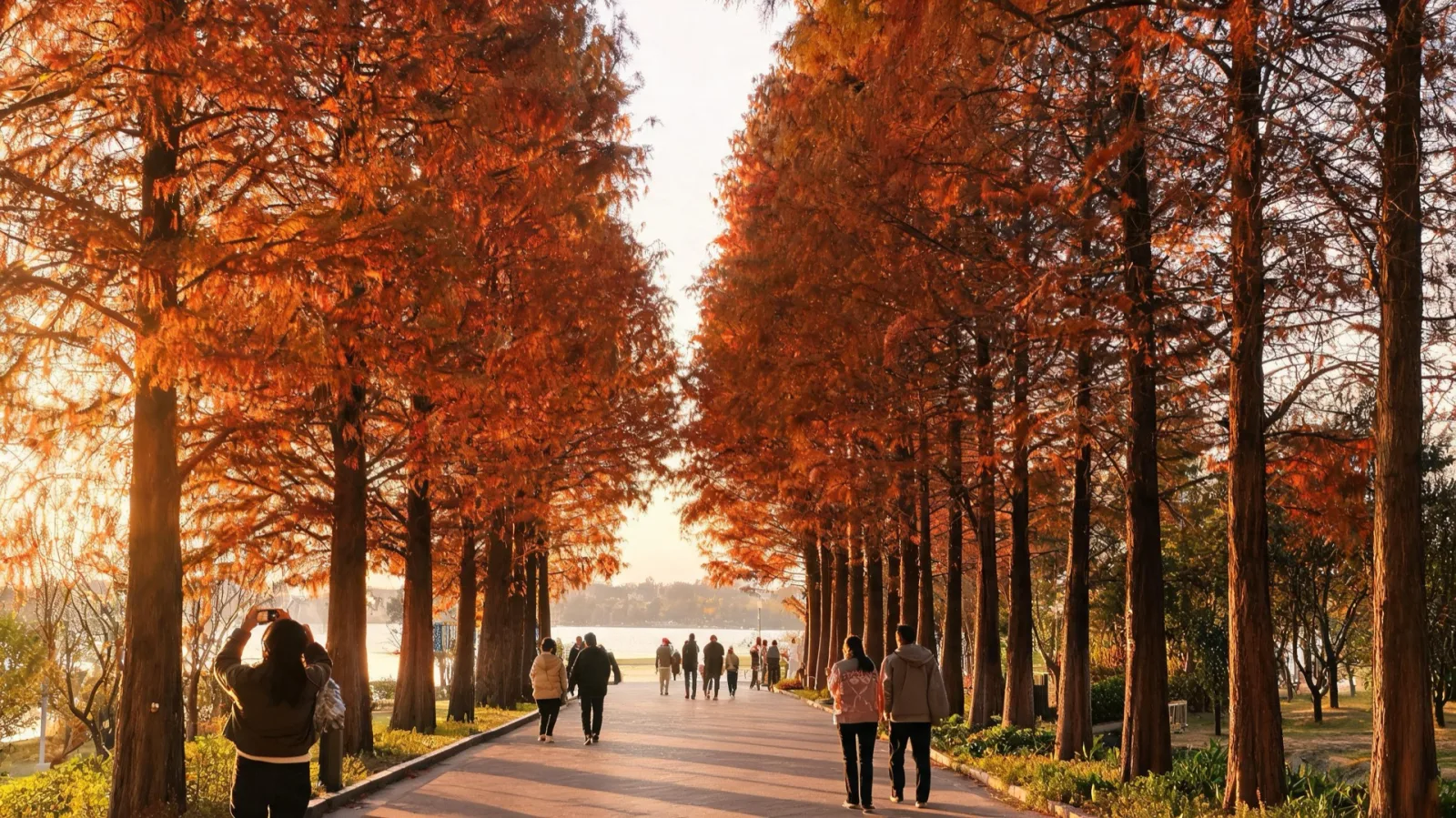
- Metasequoia Lane: A signature autumn photo spot in Suwon, spread out near the shops on the Woncheon Lake side. Metasequoia tends to turn red until mid-November, so there’s still something to see even at the tail end of foliage season.
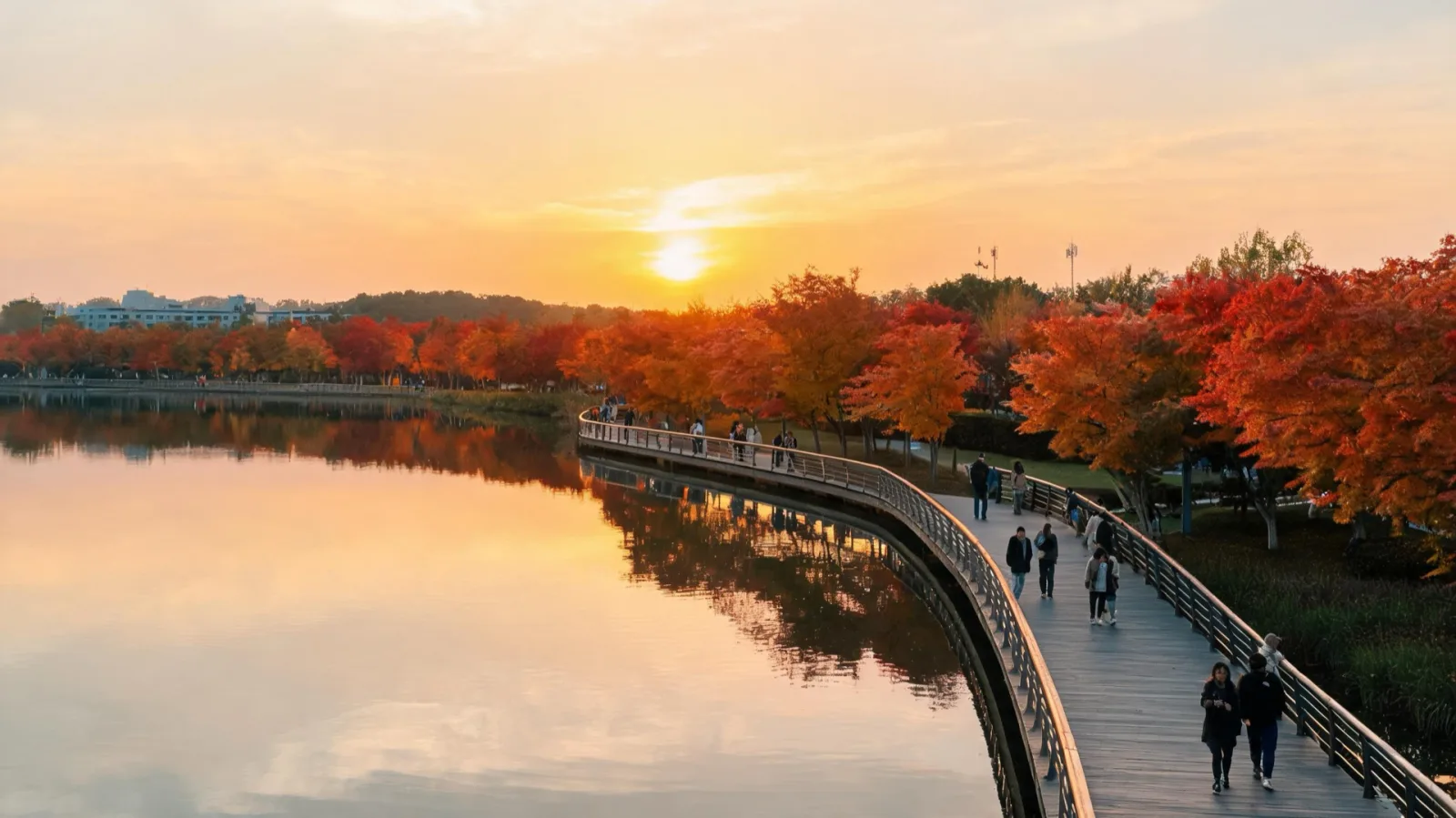
- Sunset over the lake: According to local media, the foliage peak is late October to early November, and at this time the scene of red leaves blending with the sunset over the lake is Gwanggyo’s signature.
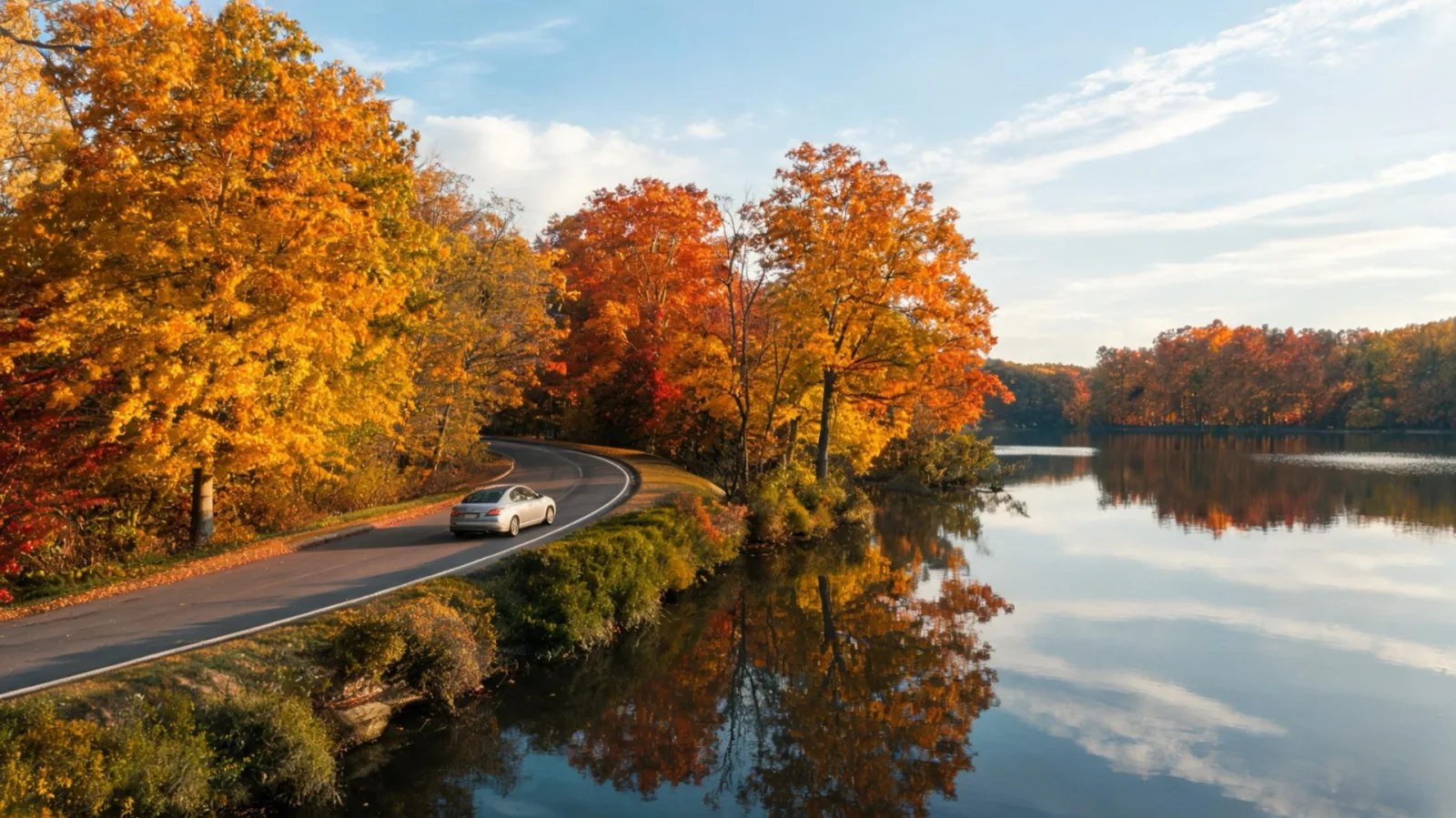
- Foliage + lakeside drive: You can connect all the way to a driving course running from the embankment road to Gwanggyo Jungang-ga and on toward Suwon’s Hwaseong Haenggung.
Essential Information at a Glance
| Item | Details |
|---|---|
| Gwanggyo Lake Park | Free admission, open 24 hours year-round (a municipal park) |
| Parking | Paid park parking (Parking Lot No. 2, etc.; details of rates to be confirmed) |
| Suwon Gwanggyo Museum | 09:00–18:00 (last entry 17:00) |
| Museum closing day | Every Monday (if a public holiday, the following day; per Suwon City official rules) |
| Museum admission | Adults 2,000 won / youth and military 1,000 won / children and seniors free |
| Reservations | No advance reservation needed for either the park or the museum |
Fees and hours may change, so check the latest information on the official websites (Suwon Gwanggyo Museum, Suwon City) before your visit.
Recommended Courses — From Half a Day to a Full Day
Half-Day Course: A Lakeside Foliage Walk (2–3 hours)
Gwanggyo Lake Park is a waterfront park of about 2 million ㎡, where two lakes—Sindae Lake and Woncheon Lake—are joined in a rounded loop. The recommended route is the autumn course (3.6 km) introduced by the local government—a path from Gwanggyo Park through Gwanggyo Maru-gil and on to the Gwanggyo waterfront walkway. It’s a representative short course blending plane trees, Rhus chinensis, oaks, and Chinese maple, letting you complete a rewarding autumn trip near Seoul without any mountain. After taking plenty of photos at the Metasequoia Lane, you can finish at night with a walk under the Loop Land lights around the lake.
Full-Day Course: Add a Gwanggyosan Trek
- Hyeongjebong course (beginner–intermediate): An urban-style mountain with well-maintained stairs, accessible from Gwanggyo Station on the Sinbundang Line.
- Full course (intermediate): Gwanggyo Station–Hyeongjebong–Birobong–Sirubong–Beomnyunsa, a roughly 9–10 km day hike with an elevation of 400–680 m.
- Beginner course: There are also short routes such as the Firefly Restroom → Gwanggyo Shelter 2.0 km.
- The Gwanggyosan–Cheonggyesan traverse (24–26 km, 7–9 hours) is for advanced hikers, so treat it as reference only.
Drive Course: Following the Foliage and the Lake
If you have a car, enjoy the foliage along the Gwanggyo Lake Park embankment road, then continue past Gwanggyo Jungang-ga toward Suwon’s Hwaseong Haenggung and Janganmun. On foliage-season weekends parking around Gwanggyo Jungang-ga is congested, so an evening drive on a weekday is recommended.
If the drive carries on to the fortress as described above, you can book the Suwon Hwaseong and Hwaseong Haenggung docent tour for 35,000 KRW, a guided walk of exactly that pair built around King Jeongjo’s story, with wireless receivers included. It turns the vaguest line of this itinerary, “then drive on to the fortress”, into something you can actually put in the calendar. Haenggung admission, 1,500 KRW for adults, is not included and is paid separately, and you need to bring your own 3.5mm wired earphones or borrow a shared pair. There are only two reviews so far, and both the guiding and the product page are in Korean.
Restaurants and Cafés — A Lakeside View Café Street
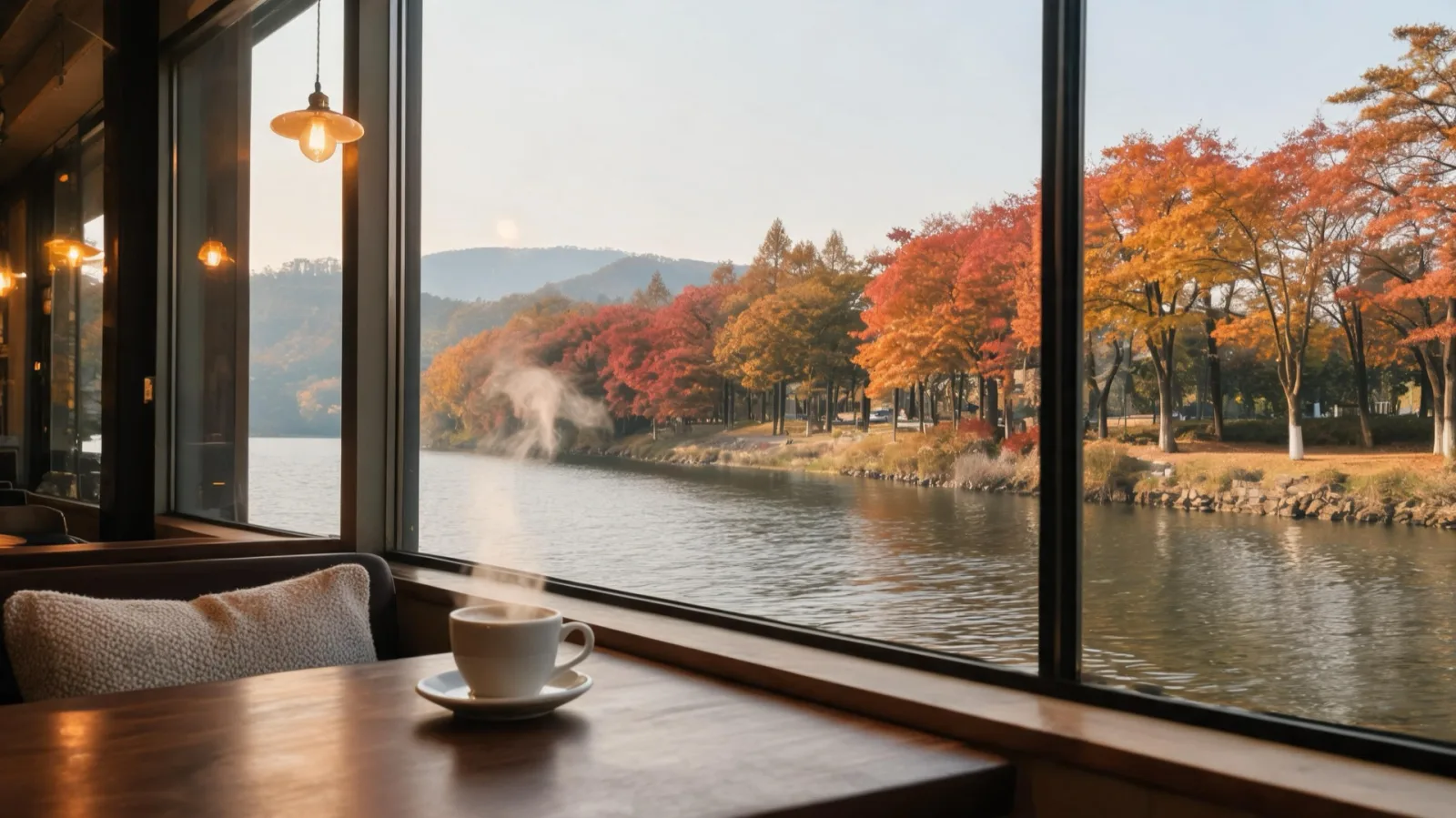
On the east side of Woncheon Lake is Gwanggyo Café Street, densely packed with large view cafés.
- Kebwiwa: Lake views from the Naruteo boat dock, open year-round 09:00–18:00.
- Tel on: High-floor views from the 37th floor of SK View Lake Tower, with 3 hours of parking provided.
- Café Narang: Madeleines and bakery; 2 hours of free parking with orders of 10,000 won or more.
- For meals, choose the brunch and pasta shops around the café street or the set-meal and Korean restaurants at Gwanggyo Jungang-ga. For specific businesses it’s best to check based on reviews at the time of your visit.
Getting There — Including Tips for International Travelers
Public Transport
- Gwanggyo Station, Sinbundang Line: About 30–35 minutes from Gangnam (Sinsa) with no transfers. The lake park and café street are within walking distance.
- Jangja Lake Park Station, Line 8: About a 5-minute walk to the north side of the park (Jangja Lake Park) — suitable for routes starting from the northern part of the lake park.
- By car: From central Seoul via the Gyeongbu and Yongin–Seoul expressways toward Gwanggyo IC and Sanghyeon IC, about 40–60 minutes.
Tips for International Travelers
- The Sinbundang Line is operated by a separate company, but you can use your T-money transit card as usual.
- “Gwanggyo” Station and “Gwanggyo Jungang” Station are different stations. The station closest to the park is Gwanggyo Station.
- Most cafés on the café street have English menus available.
- The park has lighting, so night walks are relatively safe.
- The Gwanggyo Museum is closed on Mondays, so either exclude it from your itinerary or adjust the day.
From Gangnam, within 1 hour + a 2–3 hour lakeside walk makes a half-day itinerary, and adding Gwanggyosan completes a rewarding full-day itinerary.
Tips and Precautions
- Don’t state the foliage timing as certain: The peak is, in an average year, late October to early November. The Korea Forest Service’s 2026 forecast has not been announced, so check the “Forest Foliage Forecast Map” before setting out.
- Metasequoia turns late: Even in mid-November, when the maples have mostly faded, Metasequoia Lane is still worth seeing. If you’re visiting at the tail end of the season, this is the safe card.
- Watch out for Mondays: That’s the Gwanggyo Museum’s closing day. If you plan to include the museum, adjust the day of the week.
- Weekend parking congestion: On foliage-season weekends, Gwanggyo Jungang-ga and the park parking lots frequently fill up. Using the Sinbundang Line or visiting on a weekday is easier.
- Observe the separation of bicycle and pedestrian paths along the lake, and check the relevant regulations in advance before flying a drone.
Frequently Asked Questions (FAQ)
Q1. When is the foliage peak at Gwanggyo Lake Park? In an average year, late October to early November. The Korea Forest Service’s 2026 forecast has not yet been announced, so checking the Korea Forest Service foliage forecast map before setting out is the surest approach.
Q2. Can I see the autumn leaves without hiking? Yes. The lake park’s autumn course (3.6 km) and Metasequoia Lane are flat walking paths. The Gwanggyosan trek is optional, and the Hyeongjebong course is beginner–intermediate, so it’s not too demanding.
Q3. How do I get there by subway from Seoul? Take the Sinbundang Line from Gangnam and you’ll arrive at Gwanggyo Station in about 30–35 minutes with no transfers. The lake park and café street are within walking distance of the station; for the northern entrance, use Jangja Lake Park Station on Line 8 (about a 5-minute walk).
Q4. What are the Gwanggyo Museum’s admission and closing days? Adults 2,000 won, youth and military 1,000 won, children and seniors free, and it’s closed every Monday (if a public holiday, the following day). Hours are 09:00–18:00 (last entry 17:00), but check the official website for the latest information before your visit.
Q5. Is the foliage drive okay on weekends? The course itself is good, but on foliage-season weekends parking at Gwanggyo Jungang-ga is very congested. We recommend a weekday evening drive; if you go on a weekend, it’s safer to arrive early and sort out parking first.
Final Checklist
- Check the timing on the Korea Forest Service foliage forecast map (average year: late October–early November)
- Save your route, distinguishing Gwanggyo Station vs. Gwanggyo Jungang Station on the Sinbundang Line
- Confirm the location of Metasequoia Lane (on the Woncheon Lake side)
- If visiting on a Monday, exclude the museum from your itinerary
- If driving on a weekend, plan to arrive in the morning
- Have one backup view café on your list
Thirty minutes from Gangnam. Gwanggyo offers an autumn trip near Seoul that’s beautiful enough even without hiking. Wrap up this autumn with a half-day course that runs from the lake and Metasequoia to a café.
Sources & verification
A source-based guide. Check the linked operator information again before you travel.
- Suwon City Tourism — Gwanggyo Lake ParkSources checked:
- Suwon Gwanggyo Museum (official site)Sources checked:
- Visit Suwon — official city tourism portalSources checked:
Images are illustrative examples to aid understanding, not photographs of the actual facilities.
Continue planning
Suwon Hwaseong in One Day: A Car-Free Route and Lunch
One car-free day at Suwon Hwaseong: the bus from Suwon Station, Hwaseong Haenggung and the martial arts demo, archery, and a walk along the fortress wall.
An Autumn Trip Near Seoul You Can Reach by Subway: A Complete Guide to the Bukhansan Dulle-gil — Recommended Sections, Difficulty, and Foliage Season
A subway-reachable autumn walk on the Bukhansan Dulle-gil: distance, difficulty and timing for sections 9, 10, 11 and the beginner fortress route.
The Top Autumn-Foliage Spot Near Seoul: A Complete Guide to Walking the Namhansanseong Fortress Walls — Season, Getting There, and Recommended Routes
When Namhansanseong's foliage peaks, which fortress-wall routes to walk, the right bus from Sanseong Station, palace fees and the free weekend shuttle.
Help us keep this note useful
A quick response helps us decide what to clarify or recheck. No account or email is needed.