At a glance
“Should I use an eSIM for internet in Japan, or rent a pocket WiFi?” Both have clear pros and cons, so the right answer splits depending on your group size and travel style. This article compares “best Japan eSIM” and “best Japan pocket WiFi” side by side, and uses group size as a first screen while also checking data needs, device support, battery and return rules.
The Key Criteria — What to Compare First
Start with the number of connected devices and how much data they need. An eSIM is one line per person, so you buy as many as there are people, whereas one pocket WiFi unit can be shared by up to 5–10 devices. Second is battery. An eSIM has no separate device and uses only your phone’s battery, whereas a pocket WiFi device lasts only about 8–12 hours, making a power bank essential. Third is whether you have to return it. An eSIM needs no return, but pocket WiFi carries liability for compensation if it’s lost.
Price and Essential Information Tables
Table 1. eSIM vs. Pocket WiFi — Key Comparison
| Criteria | eSIM | Pocket WiFi |
|---|---|---|
| Cost for 1 person (example) | $3.49~/1GB, unlimited $2.5–3.4/day | ¥390–680/day (about 2,900–4,900 KRW/day) |
| Cost for 2–3 people | Buy per person (×people) | One unit shared (single total) |
| Max connections | 1 | 5–10 |
| Battery | Depends on phone (drains faster when hotspotting) | Dedicated device 8–12 hours |
| Return | Not needed | Required (compensation if lost) |
| Carrier | KDDI, SoftBank, Docomo | Same |
Table 2. Provider Types
| Type | Examples | Features |
|---|---|---|
| Global eSIM resellers | Airalo, Holafly, Nomad, Saily | App-based, unlimited/data-capped |
| Carrier-affiliated eSIM | Ubigi (KDDI + Docomo) | Strong regional coverage |
| Japan-based WiFi | Japan Wireless, Ninja, Sakura Mobile | Multi-device, unlimited |
| Korean distributors | WiFi Dosirak, KT Roaming | Airport pickup, KRW payment |
Prices fluctuate a lot with promotions. Look at “list price vs. discounted price” separately.
Recommendations by Situation
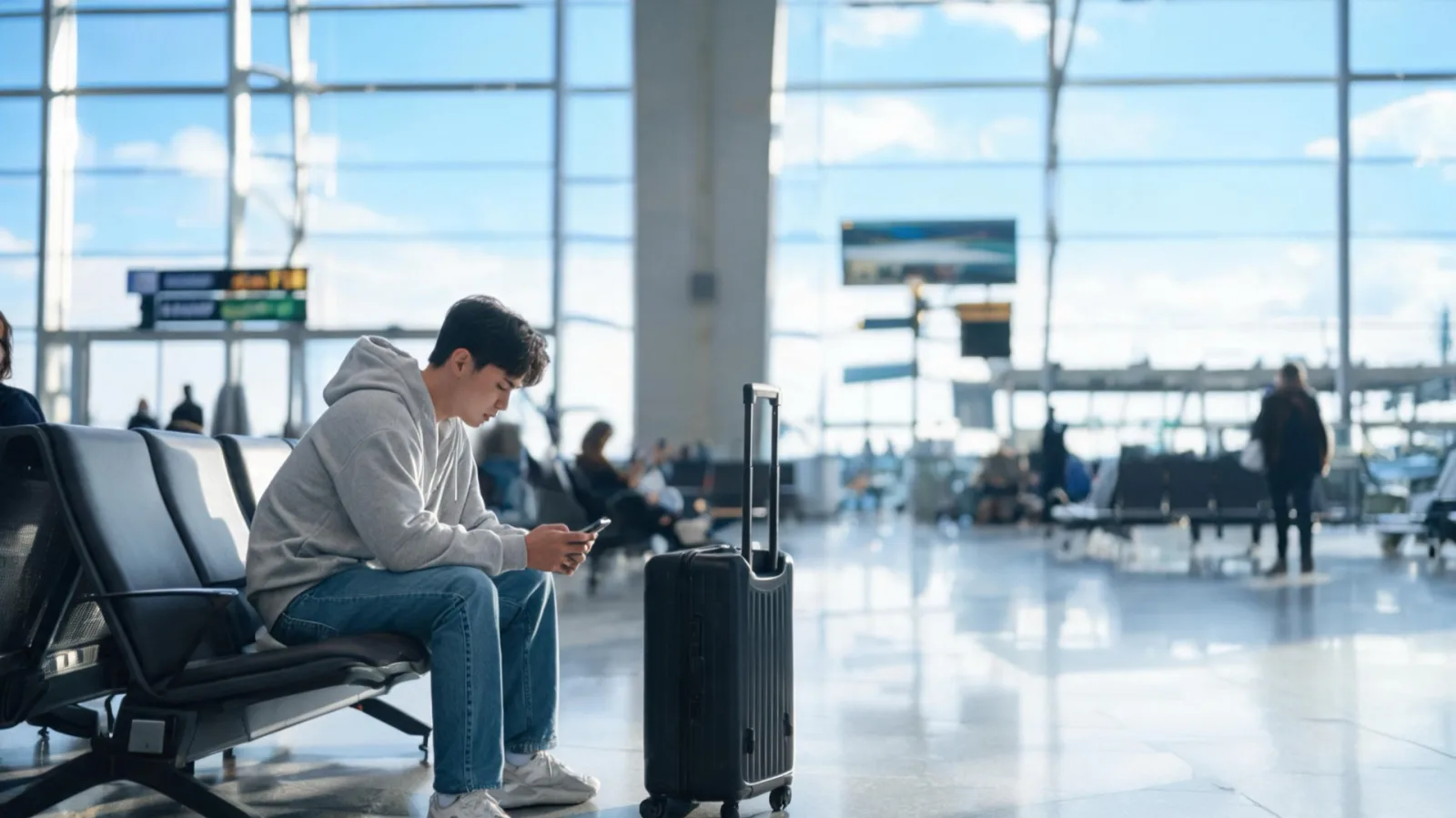
- Solo, short trip (3–5 days): An eSIM is often convenient, if the phone is unlocked and eSIM-compatible.
- Two or more people, family: One pocket WiFi can lower the per-person cost, but compare the total data, battery and return burden.
- Long trip (2 weeks–1 month): Consider a data-capped eSIM or a long-term unlimited plan.
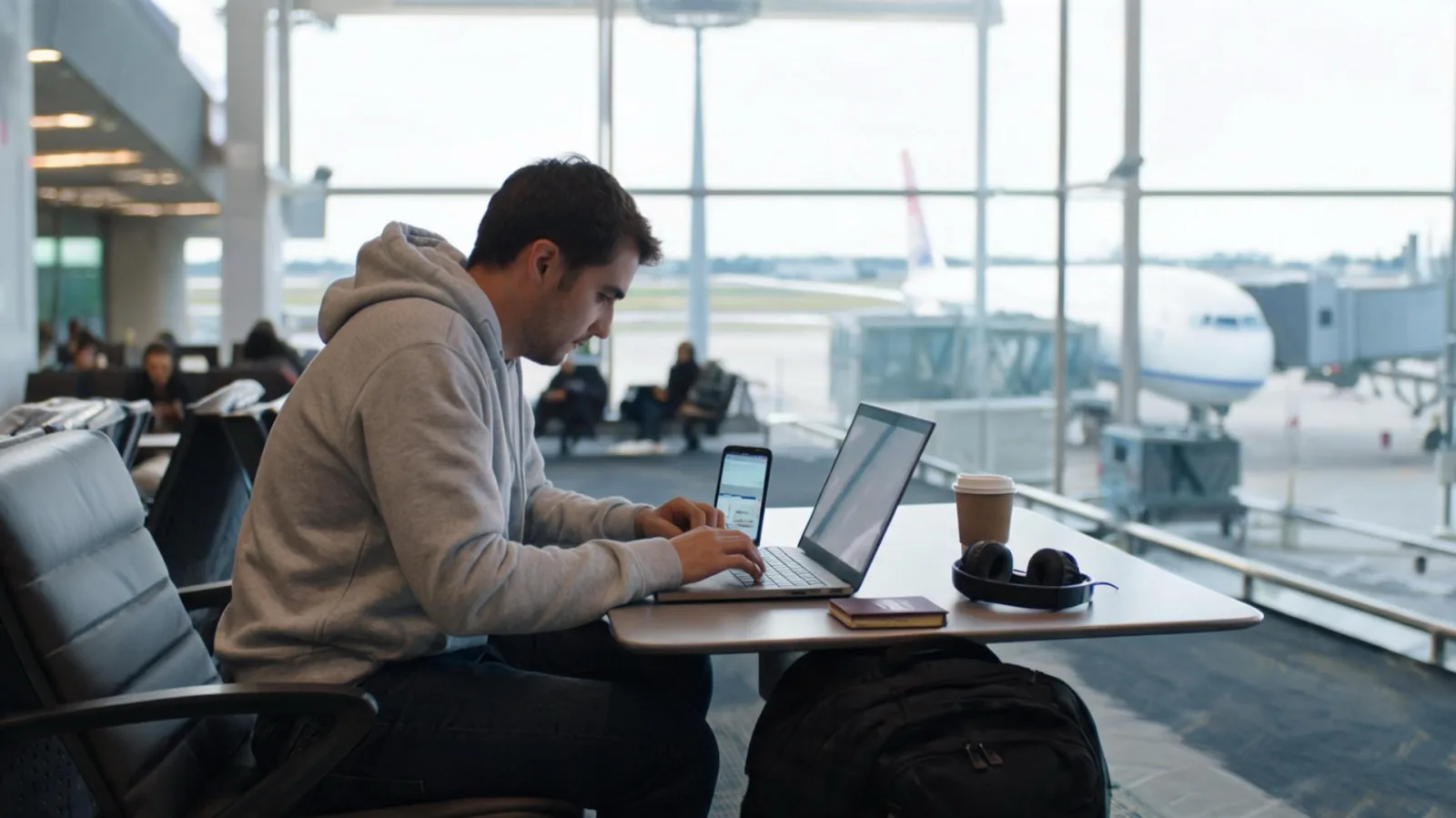
- Work, heavy data, multiple devices: Pocket WiFi or a high-capacity eSIM is more stable.
- Phone doesn’t support eSIM: Compare a physical SIM, roaming or pocket WiFi instead.
How to Reserve and Buy
An eSIM is added by scanning a QR code in the app. Install it in advance on your home WiFi before departure and you’ll be connected the moment you reach the airport. On iPhone: “Settings → Cellular → Add eSIM”; on Android: “Connections → SIM manager → Add eSIM”. After installing, turn that line on for data, and since many plans require you to leave data roaming ON per the instructions, just follow the steps in order.
For pocket WiFi, either pick it up at the airport or have it delivered to your accommodation, then enter the SSID and password. Because a return is required, check the airport counter location and closing time for your departure day in advance. Readers in Taiwan and Hong Kong often find promotions via KKday or Klook, which makes paying in local currency convenient. Note also that physical local SIMs are activated at the airport counter, so you’ll need some time right after arrival.
Tips and Cautions Worth Knowing
- Check the conditions of “unlimited.” For example, some plans slow down after 2GB per day is used. The daily cap and throttling policy determine how it actually feels in use.
- First check whether your device supports eSIM and whether the SIM is unlocked. Some handsets sold in Korea may have eSIM restricted (subject to confirmation).
- Overseas Android models lack a FeliCa chip, so they cannot use Mobile Suica. Even if you solve internet with an eSIM, you must prepare a physical IC card for transit.
- For a group sharing one connection, pocket WiFi may be practical — but read the loss and damage compensation clauses.
- Compared with carrier roaming, compare the selected plan’s total price and conditions rather than relying on a universal daily benchmark.
- For groups using many devices, buy eSIMs for each person and label the lines separately to make management easy. Conversely, if the goal is sharing one unit, choose pocket WiFi.
- Judge by the carrier (SIM). More than the reseller brand, which network (KDDI, SoftBank, Docomo) it uses determines coverage and speed.
Frequently Asked Questions (FAQ)
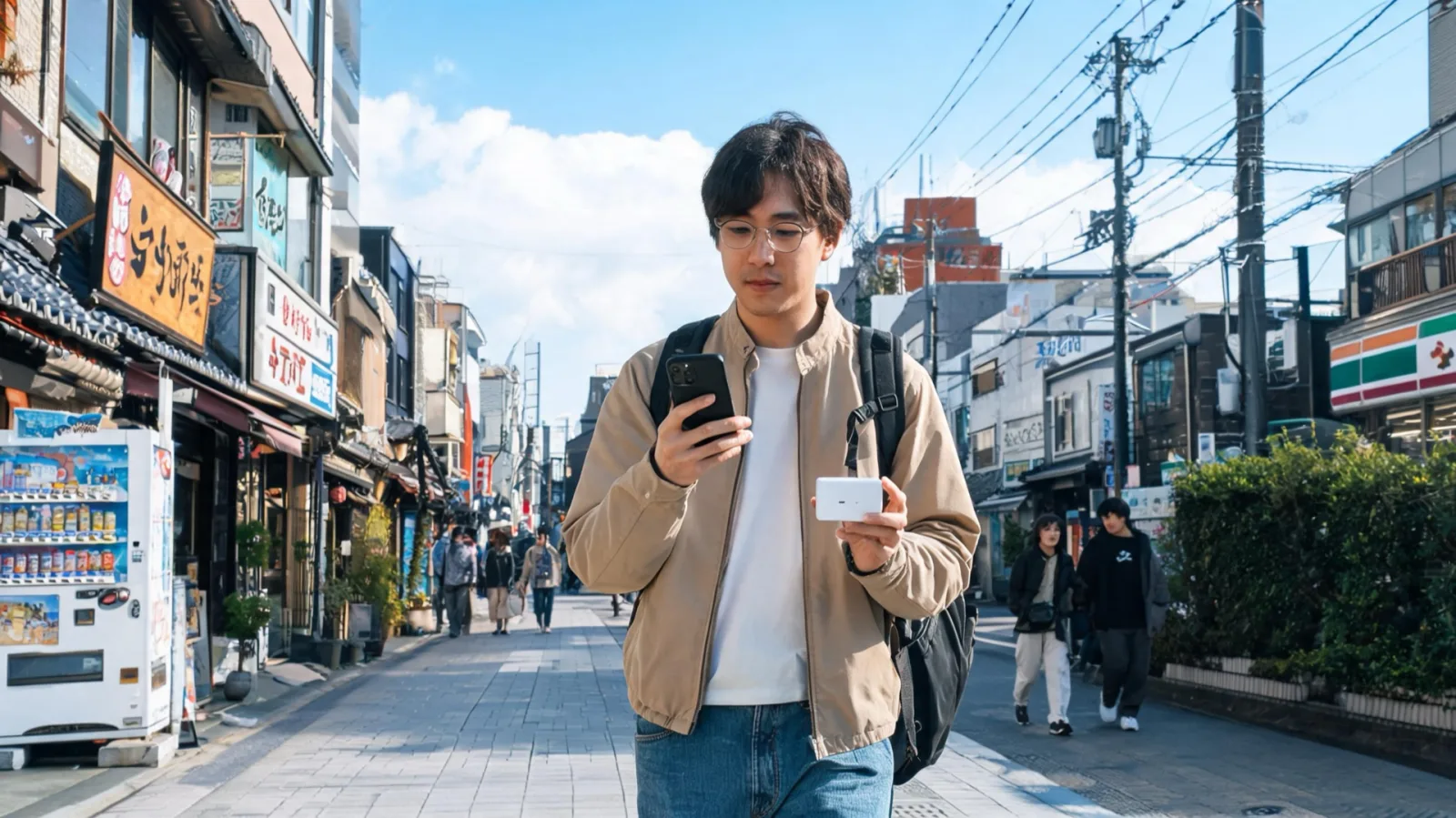
Q. Should I choose an eSIM or pocket WiFi? A. For one person, an eSIM is often the simplest. For a group, compare a shared pocket WiFi with separate eSIMs using the actual data and device needs.
Q. What’s the speed of a Japan eSIM like? (eSIM vs pocket wifi Japan) A. In city centers there’s no big difference by carrier (KDDI, SoftBank, Docomo). Coverage depends on the network named in the selected plan and the place you visit; do not infer it from the reseller brand alone.
Q. Is an “unlimited” eSIM really unlimited? A. There’s usually throttling after a daily cap. Check the plan conditions.
Q. How do I know if my phone supports eSIM? A. Check whether your settings have an “Add eSIM” menu. If not, use pocket WiFi.
Q. Can I make calls too? A. Most are data-only. If you need calls, choose a voice-enabled plan.
Final Checklist
- Confirm the number of people (1 person eSIM / 2+ pocket WiFi)
- Check device eSIM support and SIM lock
- Check the daily cap and throttling conditions of “unlimited” plans
- If using pocket WiFi, prepare a power bank
- Prepare a separate physical IC card for transit (Android)
Image note
The images are illustrative visual aids for route planning, not claims of a personal visit or on-location photography.
Sources & verification
A source-based guide. Check the linked operator information again before you travel.
- Mobal: eSIM versus pocket WiFi for JapanSources checked:
- Ninja WiFi: choosing eSIM or pocket WiFiSources checked:
- Japan WirelessSources checked:
- Apple: eSIM on iPhoneSources checked:
Images are illustrative examples to aid understanding, not photographs of the actual facilities.
Continue planning
Japan JR Pass 2026: Price and break-even guide
Compare 2026 nationwide JR Pass channel prices, Nozomi rules and a practical break-even check.
Japan Transit Cards 2026: Suica, PASMO and ICOCA
A current guide to physical and mobile Suica, PASMO and ICOCA, including visitor cards and Shinkansen limits.
Japan Trip Budget 2026: 4-day and 6-day examples
Build a Japan trip budget from flight, lodging, food and transport ranges without treating volatile prices as quotes.
Help us keep this note useful
A quick response helps us decide what to clarify or recheck. No account or email is needed.