
The short answer
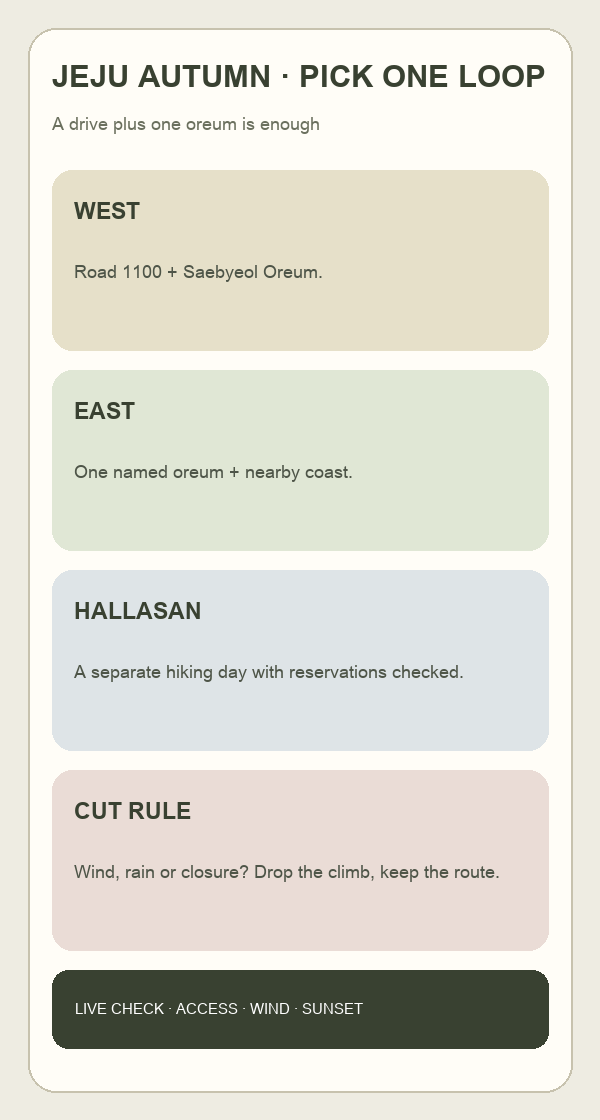
An autumn Jeju day needs one driving corridor and one oreum, not a cross-island collection. For the west, pair Road 1100 with Saebyeol Oreum. For the east, choose one named oreum whose current access you can confirm and keep the coast nearby. A Hallasan summit route is a separate hiking day with its own reservation, entry-time and weather checks.
Choose the loop before chasing foliage
| Plan | Core | What must be checked | Cut rule |
|---|---|---|---|
| West | Road 1100 + Saebyeol Oreum | Road and oreum access, wind, sunset | Drop the climb if conditions turn |
| East | One currently open oreum + nearby coast | Exact entrance, parking or bus, private-land restrictions | Do not add a second distant oreum |
| Hallasan | One official trail | Reservation, entry time, control and weather | Treat it as the whole day |
Jeju’s middle mountain is not a scenic shortcut between every coast. Road conditions, wind and the location of the next legal stop should shape the day.
West loop: Road 1100 and Saebyeol Oreum
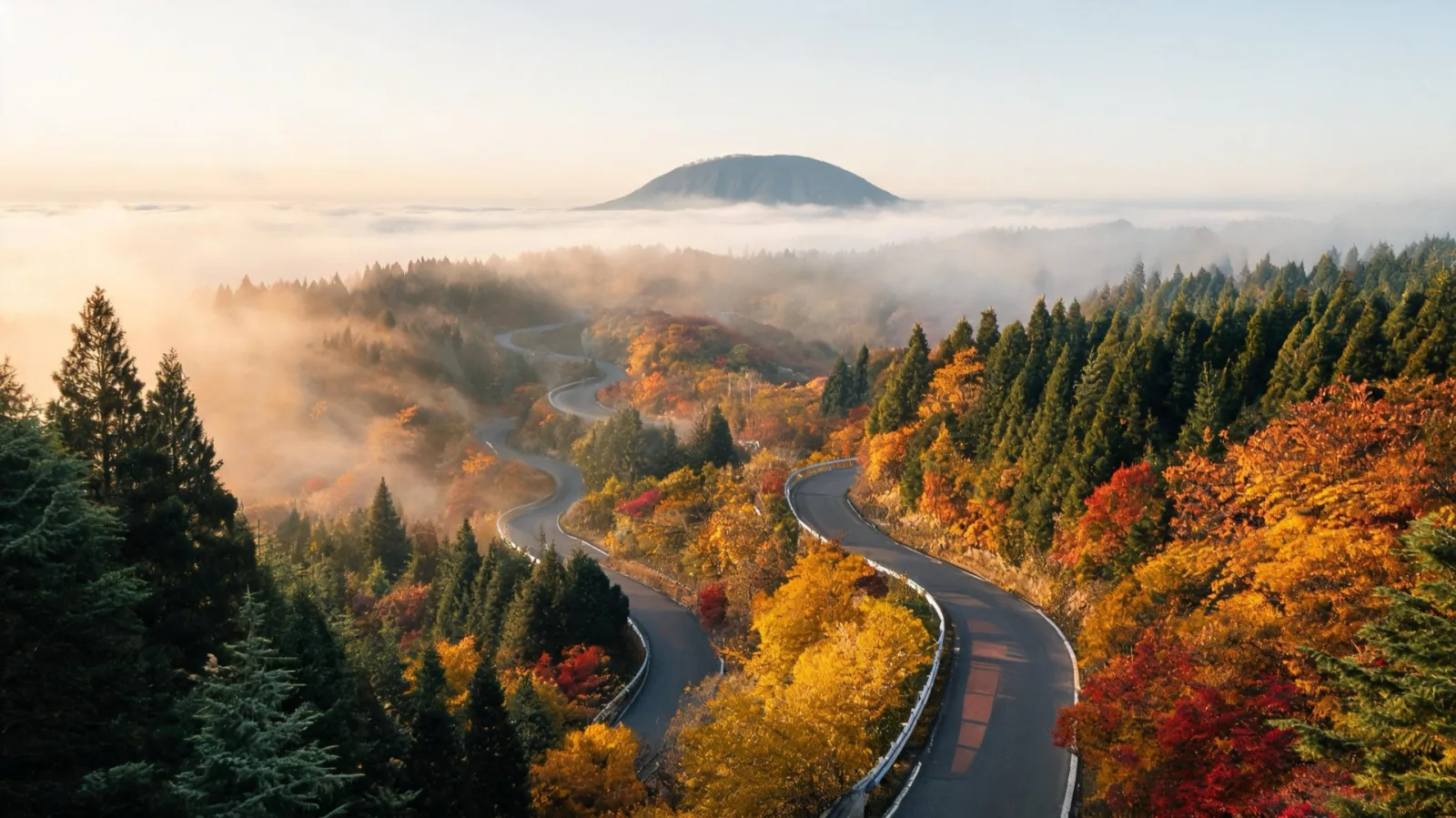
Visit Jeju describes Road 1100 as a 36.6 km high-altitude road linking Jeju City and the Jungmun side, with Hallasan and island views. That supports using it as a corridor, not promising a continuous foliage tunnel. Stop only where parking is legal and the facility is open; mountain weather can differ from the coast.
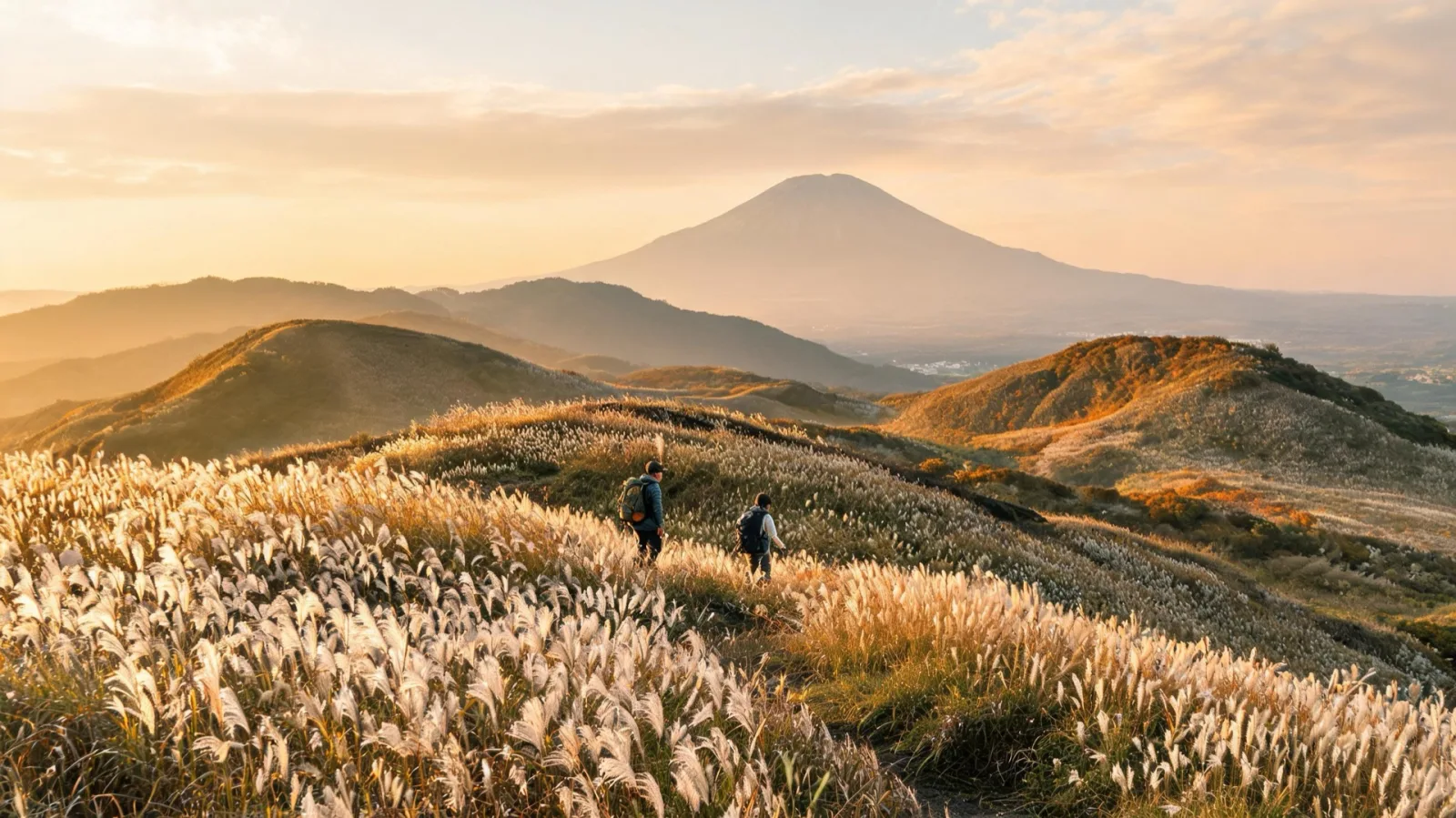
Saebyeol Oreum fits the western loop. Visit Jeju’s autumn guide says silver grass covers the slope in fall and warns that the ascent, although not long, is steep enough to be difficult for some walkers. Sunset is a visual reason to visit, but it also creates a daylight decision: start only if you can descend before dark and the wind and surface feel safe.
East loop: verify the exact oreum
Do not navigate to a generic “oreum” pin. Visit Jeju’s current Yongnuni page says many volcanic cones have imprecise mountain addresses, no dedicated parking, or private-land restrictions and tells visitors to confirm current information with the Jeju Tourism Information Center. The same principle applies even when an old post says access is easy.
Yongnuni is one option only after that check. Its official destination page describes a gentle ridgeline and roughly hour-long walk, while Jeoji Oreum’s official page identifies a forest path and observatory views toward Hallasan and Biyangdo. Choose one that fits the day’s confirmed access and then keep the next stop in the same side of the island.
Cheona Valley and Hallasan are separate commitments
Visit Jeju’s Cheona Valley autumn guide identifies the forest path as a mid-mountain foliage choice and recommends the Road 1100 bus because driving can be slow in heavy traffic. Reopen the route and transport details before travel; seasonal access and finish logistics matter more than an old “best week.”
For a Hallasan summit day, use the national park’s own reservation and notice system. Do not transfer a distance, entry cutoff or reservation rule from one trail to another. Check the chosen trail, weather warning and current control on the travel date, and carry layers suitable for a colder, windier mountain than the coast.
What completed trips add
- u/Ok-Selection-3540 completed an eight-day solo Jeju trip in late November 2023 and drove back to Saebyeol Oreum after another stop. The narrow lesson is that a car allows reprioritizing the western day; it does not prove a fixed drive time or current access.
- u/jinngeechia reported a completed nine-day Jeju trip in a post published in June 2025, with several oreum viewpoints and deliberately slow pacing. That supports selecting fewer stops rather than treating every cone as interchangeable.
- u/glenos_AU reported a completed May Korea and Jeju road trip in May 2026 that included the west coast and Abu Oreum. The account supports grouping driving by side of the island; May conditions do not establish autumn foliage, wind or opening status.
These accounts are route-design evidence. The current official page remains the source for access and operating decisions.
A weather-safe order
- Check the named oreum or Hallasan trail for current access.
- Check mountain weather, wind and road conditions.
- Fix one corridor and one climb.
- Put the climb before sunset with a turnaround margin.
- If access closes or wind rises, keep the road or coast portion and drop the climb.
Last checked: 2026-10-20.
Sources & verification
A source-based guide. Check the linked operator information again before you travel.
- Visit Jeju: Road 1100 official route guideSources checked:
- Visit Jeju: Saebyeol Oreum and autumn silver grassSources checked:
- Visit Jeju: Yongnuni Oreum current destination pageSources checked:
- Visit Jeju: Jeoji Oreum current destination pageSources checked:
- Visit Jeju: Cheona Valley forest-path autumn guideSources checked:
- Hallasan National Park: current reservations and trail noticesSources checked:
- u/Ok-Selection-3540: completed eight-day solo Jeju road trip in late November 2023Sources checked:
- u/jinngeechia: completed nine-day Jeju trip, report published June 2025Sources checked:
- u/glenos_AU: completed May Korea and Jeju road trip, report published May 2026Sources checked:
Images are examples to aid understanding.
Help us keep this note useful
A quick response helps us decide what to clarify or recheck. No account or email is needed.