Winter in Sokcho is the season where its distinctive deep-blue sea, empty beaches, and piping-hot food all come together. Travel blogs often describe winter Sokcho as “like a scene from a blue-toned film,” and it’s easy to see why. Grab a bag of dakgangjeong (sweet-and-spicy fried chicken) at the Central Market, gaze out at the winter sea, and top it off with Seoraksan’s frost-covered peaks and a hot spring soak — here is a complete winter itinerary for Sokcho.
Sokcho’s Winter Weather and How to Prepare
December in Sokcho runs roughly from −5°C to 3°C (23°F to 37°F), and January is the coldest month, with an average low of about −3.8°C (25°F). Snow in Korea tends to fall heavily along the Gangwon East Coast in January and February, so if you want to see both Seoraksan’s frosted peaks and the winter sea, a January–February visit gives you the best odds. The city center is manageable, but the mountains of Seoraksan are far colder with a much lower perceived temperature, so a three-layer setup — padded coat, hat, gloves, and scarf — is essential.
The Central Market Food Tour
At the heart of any winter Sokcho trip is Sokcho Central Market. Ranked third among Sokcho’s attractions on Tripadvisor, it’s the place to start — and the first order of business is comparing the dakgangjeong. Jungang Dakgangjeong, called the original since 1970, is known for its spicy seasoning, while Manseok Dakgangjeong counters with a sweet, mild glaze; together they form the market’s two big rivals. Ordering a portion of each to compare is half the fun.
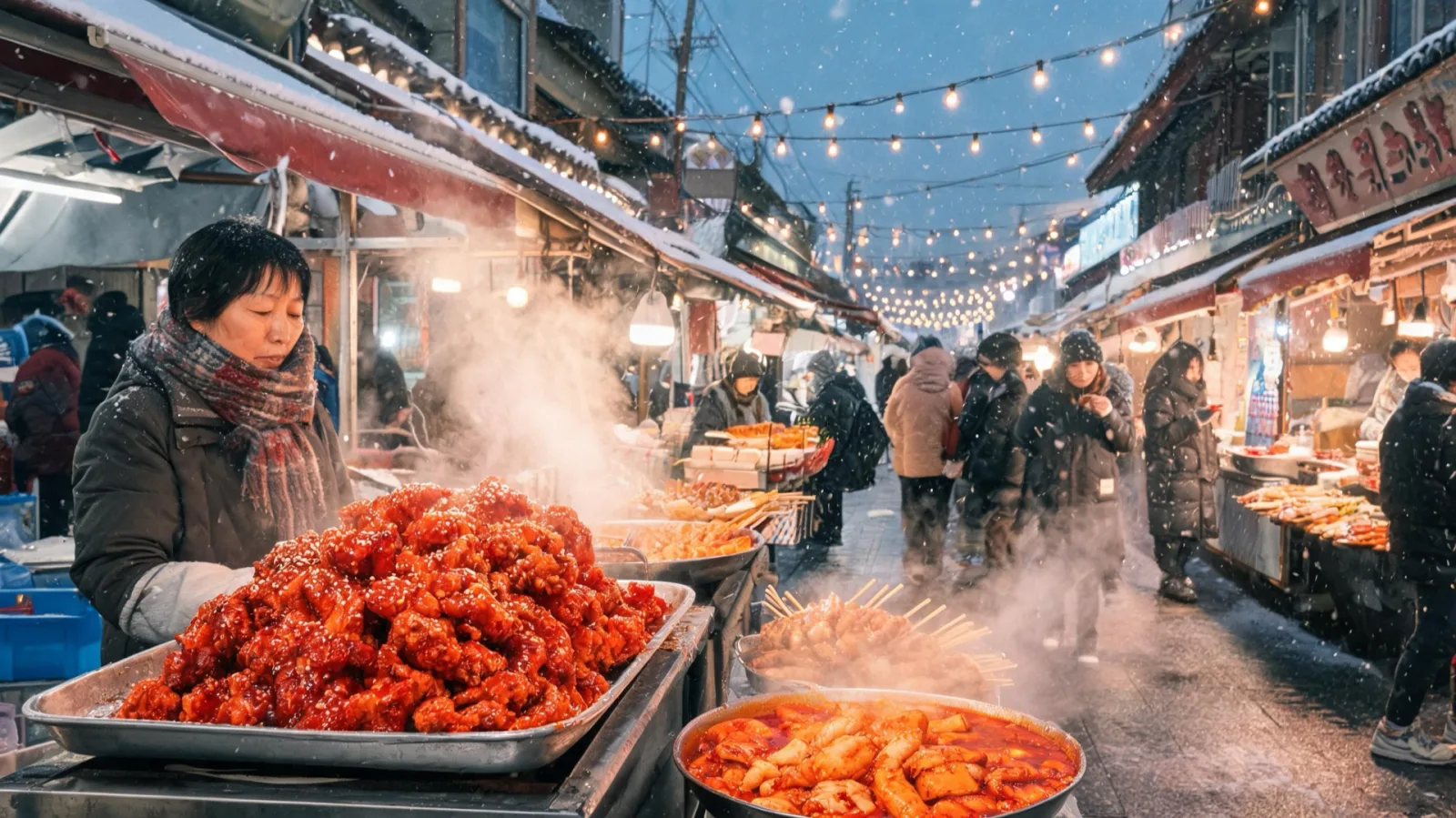
Inside the market, on the first floor of the general shopping building, Sintoburi Gamja Ongsimi draws long lines for its potato ongsimi dumpling soup loaded with perilla seeds, alongside ojingeo sundae (squid sausage) and potato pancakes. In the alley next to the Central Market, Donghae Sundaeguk — a “Hundred-Year Store” — serves a hot bowl of sundae-guk (blood sausage soup) that suits winter perfectly. Round off the tour with budget bites like pollack roe and avocado gimbap or Elephant Snack Bar (Kokkiri Bunsik), and your market tour is complete.
The Dawn Market, Daepo Port, and Winter Seafood
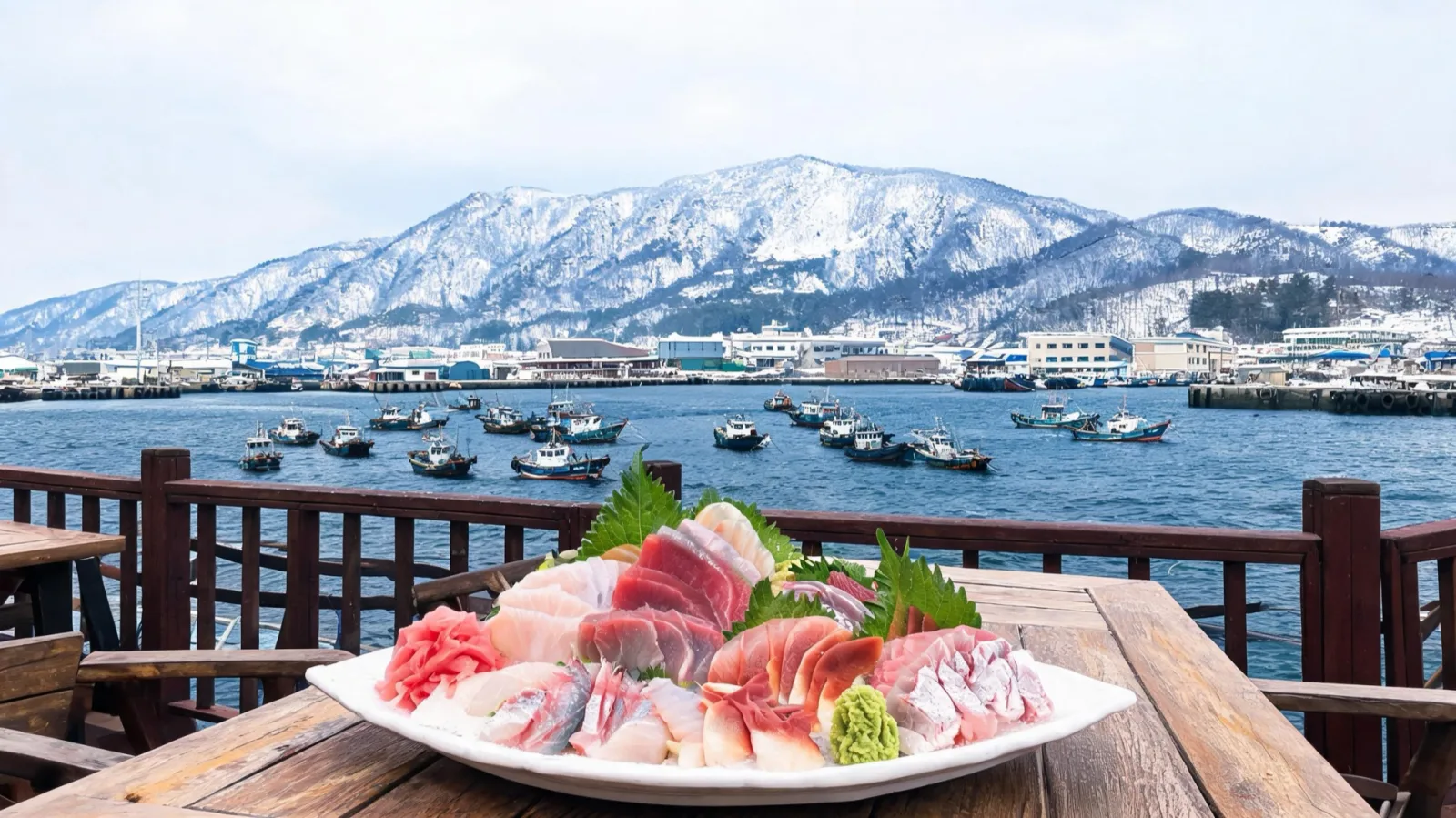
Early risers should head to the Sokcho Tourist Fish Market (Cheongho-dong Fish Center) dawn market. As a sunrise spot, it has activity even before daybreak, and its signature system lets you buy raw fish at the market and, for just a sashimi-prep fee, eat it at an adjacent restaurant. Head to Daepo Port and you’ll find rows of seafood restaurants selling snow crab and assorted sashimi platters; a sashimi meal for one runs roughly 50,000–70,000 won, and winter snow crab sets start at around 200,000 won depending on what’s included. If value matters most, direct-sale shops like Daepo Snow Crab & Sashimi Direct Sales is a safe bet.
The Winter Sea and Ocean-View Cafés
Sokcho Beach, Yeonggeumjeong, and the Yeongnangho area actually come alive in winter. With fewer people around, you can enjoy a seaside stroll all to yourself, and the Yeongnang Coastal Road is lined with ocean-view cafés. Café Woodie and Coffee Haeyo sit along the Yeongnang Coastal Road, while Some Beautiful Day and SHLTR are known as sea-view cafés on the Cheongho-dong side. The winter East Sea spread out before your coffee cup will become the best photo spot of the trip.
Seoraksan’s Frost Season and Winter Hiking Tips
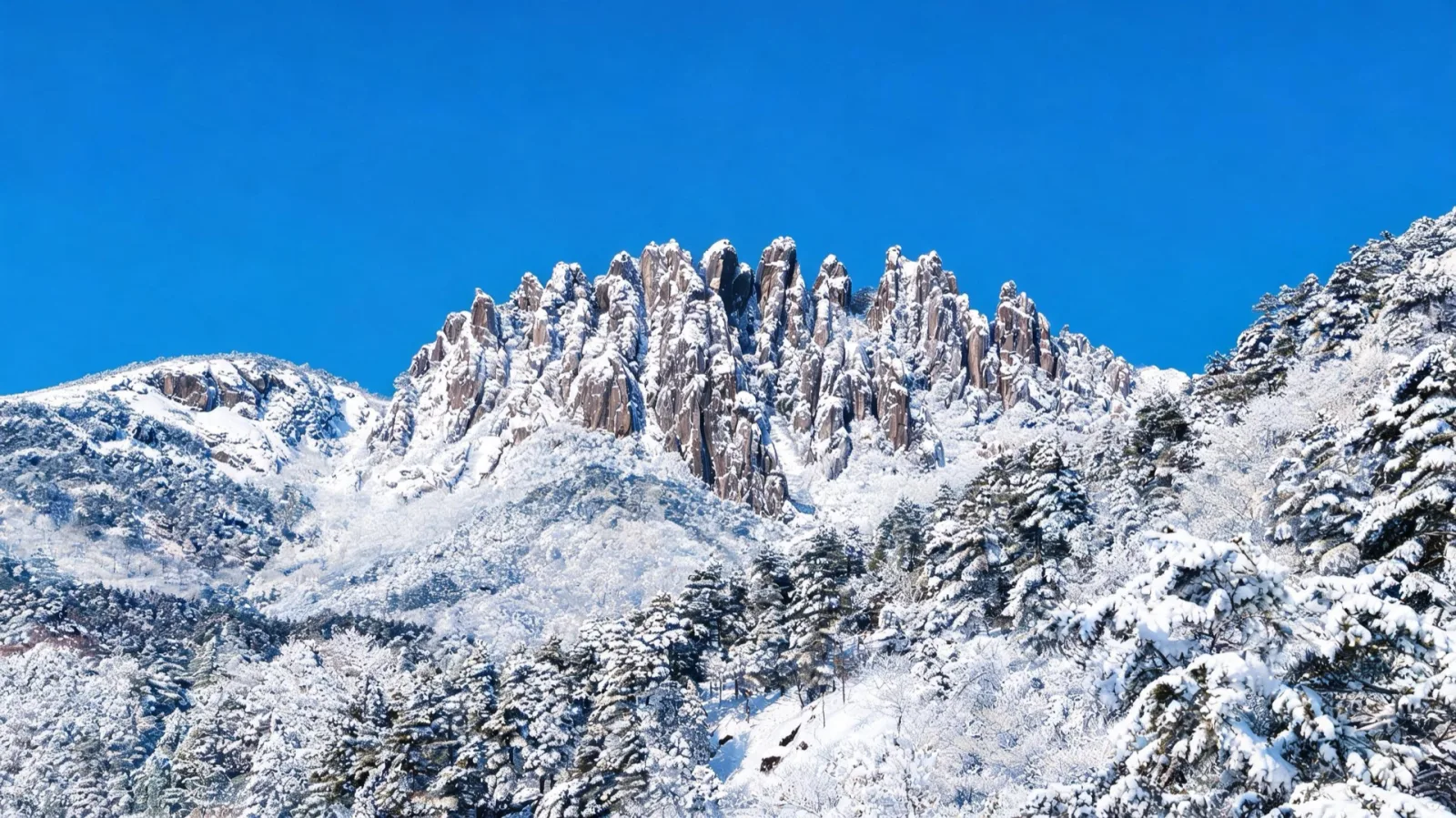
Seoraksan’s frost season is typically December through February, though higher elevations can see their first snow as early as mid-October. For beginners and families, a walk from Sogongwon to Biseondae, or the view of the snowscape from Gwongeumseong reached by cable car, is plenty; winter hiking at high elevations like Daecheongbong is recommended only for those with experience and proper gear. Winter hiking essentials include crampons (ice cleats), hiking boots, windproof and waterproof outerwear, hat and gloves, and a power bank (be aware that cold drains batteries fast). On icy sections, hiking without crampons is dangerous, so be sure to bring them.
End the Day at a Hot Spring
A great way to close out the day is Seorak Waterpia. This water park uses hot spring water drawn from Jurassic granite layers; the standard daytime ticket is about 37,000–40,000 won, and online booking offers significant discounts. You’ll need a swimsuit and a swim cap (a regular cap works), and outdoor facilities close around 6 p.m., so factor that into your schedule. Pairing the cold winter sea and a Seoraksan hike with a hot spring soak is the highlight of winter Sokcho.
Since online booking is where the discount is, you can book a Seorak Waterpia day ticket at 22,000 won against that roughly 37,000–40,000 won gate rate. It is a MIDDLE-season ticket, so confirm the dates you want fall inside that season before paying, and note that it has only one review so far. The product description is image-only Korean with no itemised inclusions or exclusions, and the booking page is in Korean too, so read it for the season dates and entry rules; bring a swimsuit and a swim cap, and remember the outdoor pools close around 6 p.m.
Frequently Asked Questions
Q. For a winter trip to Sokcho, is December or January–February better? A. If you want the frost and winter-sea atmosphere, January–February is better. The Gangwon East Coast tends to get frequent snow in January and February, and that’s also the best time for Seoraksan’s snowscapes. December is comparatively mild and less crowded.
Q. What should I be sure to eat at Sokcho Central Market? A. The classics are the dakgangjeong comparison between Jungang Dakgangjeong and Manseok Dakgangjeong, the potato ongsimi and ojingeo sundae at Sintoburi Gamja Ongsimi, and the sundae-guk at Donghae Sundaeguk.
Q. Can I hike Seoraksan in winter? A. Yes, though there are many icy sections. Bring crampons and cold-weather gear, and for beginners we recommend the Biseondae walk or a cable-car-focused route. If a weather advisory is issued, stop hiking.
Winter in Sokcho is neither too hot nor bitingly cold — it’s just right for travelers. Warm up with market food, alternate between the blue sea and the frosted mountains, and close the day with a hot spring. Follow this itinerary and winter Sokcho will become a trip you remember for a lifetime.
Sources & verification
A source-based guide. Check the linked operator information again before you travel.
- Sokcho City TourismSources checked:
- Sokcho City Hall Official WebsiteSources checked:
- Korea National Park ServiceSources checked:
Images are illustrative examples to aid understanding, not photographs of the actual facilities.
Continue planning
Seoraksan Autumn Foliage Timing and Trekking Courses: From Ulsanbawi to Biseondae
When Seoraksan's foliage peaks, which trail to pick for your fitness level, cable car fares to Gwongeumseong, and how to dodge the autumn crowds.
Seoraksan with Kids: Easy Courses and a Doable Plan
Seoraksan with kids works as a walk-from-the-entrance question: stroller-friendly Biryong Falls sections, Sinheungsa, and the cable car rule that splits the plan.
Sokcho on a Rainy Day: Keeping the Trip Alive Indoors
Rain in Sokcho means moving the day indoors: mix markets, cafes and indoor exhibits, keep one or two outdoor stops, and check Seoraksan conditions first.
Help us keep this note useful
A quick response helps us decide what to clarify or recheck. No account or email is needed.