For a one-night, two-day stay in Beppu, put the Hells tour on day one and leave day two for onsen and views. Visiting all seven hells in one run takes roughly 3 to 3.5 hours on the official course, so the four hells gathered in Kannawa can be covered on foot, leaving only the two distant hells to the bus. For the night’s stay, the choice is between Kannawa, where the Hells tour gathers within walking distance, and the area around Beppu Station, where transport and restaurants are convenient; that choice is what protects the onsen time of your one night.
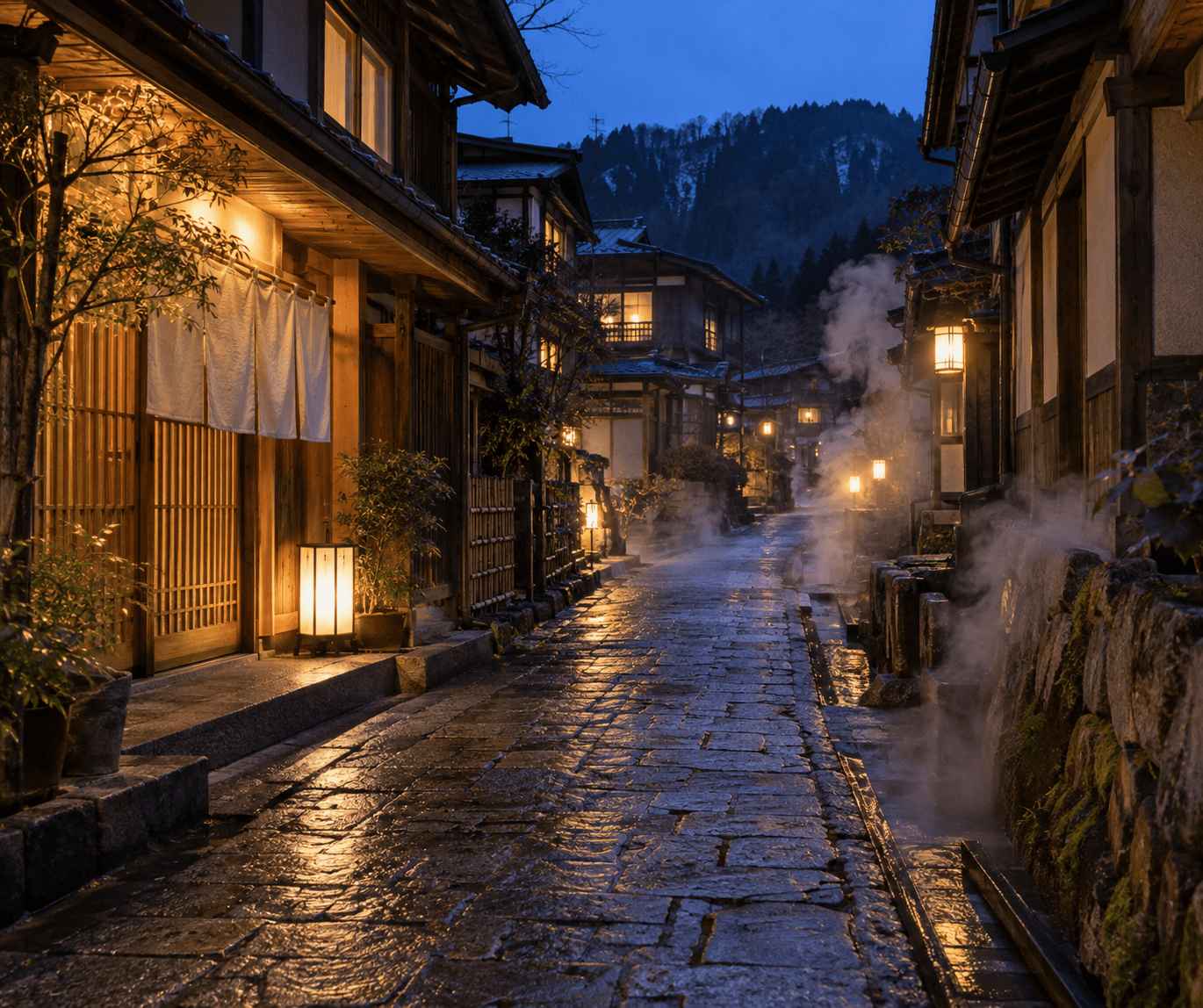
Day one is bundled into the Hells tour; day two stays open
Slowly covering several onsen districts calls for two nights and three days; with the hells and onsen at the center, one night and two days hold together. Beppu City’s official tourism site also introduces a one-night, two-day Hells course that covers all the hells and notes that a single run takes roughly 3 to 3.5 hours; the structure then has you eat jigoku-mushi (onsen steam cooking), the specialty of the Kannawa (Tetsurin) district, after the hells.
Two prepared templates point the same way for day one. In the morning, walk the four Kannawa hells: Umi Jigoku, Oniishibozu Jigoku, Kamado Jigoku and Shiraike Jigoku. In the afternoon, take bus #16 toward Shibaseki for Chinoike Jigoku and Tatsumaki Jigoku, and in the evening come back down for the Takegawara sand bath. Actual travel records also present, as the standard route, a two-area split: see five hells by bus first, then the remaining two, before returning to Beppu Station. In the sources as of the September 2026 check, the sand bath means wearing a provided yukata and being buried up to the neck for roughly 10 to 20 minutes, enjoyed at the indoor bath of Takegawara Onsen or at the beach sand bath.
Day two is a choice between the Mt. Tsurumi Ropeway and Myoban. For the ropeway there is guidance to go up before 11:00, and the stated reason is clouds; locking the transfer in early is the safer side. For the afternoon, a two-day template adds the yunohana huts and a mud bath in Myoban, plus a quiet public bath like Mushiyu in the Kannawa back lanes on the way back. There is also an official note that Umi Jigoku, Chinoike Jigoku, Tatsumaki Jigoku and Shiraike Jigoku are nationally designated scenic places; use it to set the priority of which hells to keep and which to see.
Times and fares in the table below come from sources checked in September 2026.
| Segment | Axis | What the sources show |
|---|---|---|
| Day 1 morning | Kannawa walking loop | Four hells linked on foot, combined ticket bought at the first ticket window |
| Day 1 afternoon–evening | Distant hells and the sand bath | Chinoike and Tatsumaki Jigoku by bus #16, sand bath 10 to 20 minutes |
| Day 2 morning | Views first | Mt. Tsurumi Ropeway, guidance to arrive before 11:00 |
| Day 2 afternoon | Onsen finish | Myoban yunohana huts and mud bath, quiet public bath in Kannawa |
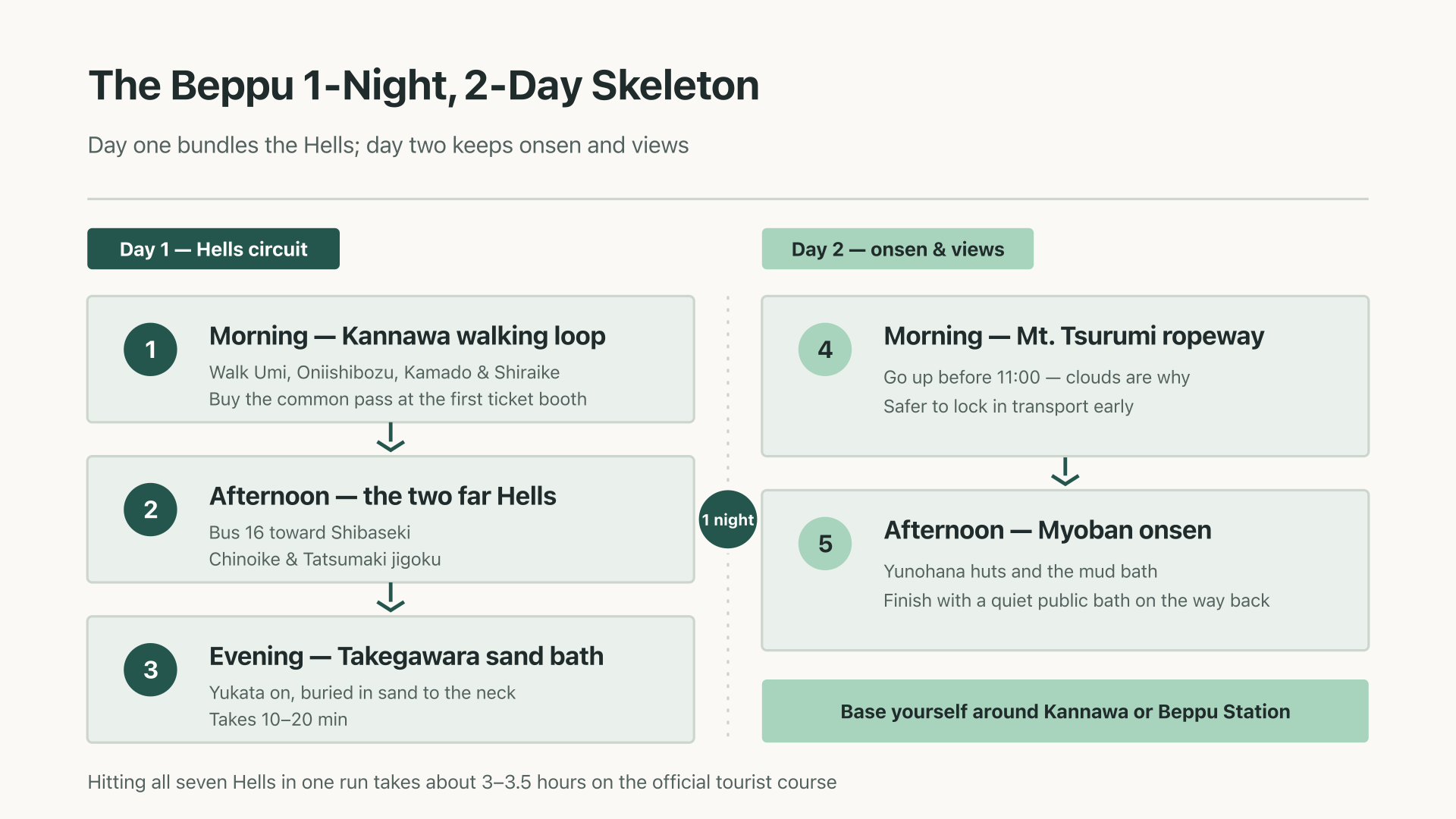
For tickets, the combined ticket is the default
The combined ticket covers all seven hells with one pass, valid the day you buy it and the day after, with one entry per hell. Each hell has its own ticket window, so you buy it at the first one you reach; hours are 8:00 to 17:00, year-round. In the sources as of the September 2026 check, the price is ¥2,400 for adults, carrying a revision note dated February 1, 2025. Alongside this, a July 2026 travel record says the same ticket was bought for ¥2,200, and there is a listing that shows a ¥2,200 two-day version; check the price at that day’s ticket window or the official booking channel before putting it in your budget.
Individual admission is ¥500 for adults. One calculation has the combined ticket paying off from the fifth hell, so if you plan to see five or more, taking the combined ticket from the start is the simpler move.
City buses are the default; the tour bus is a reservation-based alternative
From the west exit of Beppu Station, Kamenoi Bus routes 2, 5, 24 or 41 toward Kannawa take about 20 minutes. City buses run frequently between Beppu Station/Kitahama and the Kannawa hell cluster, so moving on your own is the default axis. As of the September 2026 check, Kamenoi Bus passes are listed at ¥1,100 for a 1-day pass and ¥1,700 for a 2-day pass (for use from July to December 2026), and a comparison notes that paying per ride is cheaper when the sum of your planned individual fares is lower. To fold Myoban or the ropeway into the same day, a 1-day pass at ¥1,800 adds Myoban, Suginoi and the ropeway approach to the central unlimited pass, which covers central Beppu including Kannawa; for a pure Hells run, the central pass is judged sufficient.
To hand both movement and viewing to one booking, there is the regular sightseeing bus. The adult fare is ¥4,500 with admission to all seven hells included, and reservation is required; bookings open two months ahead and the bus does sell out. The ride takes about 3 hours. A travel record of riding it on a reservation rates the movement easy and the time allocation just right.
The same source records the trade-off: the bus moves at a fixed pace and doesn’t stop long enough to linger. If you want to stay long at one hell, moving by city bus on your own is the right call; when time is short, another summary says that seeing just Umi Jigoku and Chinoike Jigoku is enough to take in Beppu’s particular onsen atmosphere.
If you are coming in from Fukuoka, decide the approach first. The highway bus stops right at Kannawa-guchi in the Hells area when leaving Fukuoka Airport, so you are spared the trip to Beppu Station and the bus change. On the rail side, as of the September 2026 check, the Sonic limited express starts at ¥2,950 one way with early booking, and there is a calculation in which two people share a WEB four-ticket coupon at ¥10,000 for ¥5,000 round trip each. Some public baths, small restaurants and coin lockers may require cash or 100-yen coins, so carry small bills and coins together.
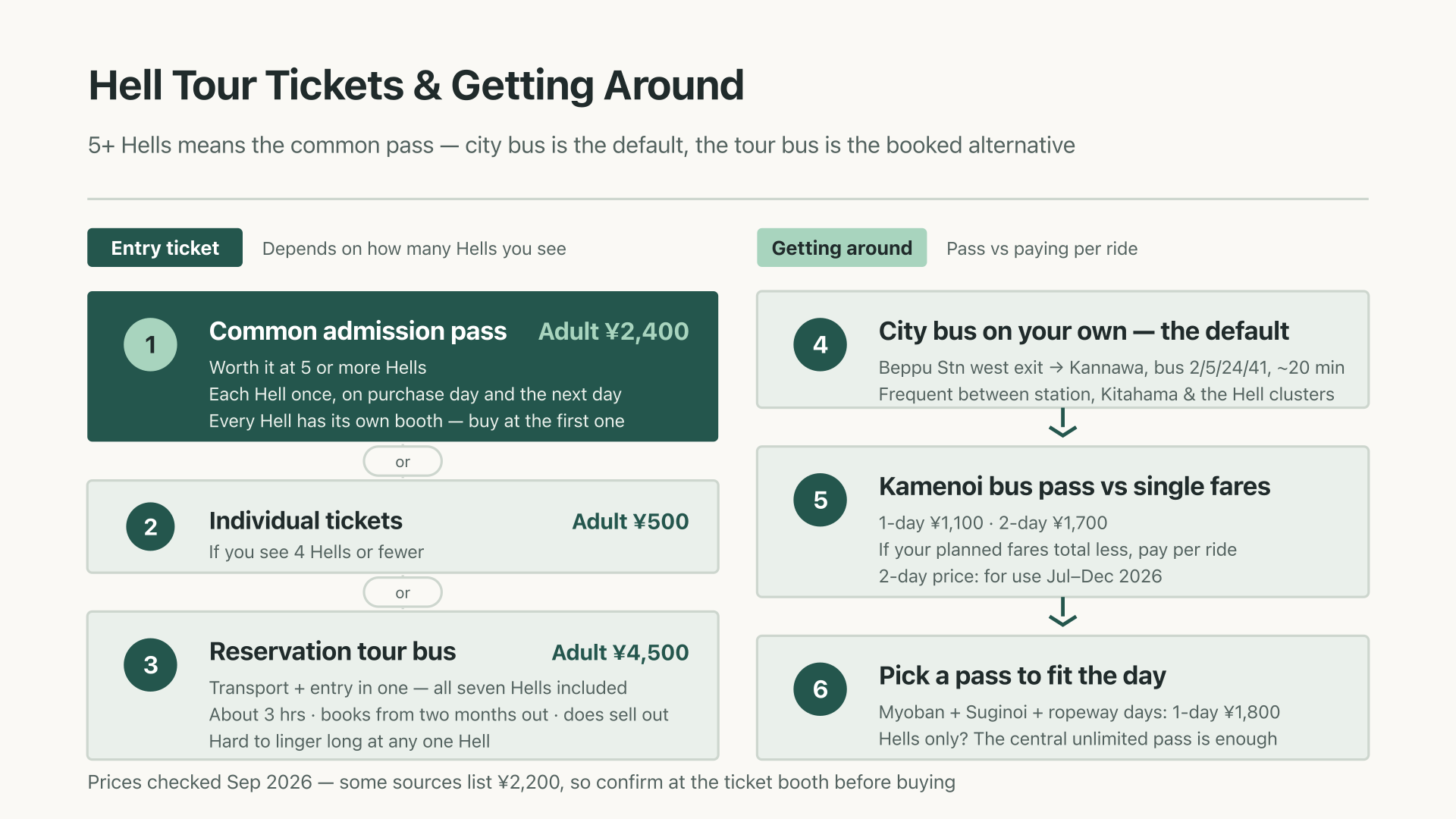
For the ryokan, sort the onsen districts by character first
One summary describes Beppu not as a single resort but as a city strung together from onsen districts of different characters. The area around Beppu Station is busy and packed with restaurants, and Kannawa on the hill is the center of the onsen town, wreathed in steam. Kankaiji is the upscale district with views, Myoban the quiet sulfur-bath district, and Kamegawa sits on the coast with the sand bath. Choosing where that night goes starts from these differences.
Myoban is the option when the onsen itself is the point, but the bus link to Beppu Station runs less often than the Kannawa routes, so plan for 25 to 30 minutes each way, with an occasional taxi to budget for. In return, the same source explains that many guests at Myoban ryokans spend more of their stay on-site with the baths and mountain views. You can narrow candidates with the area filters of Beppu City’s official tourism stay list, which registers 55 properties. For example, Nogamihonkan Ryokan is within 10 minutes by car of the hells onsen, has an onsen, a spa and a restaurant, and holds a review score of 8.6 out of 10 from 972 reviews. In the sources as of the September 2026 check, the properties rated highly by couples were Kamenoi Hotel Beppu, Beppu Hatto On’yado Nono Beppu and AMANEK Beppu YULA-RE. In peak seasons, the guidance is to book ahead to secure the property you want.
How to decide
- Bundle the Hells tour on day one with the Kannawa walking loop and the two distant hells, and keep day two for onsen and views.
- The combined ticket is the default; add the reservation-based tour bus only when you want the movement handled too.
- Pick the ryokan district on the Hells route first — Kannawa or the station area, and Myoban when a quiet onsen comes first.
Images are examples to aid understanding.
Last checked: 2026-09-13
Sources & verification
A source-based guide. Check the linked operator information again before you travel.
- Beppu Tabi, one-night Hells courseSources checked:
- Beppu Tabi, official stay listSources checked:
- Hotels.com, Nogamihonkan Ryokan listingSources checked:
- Japan Activity, Beppu itinerarySources checked:
- Piggyback Japan, Beppu spot guideSources checked:
- Yukito note, Beppu bus and Hells ride recordSources checked:
- Big Family Japan, Beppu Hells family daySources checked:
- Mochikuma travel diary note, Beppu stay recordSources checked:
Illustrations are examples to aid understanding, not photographs taken on site. Actual photographs have separate source credits.
Continue planning
One Night in Hita Onsen: An Alternative to Yufuin
Hita Onsen is the one-night alternative to Yufuin: about 1 hour 23 minutes from Fukuoka Airport by direct bus, pairing riverside ryokan baths with a daytime Mameda-machi walk.
Seoul to Busan and Gyeongju: KTX, Express Bus, or Car
How Seoul–Busan and Gyeongju move by KTX, express bus, or car after the September 2026 Korail–SR merger, when Chuseok train tickets open by route, and how to leave Gyeongju Station.
Rainy Autumn Day Outings in the Seoul Capital Area: Indoor Anchors, Routes, and a Day Plan
When rain hits the Seoul capital area, bundle the day around COEX, Seongsu, or the Myeongdong–Jongno anchors, keep moves underground, pre-decide the cut order, and close at a jjimjilbang.
Help us keep this note useful
A quick response helps us decide what to clarify or recheck. No account or email is needed.