
The short answer
At Seoraksan in autumn, pick one primary experience: a lower-valley walk, Ulsanbawi, or the cable car. Each has a different effort and failure mode. The official route, entry-time and live-control pages decide what is open. A past foliage date can guide when to look, but it cannot promise color for your day.
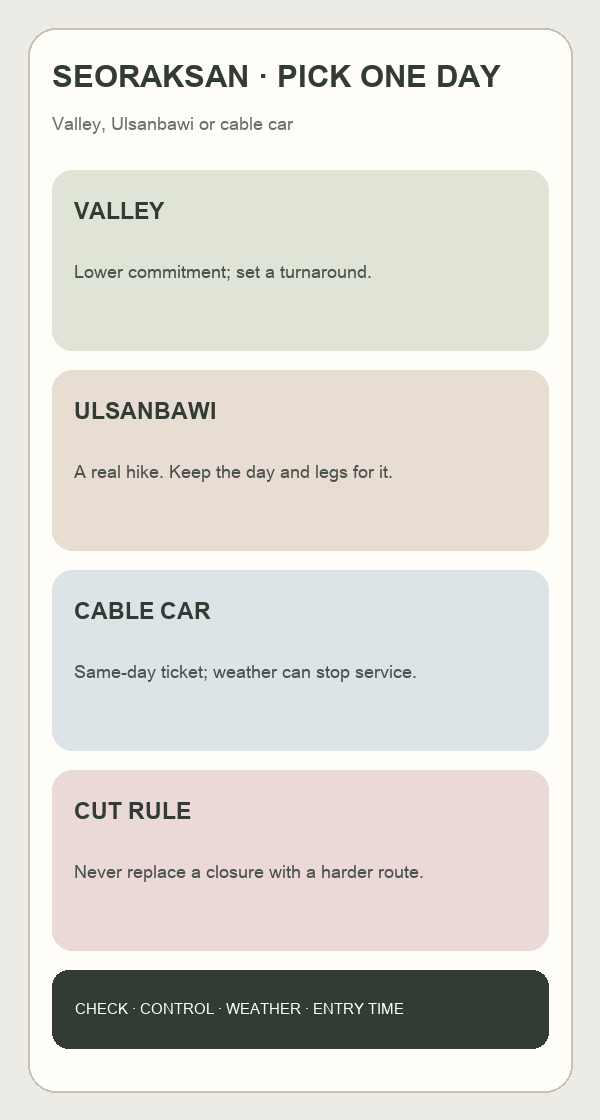
Choose the route by commitment
| Primary plan | Commitment | Check first | Fallback |
|---|---|---|---|
| Valley-side walk | Lower, with a chosen turnaround | Exact open route and surface | Shorten the endpoint |
| Ulsanbawi | A sustained hike with steep final sections | Route, entry control, daylight and weather | Postpone; do not start late |
| Cable car | Short ride plus upper-station walking | Same-day operation and ticketing | Sinheungsa or an open low route |
Do not combine all three because they share the Sogongwon side. Queues, slow walking and autumn daylight can consume the margin between them.
Timing: use observations, not a guaranteed peak
The Korea Meteorological Administration publishes first-color and peak observations. Its 2025 materials record one completed season, not a permanent calendar. Seoraksan changes from high elevation downward, and annual temperature, rain and wind shift the result. Check the latest KMA observation and recent official park information close to departure. If the exact color is essential, keep a second date or another autumn walk.
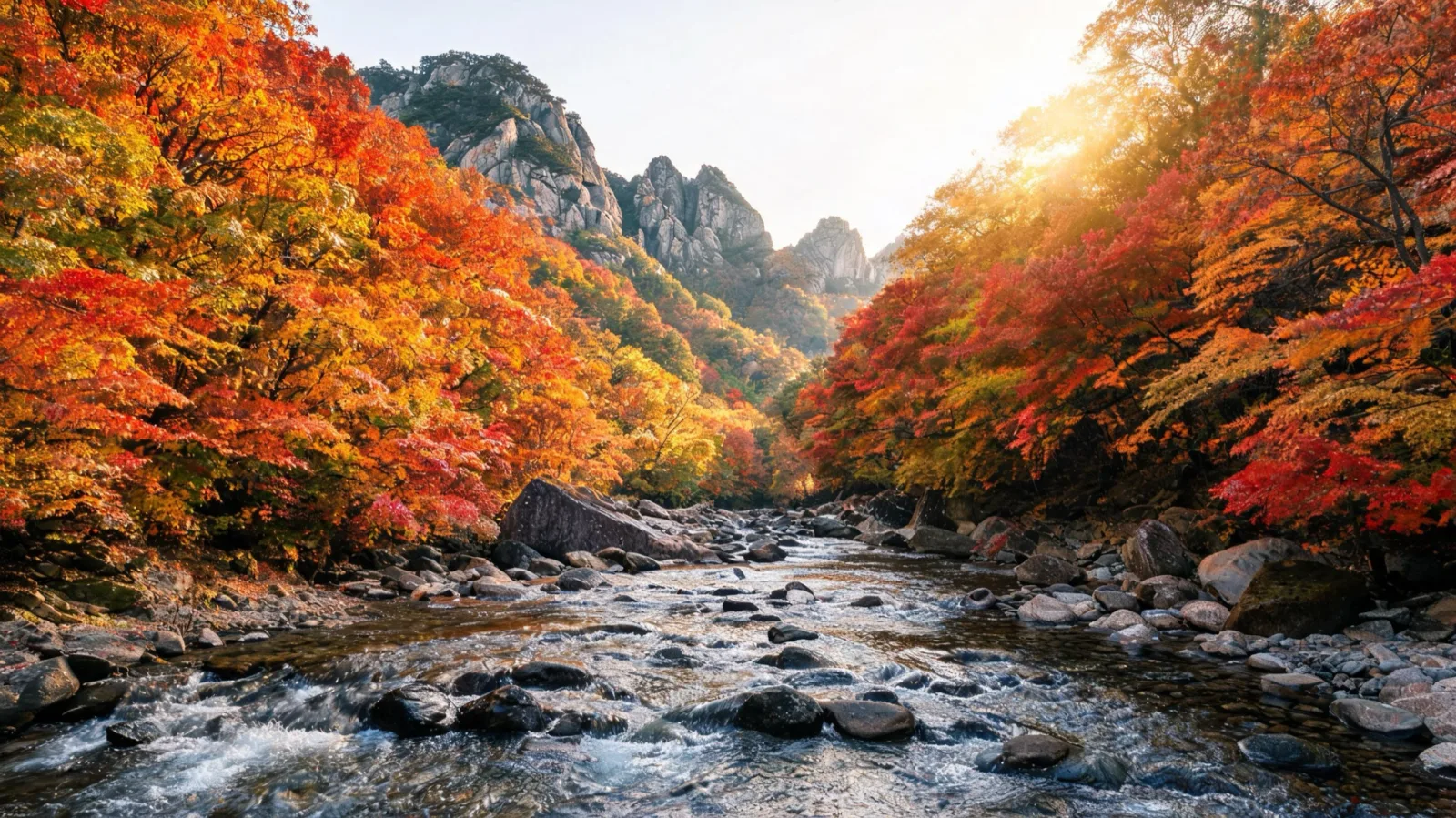
Valley plan: define the endpoint precisely
Use the KNPS course page to name the route you will actually walk. Biseondae and Geumganggul are not interchangeable endpoints, and a distance for the longer route should not be presented as a Biseondae round trip. Check the live control, ask at the park if needed, and set a turnaround that leaves daylight for the same surface on the way back.
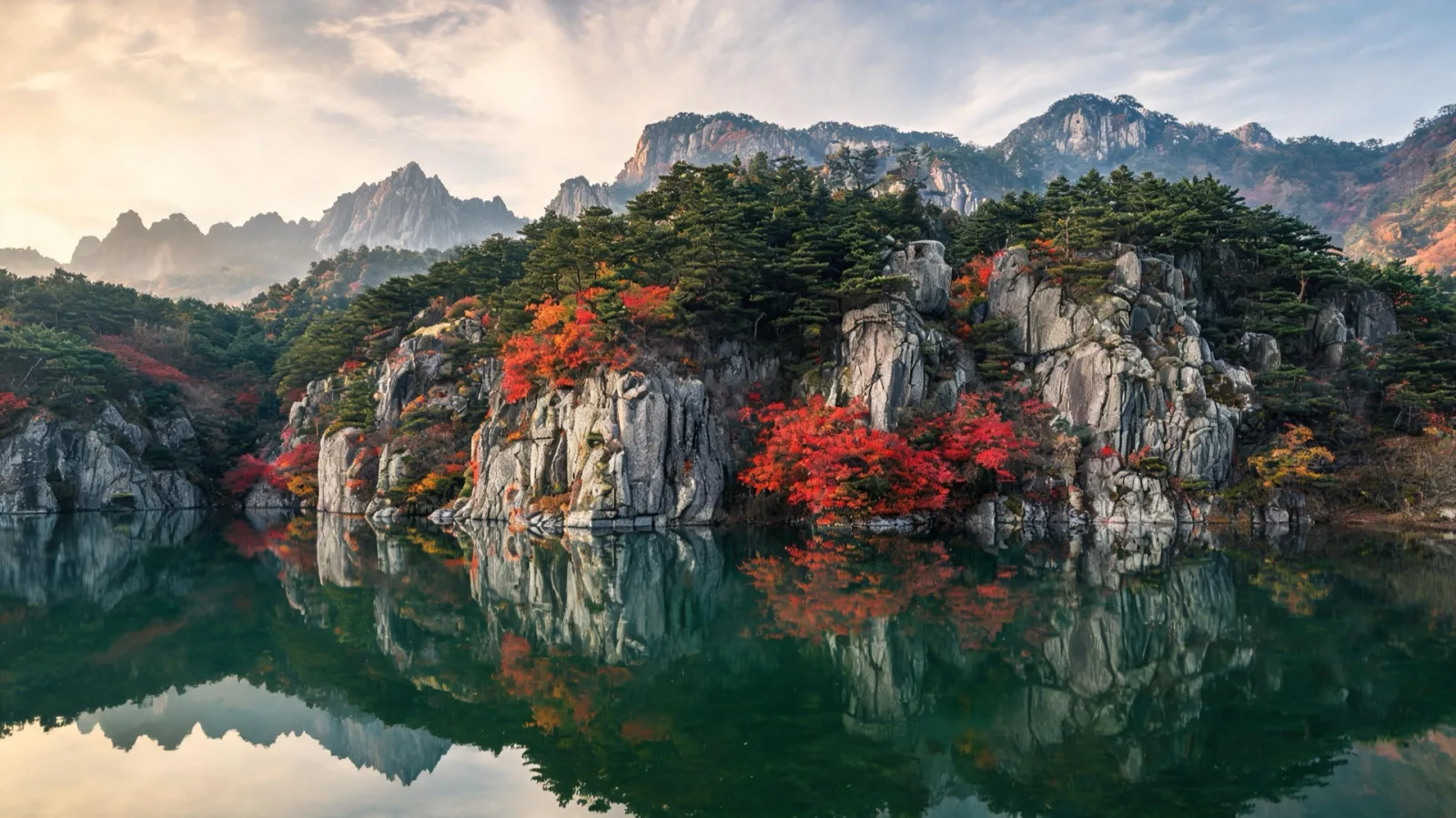
A valley plan is the useful choice when the group wants foliage on foot but does not accept Ulsanbawi’s sustained climb. “Lower commitment” still does not mean step-free, dry or suitable for every traveler.
Ulsanbawi: keep it as the day’s hike
KNPS lists Ulsanbawi as its own route from the Sogongwon side. The final rock-and-stair section raises the effort beyond a casual park walk. Check the current route entry restriction and weather before starting, and turn back when the group’s pace threatens the daylight margin. Do not bolt it onto a late cable-car slot.
Cable car: ticket first, then use the wait
The operator’s guide says cable-car tickets are round trip and sold on site for the same day; advance reservations are not accepted. Daily operating hours are posted by the operator and service can change or stop with wind and weather. Buy the timed ticket before building a waiting-period walk. There is no walking route down from the upper station, so return-car timing matters.
The cable car does not remove every walking barrier. Confirm the current accessibility details with the operator for wheelchairs, strollers and the rocky upper area. If the ride stops, choose an open lower plan rather than replacing it with a harder exposed hike.
What completed trips add
- The Girl with a Big Bag reports completing Seoraksan’s major routes across seasons. The narrow lesson is to treat ridge routes as separate trips, not extensions of a cable-car visit.
- u/Robert_Pug, in a completed Ulsanbawi report with no exact publication date used here, took close to six hours with frequent rests. That personal time supports a generous buffer; it is not an official route standard.
- u/Character_Rub8286, after a completed 5–10 September Sokcho and Ulsanbawi trip whose publication year is not used here, took more than four hours and found the final rocky stair section hardest. The account also shows that a calendar date does not guarantee expected foliage.
These accounts explain pacing and expectations. Current access, controls and operation still come from KNPS and the operator.
Before leaving Sokcho or Seoul
- Open the latest KMA observation, KNPS live control and entry-time notice.
- Select one named route or the cable car as the priority.
- Check the cable-car operator if it is part of the day.
- Check the current Sokcho bus timetable or your legal parking plan.
- Write one fallback that is easier than the original plan.
Last checked: 2026-10-20.
Sources & verification
A source-based guide. Check the linked operator information again before you travel.
- Korea Meteorological Administration: 2025 seasonal observation releaseSources checked:
- Gangwon Regional Meteorological Administration: 2025 observation tableSources checked:
- Seoraksan National Park: routes and live controlsSources checked:
- Seoraksan National Park: entry-time noticeSources checked:
- Seorak Cable Car: official visitor guideSources checked:
- Sokcho city bus timetable and route informationSources checked:
- The Girl with a Big Bag: completed major Seoraksan trails across seasonsSources checked:
- u/Robert_Pug: completed Ulsanbawi hike reportSources checked:
- u/Character_Rub8286: completed September Sokcho and Ulsanbawi trip reportSources checked:
Images are examples to aid understanding.
Help us keep this note useful
A quick response helps us decide what to clarify or recheck. No account or email is needed.