If you’re searching for a “Bukchon Hanok Village route,” you’re probably mulling over questions like these: “Where should I start, and in what order should I walk so the photos come out well?”, “How do I find that photo spot they call the ‘Senior Center Alley’?”, “Is it okay to go on a Sunday?” Bukchon is both a tourist destination and a village where people still live, so your satisfaction can vary greatly depending on the time of day and your manners. The official restriction is specifically the red zone around Bukchon-ro 11-gil: tourist visits there are restricted from 17:00 to 10:00 the next day. Seoul’s notice also calls the residential alleyways a Sunday rest day, but that should not be read as a blanket closure of every street, café, or nearby route in Bukchon. This article gathers the route, photo viewpoints, Samcheong-dong cafés and restaurants, access from Anguk Station, and the boundaries visitors need to check before walking.
Why This Place Is Special — The Charm of Bukchon
It’s a living hanok village. Bukchon is a serene village where aristocratic families have lived for 600 years. It isn’t a newly built tourist complex but a neighborhood where residents still live today, so the warmth of daily life seeps through between the hanok roofs and stone walls. The greatest appeal is that you can enjoy the alley scenery of Seoul’s most polished “hanok complex village” for free.
The view from the Senior Center Alley is the signature photo spot. The angle that looks down over the hanok roofs from the hill alley at the end of the Jagyeongdanjang stone wall path, next to Galleria Foret, is Bukchon’s point for a once-in-a-lifetime shot. It’s one of the “Eight Views of Bukchon” designated by the city of Seoul, and it is most beautiful when the morning sunlight settles onto the tiled roofs. Walking along the eight-view points, such as the Gahoe-dong hill and the Wonseo-dong stone steps, completes the route on its own.
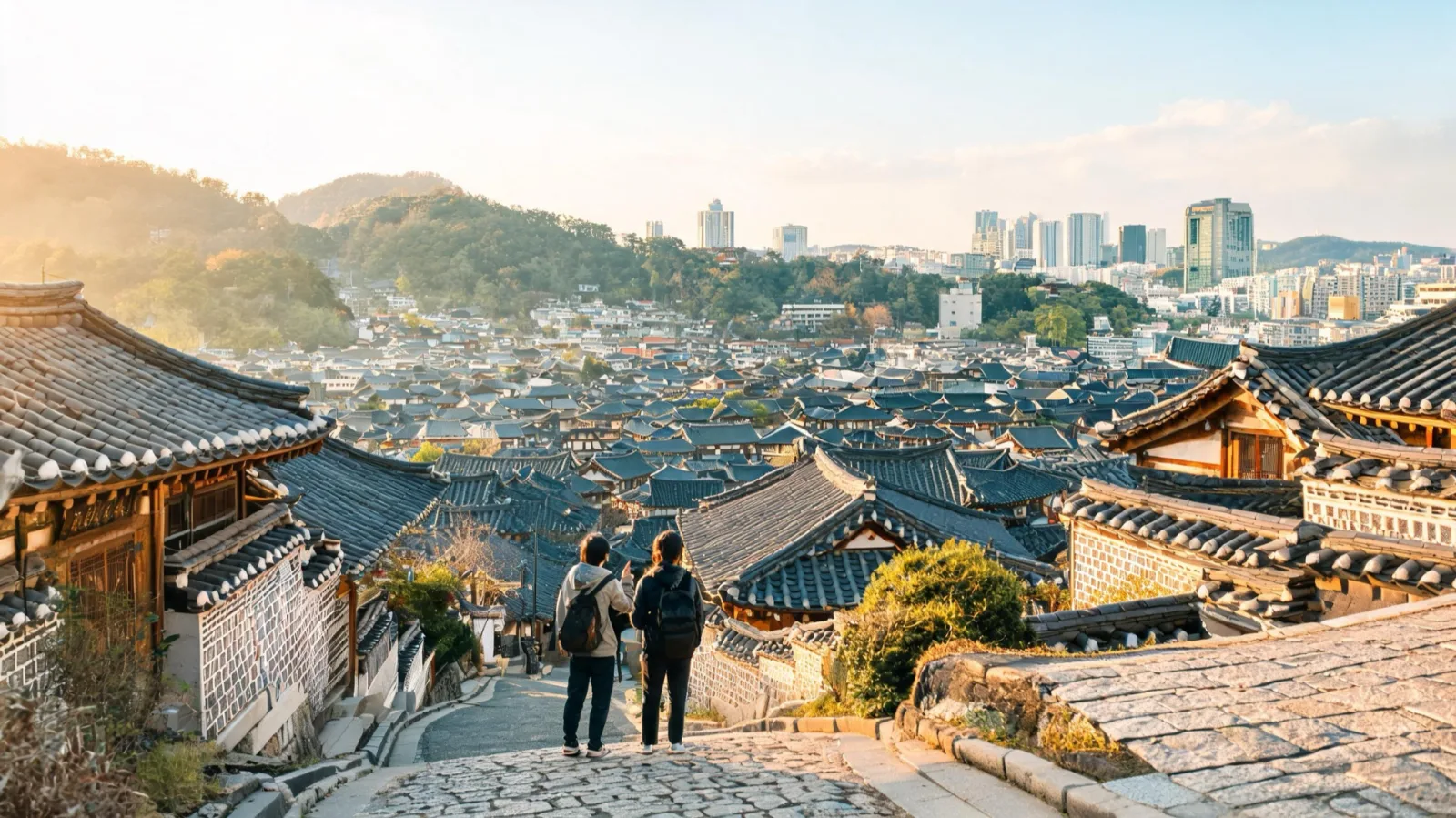
It connects naturally to the Samcheong-dong café and gallery street. When you finish your walk, art museums, workshops, and cafés line Samcheong-ro, so there’s no shortage of places to rest even if you grow tired. The open lawn garden of the Jeongdok Public Library is free and open, making it a perfect resting spot for a half-day itinerary.
You can combine it into one route with Gyeongbokgung. Jagyeongdanjang connects toward the back gate of Gyeongbokgung, about a 15–20 minute walk away, so you can build the classic route of Gyeongbokgung in the morning and Bukchon and Samcheong-dong in the afternoon. Even on Tuesdays, when Gyeongbokgung is closed, Bukchon stays open (provided you respect the time limits), so it’s also popular as a Tuesday alternative.
If those viewpoints are the reason you are coming, MyRealTrip lists a 30-minute portrait session based in Bukchon at 77,000 won, rated 5.0 from 42 reviews. It is a light personal shoot rather than a group tour, which suits the quiet pace this village asks for. The base price covers one person, 20 unedited frames and two retouched images; extra people, extra frames and slots after 3pm all cost more, and the photographer asks you to confirm a time by message before booking. Any shoot inside the restricted alleys still has to fall within the 10am to 5pm window and avoid Sundays, and the booking page is in Korean.
Essential Information at a Glance — Visiting Hours, Fees, Reservations
| Item | Details |
|---|---|
| Admission | None (the village itself is free; only individual exhibitions and experience facilities charge fees) |
| Reservations | Not needed (free on-site visiting; experience programs are booked individually) |
| Tourist visiting hours | Red zone around Bukchon-ro 11-gil (including Senior Center Alley): no tourist visits 17:00–10:00; other zones have different guidance |
| Sundays | Residential alleyways are designated a “street rest day” in the official notice; follow signs and use nearby routes where access is allowed |
| Time needed | 1.5–2 hours (half a day if including Samcheong-dong cafés and a meal) |
| Parking | Practically unavailable — public transit recommended |
The alley time limits are visiting etiquette implemented with residents’ consent. Remembering that this place is “someone’s home” before it is a tourist site makes the reason for following the rules clear.
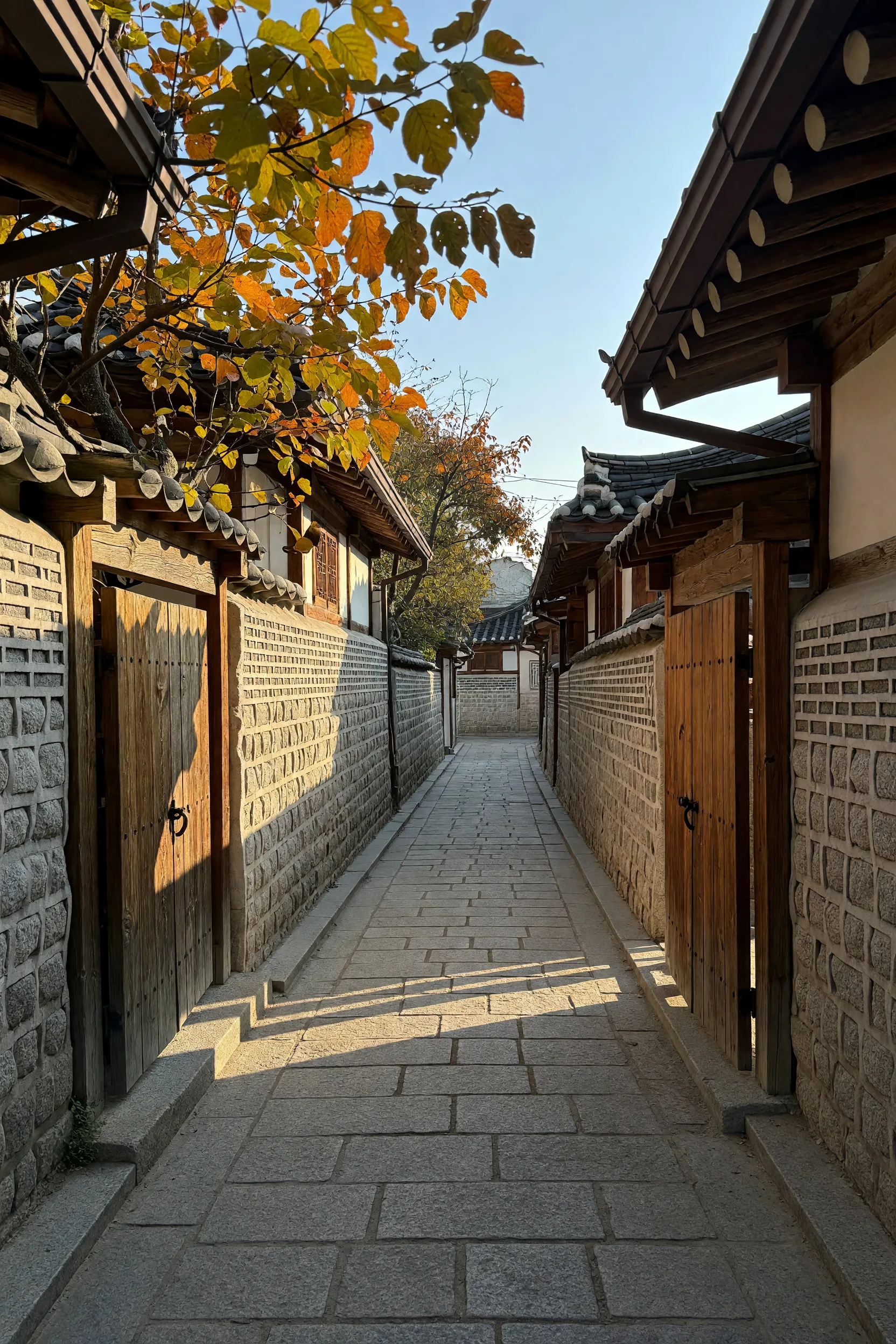
Recommended Route — Morning, Afternoon, and Evening Walking Flows
Morning (09:30–12:00): Start walking from Exit 2 of Anguk Station along Bukchon-ro. First get a map at the Bukchon Culture Center, then enter the hanok alleys of Gahoe-dong. Once it turns 10:00, the red-zone Senior Center Alley is within its permitted visiting window, so head up the hill checking off the photo spots one by one while following the signs. Between 10:00 and 11:00 in the morning there are relatively few tourists, making it the best time for a quiet walk.
Afternoon (12:00–15:00): Come down along the Jagyeongdanjang stone wall path, pass the Wonseo-dong stone steps, and move on to the Samcheong-dong street. After lunch at Samcheong-dong Sujebi or Hwangsaengga Kalguksu, casually look around the lawn garden of the Jeongdok Public Library and the gallery and workshop street.
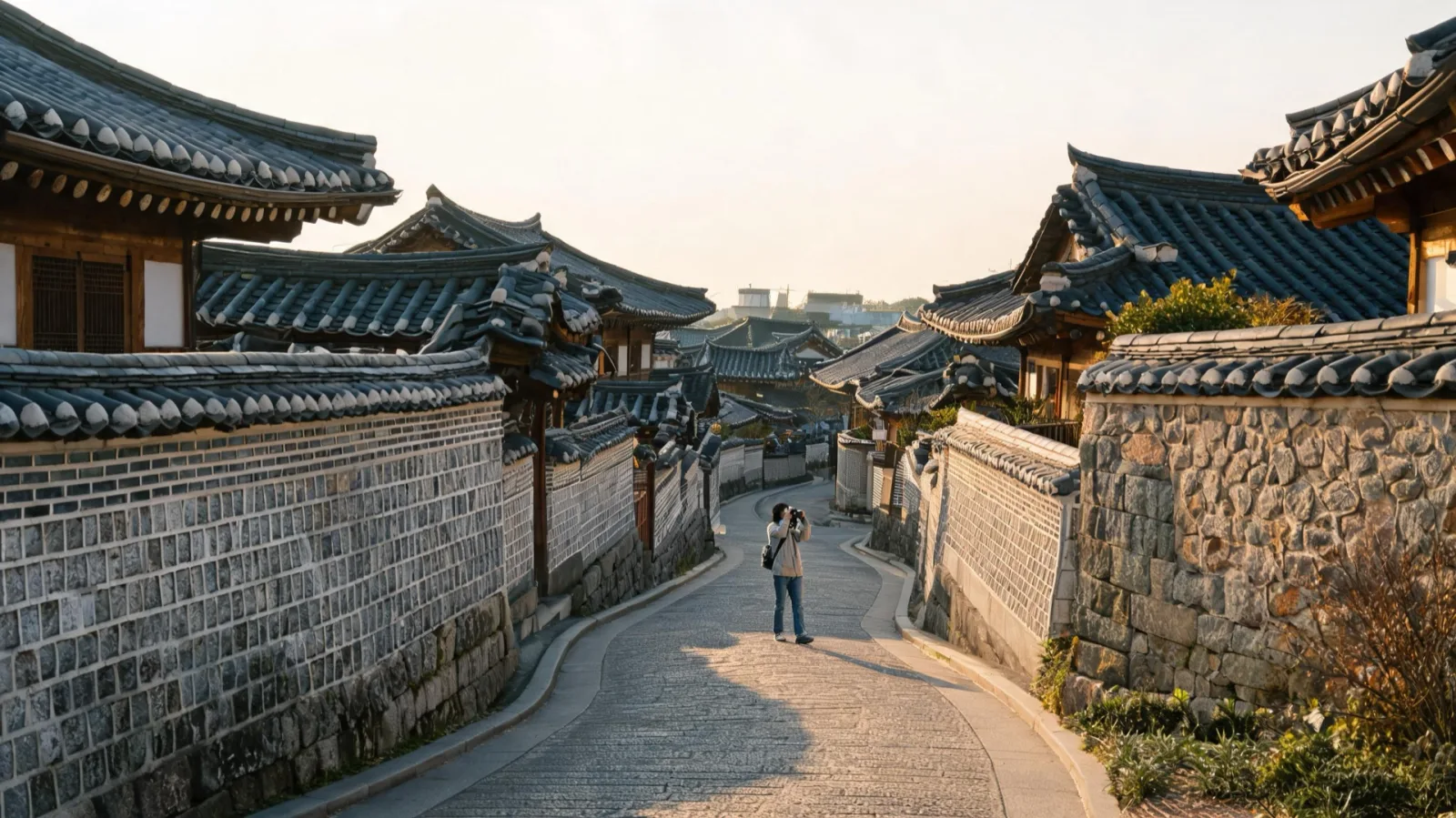
Evening (15:00–18:00): Wrap up with dessert time at a Samcheong-dong café. If you still have time, you can extend to Gyeongbokgung (if it isn’t Tuesday) or Insa-dong. Leave the red zone around Bukchon-ro 11-gil before 17:00, then use the main road or nearby areas according to the signs.
Where to Eat & Cafés — Old-School Flavors and Atmospheric Cafés in Samcheong-dong
| Name | Recommended menu | Price range / notes |
|---|---|---|
| Samcheong-dong Sujebi | Sujebi (hand-pulled dough soup), ongsimi | Around 10,000 won; an old establishment since 1982 selected by the Michelin Bib Gourmand |
| Hwangsaengga Kalguksu | Kalguksu (knife-cut noodles), dumplings | Around 10,000 won; main branch in Sogyeok-dong |
| Ido Gomtang | Gomtang (beef bone soup) | 10,000–15,000 won range; part of a Jongno gukbap old-guard lineage |
| Mokseokjeong | Hanok-style hanjeongsik course | Reservation-only dining; a settled course enjoyed in a hanok |
| Obokdang | Charcoal-grilled dwaeji bulbaek set | 10,000–20,000 won range; casual Korean food |
| Seoul’s Second Best House | Danpatjuk (red bean porridge) | Around 10,000 won; a Samcheong-dong danpatjuk landmark |
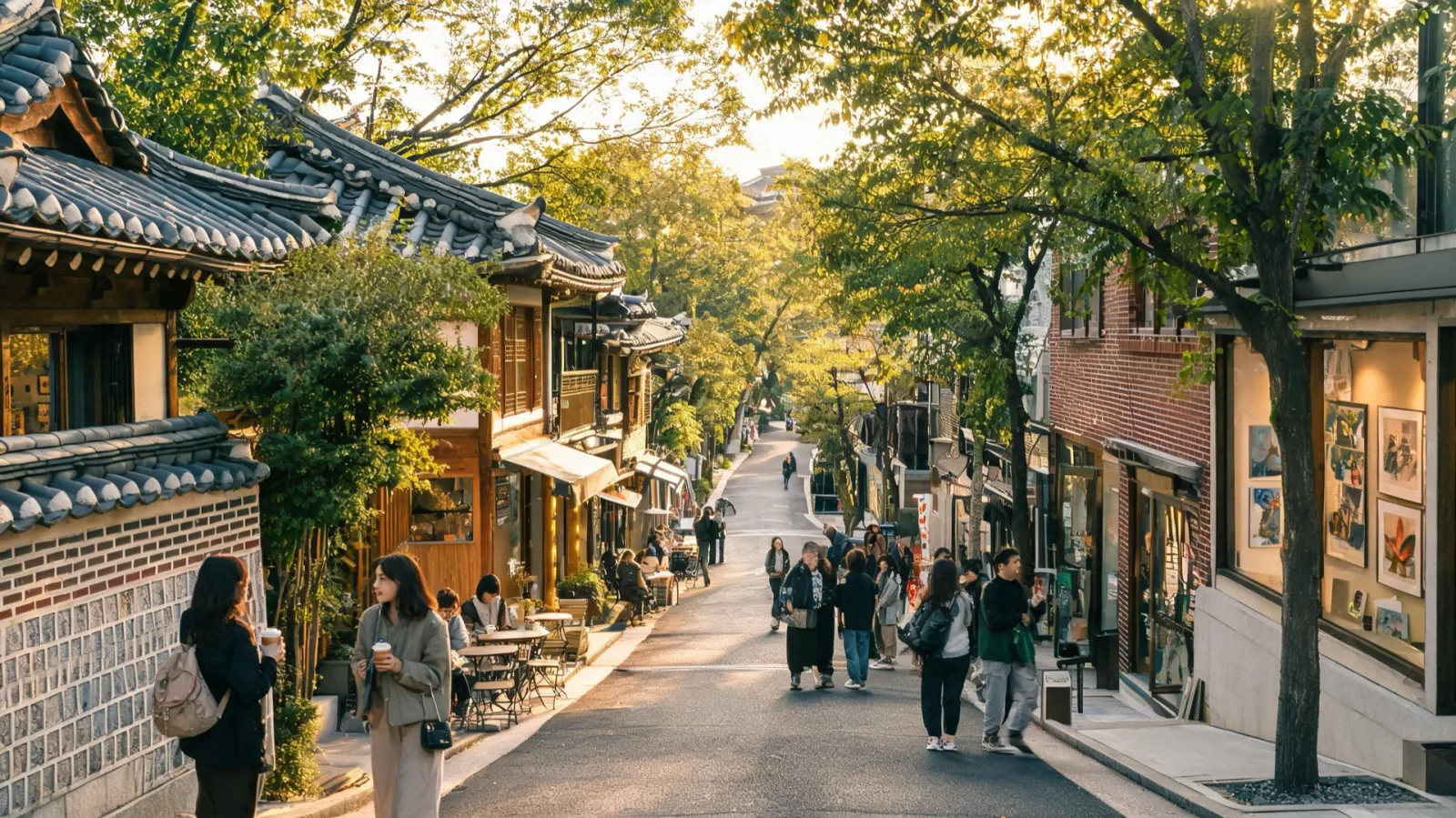
Cafés: Postones Samcheong is a view spot where you can look down over the Samcheong-dong scenery from the windows on the 2nd and 3rd floors; Slow Park is a long-popular café with a garden atmosphere; and Brick Sandwich has recently become a social media talking point for its brick financcier. Café Jinsun charms with its rooftop and its interior design on each floor. Coffee runs roughly 5,000–8,000 won and desserts 7,000–12,000 won (varies by shop). Including lunch and a café, a budget of 20,000–30,000 won per person is enough.
Transport & Access — Including Tips for Foreign Visitors
Subway: Exit 2 of Anguk Station (Line 3) is the main gate. From the exit, a 5–10 minute walk along Bukchon-ro brings you to the village’s first alley. It’s also reachable in about 15 minutes on foot from Exit 3-1 of Jonggak Station. For buses, trunk lines 109, 151, 162, 171, 172, and 272 stop at the Anguk Station bus stop.
Tips for foreign visitors:
- Many foreign visitors don’t know about the Sunday visiting restrictions and the alley noise etiquette. English and Chinese signs are posted in each alley, so please read them in advance and take photos quietly.
- Most shops accept card payments, but some old establishments may take cash only, so carrying a little cash is reassuring.
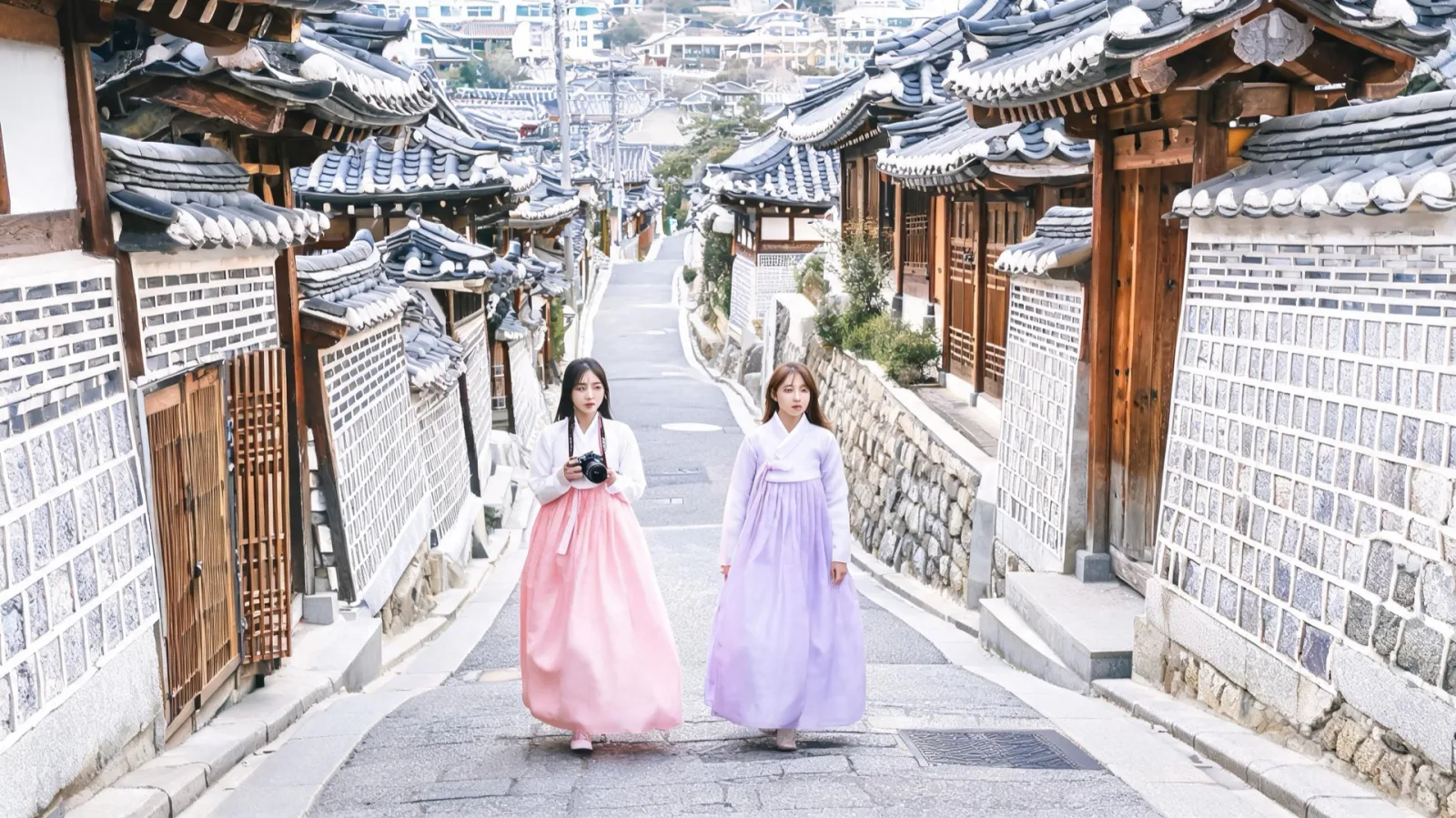
- Wearing a hanbok while touring Bukchon makes your photos come alive even more, but with the many inclines and stone steps, comfortable shoes are a must.
- It’s a 15–20 minute walk from Gyeongbokgung, so they pair well on the same day. Bukchon has no reservations or admission tickets, making it especially easy for walkers.
Tips and Precautions Worth Knowing — Visiting Etiquette Changes the Quality of Your Trip
- Bukchon is a residential area. Refrain from entering through gates to take photos, from talking loudly with a megaphone, and from using a flash at night. Quiet footsteps and a low voice are basic etiquette.
- Respect the time-restricted areas. The red zone around Bukchon-ro 11-gil (including Senior Center Alley) restricts tourist visits from 17:00 to 10:00 the next day. Other orange/yellow areas have guidance or monitoring rather than the same blanket time rule, so read the local signs.
- Prepare an alternative route for Sundays. The official notice designates the residential alleyways a Sunday rest day. Use Samcheong-dong, Insa-dong, Cheonggyecheon, the main road outside Bukchon, or the Jeongdok Public Library garden where access is allowed.
- Give up on parking and use public transit. There is almost no parking space inside the village.
- The popular time slots are just after 10:00 a.m. and around 4:00 p.m. If you want a quiet walk, visiting between 10:00 and 11:00 is best.
Frequently Asked Questions
Q1. Does Bukchon Hanok Village need an admission fee or reservation? No. The village itself is free and can be visited without a reservation. However, some alleys have restricted passing hours, and hanok experience and exhibition facilities apply individual reservations and fees.
Q2. Can I visit on a Sunday? The official notice calls the residential alleyways a Sunday “street rest day.” The restriction is not a blanket closure of every Bukchon street; check the signs around the red zone and substitute nearby routes such as Samcheong-dong or Insa-dong where needed.
Q3. Can I take photos freely? Personal commemorative photos are fine, but refrain from photographing a home’s entrance or windows, or residents coming out, and commercial photography requires prior permission.
Q4. How long does it take to walk the route? For the core alleys, 1.5–2 hours. Including Samcheong-dong cafés and lunch, a half-day itinerary is appropriate.
Q5. Can I combine it with Gyeongbokgung on the same day? Yes. Jagyeongdanjang connects toward Gyeongbokgung’s back gate, about a 15–20 minute walk. Just note that Gyeongbokgung is closed on Tuesdays, so check the day of the week first.
Wrapping Up — A Checklist for Today
- Check the red-zone visiting window around Bukchon-ro 11-gil (10:00–17:00) and the Sunday residential-alley guidance
- Save your route based on Exit 2 of Anguk Station
- Pin the locations of Senior Center Alley, Jagyeongdanjang, and the Wonseo-dong steps
- Prepare comfortable shoes (many inclines and stone steps)
- Secure one or two backup Samcheong-dong lunch and café spots
- Agree with your companions on quiet walking etiquette
The heart of the “Bukchon Hanok Village route” ultimately comes down to time and etiquette. Follow the checklist above, and you can fully enjoy the most lyrical half day in Seoul — from the morning sunlight on the hanok roofs to the ease of Samcheong-dong.
Sources & verification
A source-based guide. Check the linked operator information again before you travel.
- Korea Heritage Agency (hanok and heritage programmes)Sources checked:
- Korea Heritage ServiceSources checked:
- Seoul Metropolitan Government — Bukchon Special Management Area noticeSources checked:
Images are illustrative examples to aid understanding, not photographs of the actual facilities.
Continue planning
Chuseok Day Trips with Kids in the Seoul Capital Area: Picking Less Crowded Options
Which Seoul capital area places open over the Chuseok holiday, how crowds usually run by place type, and the transit axis and booking order that hold a kids' day trip together.
Enjoying Soy-Marinated Crab (Ganjang Gejang) at the Peak of Flower Crab Season — A Complete Guide to the Best Gejang Restaurants in Seoul and on Ganghwa Island, and How to Choose Them
Blue crab season, telling males from females, gejang alleys in Sinsa-dong and Ganghwa, prices, and how to finish with shell bibimbap.
An Autumn Trip Near Seoul You Can Reach by Subway: A Complete Guide to the Bukhansan Dulle-gil — Recommended Sections, Difficulty, and Foliage Season
A subway-reachable autumn walk on the Bukhansan Dulle-gil: distance, difficulty and timing for sections 9, 10, 11 and the beginner fortress route.
Help us keep this note useful
A quick response helps us decide what to clarify or recheck. No account or email is needed.