
Choose by the map, not by an old fare table. If the trip stays around Gangneung Station, Jungang Market, Gyeongpo and Anmok, take KTX-Eum and use a live bus or taxi for the last leg. If the plan spreads along the coast to Jumunjin or Jeongdongjin, or if the group carries bulky luggage, compare a car with the train-plus-taxi total.
The decision in one table
| Your itinerary | Better starting point | What to verify before paying |
|---|---|---|
| Station, downtown, Gyeongpo and Anmok | KTX-Eum | Live departure, arrival station, seat and return availability |
| One compact day trip with two or three coastal stops | KTX-Eum plus bus or taxi | Last move back to Gangneung Station and a return buffer |
| Jumunjin, Jeongdongjin or several outer-coast stops | Compare a car with KTX plus local rides | Rental eligibility, train routing, parking and weekend road time |
| Heavy luggage or a group splitting ground costs | Compare full trip totals | Train seats plus local rides against rental, fuel, tolls and parking |
KORAIL’s booking screen is the source for the actual train formation, stations, seat and price. Search both the outward and return legs for the travel date. Do not carry forward an old first train, last train, daily count or fare: all four can change with the timetable and selected service.
What changes after Gangneung Station
Gangneung Station is useful for the central cluster. Jungang Market, Gyeongpo, Gangmun and Anmok can be combined with walking plus a live bus or taxi plan. VISITKOREA’s 2026 east-coast guide describes Anmok as reachable from Gangneung Station by city bus or taxi, but the exact route and wait should still be checked on the day.
The outer coast changes the calculation. Jumunjin lies north of the compact Gyeongpo and Anmok cluster; Jeongdongjin lies south. A car can reduce transfers when several such stops share one day, but it also adds pickup, return, parking and road-traffic risk. For a single outer stop, KTX plus taxi may still be simpler.
A July 2026 traveler reported enjoying a Gangneung day trip by KTX and using taxis during the day (completed-trip discussion). A June 2023 traveler took KTX, reached Gyeongpo by bus and later used taxis when buses were less useful for the south coast (trip report). Another traveler described a KTX day trip that used a bus to Jumunjin and a taxi for the next move (August 2025 report). These reports support the mixed-transport option, not a promise about today’s fare or waiting time.
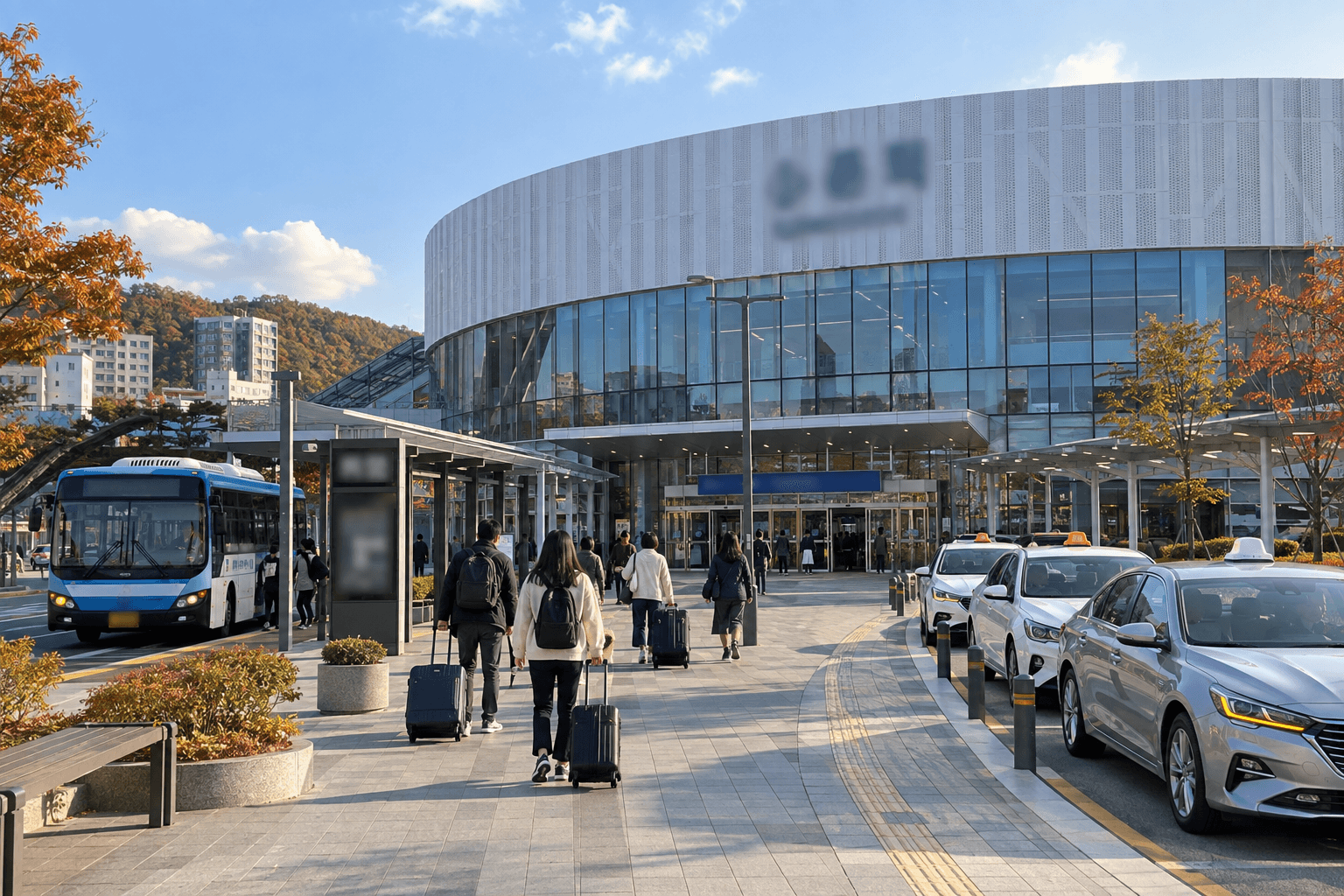
A Reproducible Route-Scope Check
The following comparison was checked on 2026-10-20 from the official place pages and can be repeated by entering the listed stops in the same order. It measures local legs, not prices.
| Declared itinerary after the train | Local legs to plan | What the official place pages show |
|---|---|---|
| Gangneung Station → Gyeongpo Beach → Anmok Beach → Gangneung Station | 3 | A compact station-and-coast loop using the station, 514 Changhae-ro and 20-1 Changhae-ro 14beon-gil |
| Gangneung Station → Jumunjin Beach → Anmok Beach → Jeongdongjin Beach → Gangneung Station | 4 | A north-to-south coast crossing: Jumunjin is identified as northernmost Gangneung, while Jeongdongjin Beach is directly beside Jeongdongjin Station |
This audit changes the decision in two ways. A car deserves comparison when one day crosses from Jumunjin through the central coast to Jeongdongjin. If Jeongdongjin is the only outer stop, search trains to Jeongdongjin Station before adding a rental from Gangneung Station. Recheck live trains and local routes for the travel date.
When a car is actually available to you
International visitors should clear the rental-document gate before comparing prices. VISITKOREA says short-term renters need the required original licence and an appropriate international driving permit, and rental companies can apply their own age, driving-experience, payment-card and insurance conditions. Read the selected company’s current terms; an attractive search price is not proof that the driver or card will be accepted.
Build the car total from the live rental, insurance, fuel, tolls and parking. Build the train total from the current round trip plus the local rides the itinerary really needs. This avoids the old mistake of comparing a bare daily rental with a full train-and-ground trip.
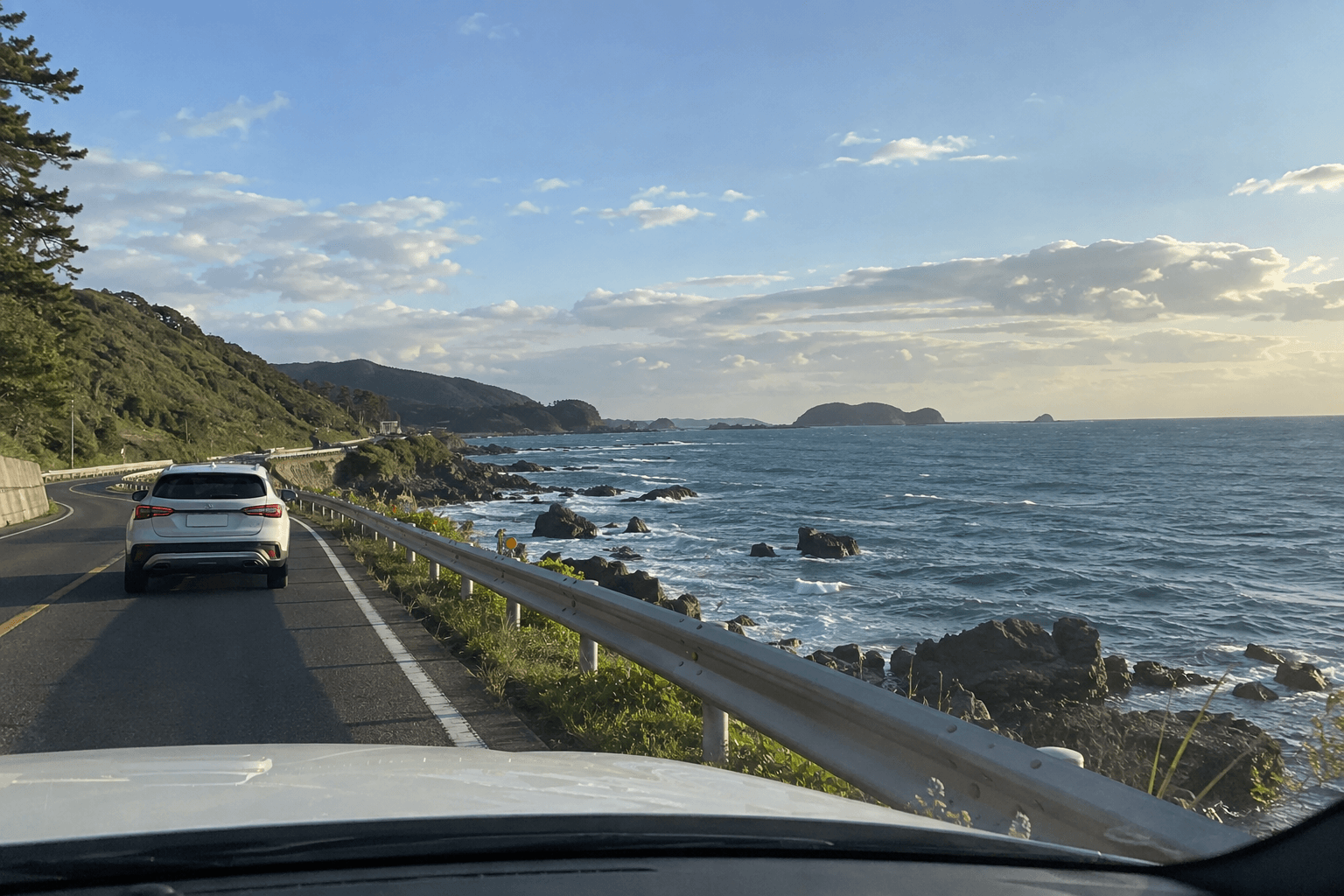
Booking order
- Fix the farthest stop and decide whether it belongs in a compact day or an outer-coast day.
- Check the return KTX first, then the outbound train. A day trip fails if the last coastal move leaves no margin for the station.
- If driving, confirm renter eligibility and the complete price before reserving lodging or timed attractions.
- Recheck the live train or road plan close to departure.
For a compact Gangneung day, start with KTX and a realistic last-mile plan. Choose a car only when the itinerary’s spread, luggage or group logistics saves more effort than pickup, parking and traffic add.
Put these notes into a Seoul 2-day itinerary →
Sources & verification
A source-based guide. Check the linked operator information again before you travel.
- KORAIL official English ticket searchSources checked:
- KORAIL official timetable and route downloadsSources checked:
- VISITKOREA: Driving in Korea and short-term rental requirementsSources checked:
- VISITKOREA: East Coast beaches reached by KTX-EumSources checked:
- VISITKOREA: Gangneung destination overviewSources checked:
- KORAIL Passenger Transport overviewSources checked:
- Traveler report: KTX plus taxi day trip, July 2026Sources checked:
- Traveler report: KTX, bus and taxi around Gyeongpo, June 2023Sources checked:
- Traveler report: KTX, bus to Jumunjin and taxi return, August 2025Sources checked:
- VISITKOREA: Gangneung Station and Anmok routeSources checked:
- VISITKOREA: Gyeongpo BeachSources checked:
- VISITKOREA: Jumunjin BeachSources checked:
- VISITKOREA: Jeongdongjin BeachSources checked:
Images are examples to aid understanding.
Help us keep this note useful
A quick response helps us decide what to clarify or recheck. No account or email is needed.