When autumn comes, you long for a table of mountain herbs. Yet few people actually know exactly what gondre rice (곤드레밥) is, where to go to taste it at its best, or when and how to add ssamjang and salted anchovy sauce. You might also wonder about the price range of wild-vegetable set meals, and whether you can make a day trip from Seoul. This article covers it all in one place: the origins of gondre rice, the signature restaurants in Bongpyeong, Pyeongchang, and in Hoengseong, price ranges, and the story of autumn herbs — bellflower root, bracken, and deodeok.
Gondre Rice: The Key Points First
- Gondre is a Gangwon dialect word. Its formal name is “Goryeo thistle” (고려엉겅퀴), a wild mountain herb that is a type of thistle.
- It began as a subsistence food of the mountains. In Gangwon mountain villages like Pyeongchang, Hoengseong, and Jeongseon, where growing grain was difficult, there was a culture of cooking rice with wild herbs, which became a specialty of Bongpyeong alongside tourism in the 2000s.
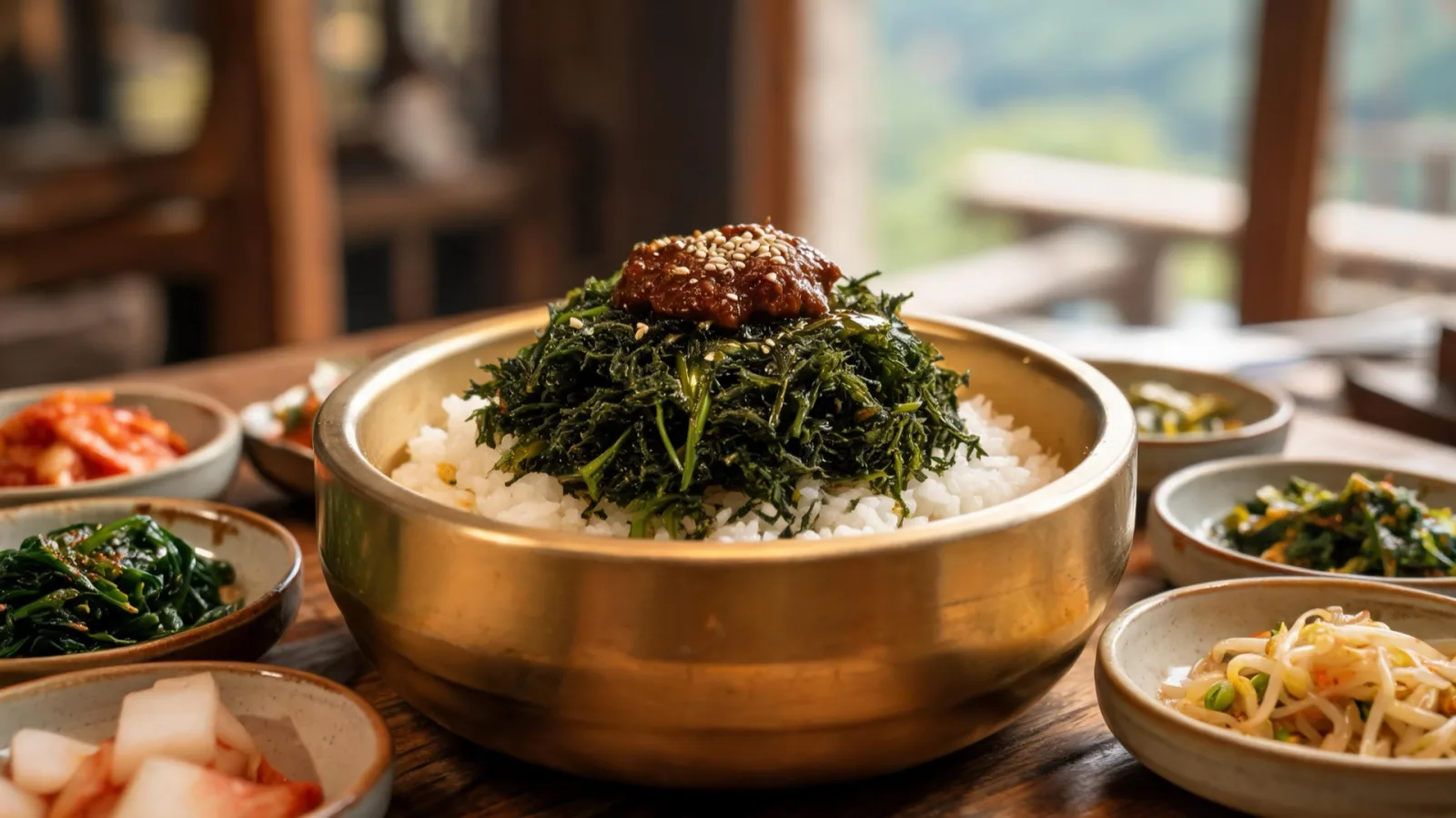
- How you eat it is half the experience. The traditional way is said to be: eat it as a gondre wrap with ssamjang on top, then finish by sprinkling salted anchovy sauce and perilla seed powder to make gondre bibimbap.
- Autumn is the season of rediscovery. Most Korean herbs are at their best in spring, but in autumn, dried-herb dishes shine and root vegetables like bellflower root and deodeok reach their harvest season.
Gondre Rice & Wild-Vegetable Set Meals: Season & Price Range
| Category | Details |
|---|---|
| Gondre harvest & processing | Sown in spring, harvested for wraps from summer, then dried and shipped |
| Root herb harvest season | Bellflower root·deodeok etc., root harvest in autumn (around October) |
| Gondre rice per person | About 10,000 won (Ssangdungine Gabyeoseul Restaurant in Bongpyeong, 10,000 won, as of September 2025) |
| Wild-vegetable set meal·bibimbap | 12,000–17,000 won (based on Kkamuhouse in Hoengseong 13,000 won, Taeyangjip deodeok wild-vegetable bibimbap 15,000 won) |
| Main areas | Bongpyeong, Pyeongchang; Hoengseong (Dunnae·Hoengseong-eup) |
Prices are based on 2025 visit reviews and price information and may change by establishment and season, so we recommend confirming the latest prices before visiting.
Gondre Rice & Wild-Vegetable Set Meals: Where to Eat
Bongpyeong, Pyeongchang — The home of gondre rice. The “When Buckwheat Flowers Bloom” Hall in Jangpyeong is a historic gondre rice specialty restaurant mentioned alongside Lee Hyo-seok’s literature, and places like Ssangdungine Gabyeoseul Restaurant, offering gondre rice for around 10,000 won, are gathered in Bongpyeong. It pairs well with Daegwallyeong and the Bongpyeong Buckwheat Festival (autumn).
Hoengseong — An area with the charm of wild-vegetable set meals. Kkamuhouse is famous for its 13,000 won course of gondre bibimbap + grilled deodeok using herbs it grows itself; Taeyangjip offers deodeok wild-vegetable bibimbap at 15,000 won; Dubumadang combines wild-vegetable bibimbap with tofu dishes; and Heundeul Bawi in Dunnae is known for its wild-vegetable set meals.
Other wild-vegetable areas — Mountain areas in Gangwon such as Jeongseon, Yeongwol, and Inje, as well as Cheongsong and Uljin in North Gyeongsang, are also famous for wild-vegetable dishes.
How to Eat Gondre Rice (Including How to Choose & Store It)
The order at a restaurant — ① Start with a bite of gondre wrap: put ssamjang on the gondre rice and wrap it with herbs. ② Sprinkle salted anchovy sauce and perilla seed powder and mix it into gondre bibimbap. ③ Eat alternately with bellflower root, bracken, and aster greens to finish. This combination of “ssamjang, salted anchovy sauce, and perilla seed powder” is said to be the way traditionally served at Bongpyeong gondre rice restaurants.
When making it at home — Soak dried gondre in cold water long enough (2–3 hours or more), then boil it to remove the bitterness, dress it with perilla oil, and put it on top of the rice to cook.
Enjoying autumn herbs — Bellflower root is typically served as seasoned bellflower root or fritters; deodeok is grilled; bracken is typically used in herb bibimbap or hot pot. Bracken’s main season is the spring shoots, but it can be enjoyed year-round in blanched and dried form.
Storage tip — Dried herbs keep a long time if stored sealed in a well-ventilated place. The culture of drying herbs is the wisdom of mountain villages that dried herbs at harvest time to eat them year-round.
A Day-Trip Gondre Rice Tour from Seoul (+ Tips for International Visitors)
- Travel time: 2–2.5 hours by car from Seoul (Jangpyeong IC or Dunnae IC on the Yeongdong Expressway). You can also use the KTX Gyeonggang Line to Jinbu Station or Pyeongchang Station and connect by local bus.
- Recommended course: In the autumn foliage season (October), a course combining Woljeongsa Temple on Mt. Odaesan, Daegwallyeong, and Lee Hyo-seok’s Birthplace is well worth it.
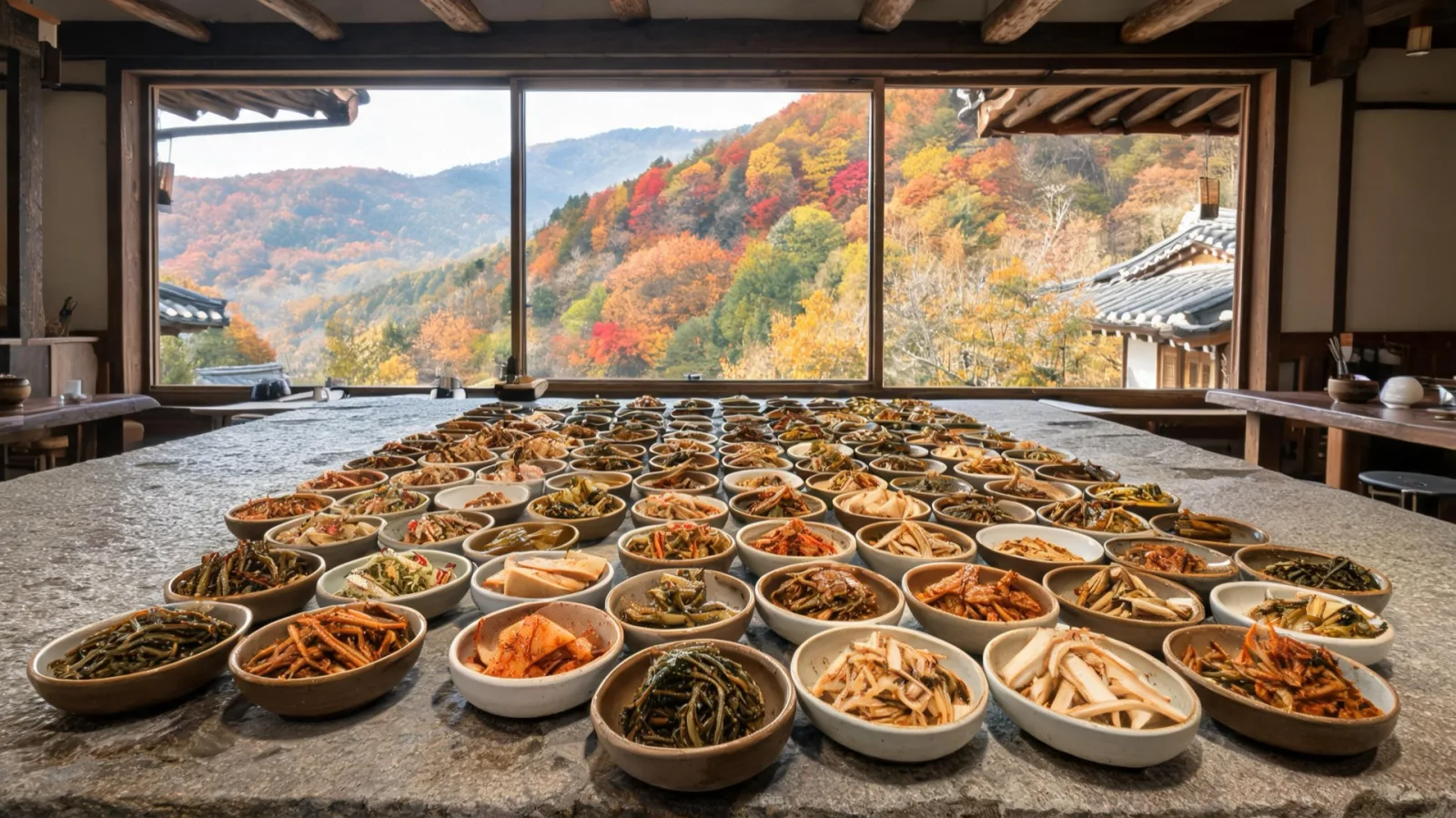
Tips for traveling with international visitors — Introducing gondre rice as “a Korean-style herb rice you mix and eat” makes it easy to understand. Wild-vegetable set meals can include as many as 17 herb side dishes, making them a good option for vegetable-loving tourists. Demonstrating the gondre wrap method and the process of sprinkling salted anchovy sauce and perilla seed powder makes the dining experience much richer. But gondre has a slightly bitter taste, so give first-timers a heads-up. The story that the name “gondre” itself is a Gangwon dialect word is also nice to share.
Because the October course above adds Odaesan Woljeongsa and Daegwallyeong to the Bongpyeong gondre restaurants, which is more than a two-and-a-half-hour drive comfortably allows in one day, you can open MyRealTrip’s accommodation search for Pyeongchang, preset for two adults with the dates set on the page. Pyeongchang has by far the deepest stay inventory of the two counties covered here, which puts the Bongpyeong restaurants within easy reach the next morning. The search covers all of Pyeongchang County, so filter by map position if you specifically want to wake up near Bongpyeong, and remember the results are a date-specific listing rather than a ranking: peak foliage weekends in late October price up quickly, so check the address, beds, meals, taxes and cancellation terms at checkout. The page is in Korean.
Tips & Cautions
- Reconfirm prices and hours. The prices introduced are as of 2025, so confirmation before visiting is needed.
- Bitterness is normal. Gondre’s characteristic slight bitterness is a feature, not a failure.
- Salted anchovy sauce, a little at a time. Start by sprinkling a small amount to adjust the seasoning.
- Pair with festivals and attractions. Check the schedules of autumn events such as the Bongpyeong Buckwheat Festival in the official notices each year.
- Check for vegetarian options. Wild-vegetable set meals may also include salted anchovy sauce or meat depending on the establishment, so if you’re vegetarian, ask in advance.
Frequently Asked Questions (FAQ)
Q. What is the gondre in gondre rice? It’s a Gangwon dialect word; its formal name is Goryeo thistle (고려엉겅퀴). It’s a wild mountain herb, a type of thistle, that is served over rice.
Q. Where should I eat gondre rice for the best flavor? Bongpyeong, Pyeongchang, is the home of gondre rice. The specialty restaurants in Bongpyeong’s alleys are representative, and Hoengseong is famous for wild-vegetable set meals and deodeok dishes.
Q. How much does gondre rice cost? Gondre rice is about 10,000 won per person (as of September 2025), and wild-vegetable set meals and bibimbap are typically 12,000–17,000 won. Since it varies by establishment, please confirm before visiting.
Q. Is there a special way to eat gondre rice? Traditionally, it’s said you first eat it as a gondre wrap with ssamjang on top, and then sprinkle salted anchovy sauce and perilla seed powder and mix it into bibimbap.
Q. Is it a good menu for international visitors? Since it’s a herb-centered table setting, it’s popular with those who prefer vegetables. However, it’s better to give a heads-up about gondre’s bitter taste and the saltiness of the anchovy sauce.
Final Checklist
- Learned what gondre is (Goryeo thistle, a Gangwon dialect word)
- Decided on a destination (Bongpyeong, Pyeongchang / Hoengseong) and travel time (2–2.5 hours)
- Learned the order for eating gondre rice (wrap → bibimbap)
- Checked the price range (gondre rice around 10,000 won, wild-vegetable set meals 12,000–17,000 won)
- Chose autumn herb dishes (bellflower root·deodeok·bracken)
Sources & verification
A source-based guide. Check the linked operator information again before you travel.
- Pyeongchang County — Bongpyeong-myeon official pageSources checked:
- Hoengseong County Tourism — official siteSources checked:
- Nongsaro (RDA agricultural information portal) — crop guidesSources checked:
Images are illustrative examples to aid understanding, not photographs of the actual facilities.
Continue planning
The Complete Guide to Autumn Fruit-Picking Experiences — Pears, Persimmons, Chestnuts & Sweet Potatoes, Farms Near Seoul, and a Gift Guide
When pears, persimmons, chestnuts and sweet potatoes are picked, which farms near Seoul run harvests, what they cost, and how to store the haul.
When Is Eul Fish in Season — and How Long Does It Stay Delicious? A Complete Guide to Autumn Eul Fish Restaurants and How to Eat It Raw or Grilled
When gizzard shad peaks, what it costs, where to eat it in Gunsan, Samcheonpo, Mokpo and Seocheon, and whether to order it raw or grilled.
Enjoying Soy-Marinated Crab (Ganjang Gejang) at the Peak of Flower Crab Season — A Complete Guide to the Best Gejang Restaurants in Seoul and on Ganghwa Island, and How to Choose Them
Blue crab season, telling males from females, gejang alleys in Sinsa-dong and Ganghwa, prices, and how to finish with shell bibimbap.
Help us keep this note useful
A quick response helps us decide what to clarify or recheck. No account or email is needed.