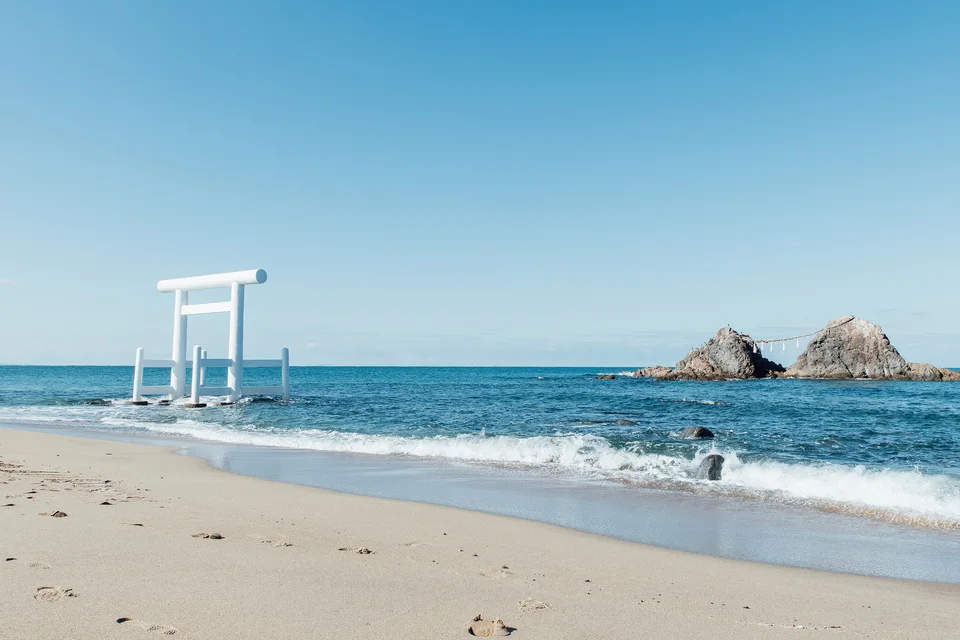
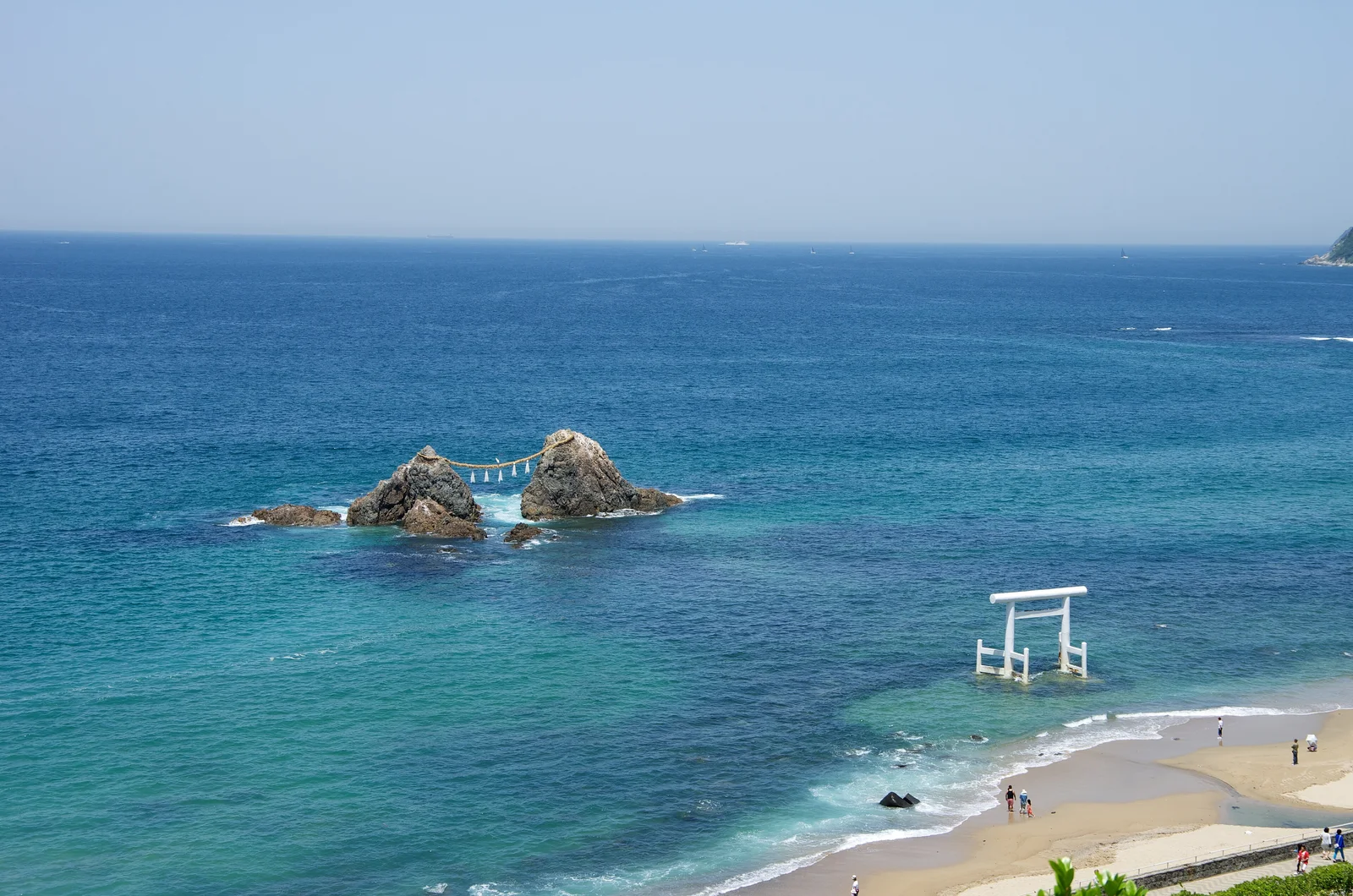

Most photos of Futamigaura are taken at sunset. A white torii stands in the shallows, two rocks tied together with a sacred rope sit beyond it, and the sun drops toward them. The Itoshima Tourism Association calls the place “Futamigaura of the setting sun”.
If you are going by bus to see that, check the date first. On an October weekday, the last direct bus back to central Fukuoka leaves at 17:31. That month the sun sets between 17:28 and 18:04. Stay for the whole sunset and the direct bus has already gone.
So this trip is easier to plan from the ride home backwards. Go out on the West Coast Liner, the direct bus from Hakata or Tenjin. You don’t change buses, and you are at the beach in a little over an hour. Choose the way back by whether you want the sunset. For a day by the sea, ride the same direct bus back. For the sunset, the answer on weekdays is the 18:21 Nishinoura bus and a train (late September to early March), and on weekends the 18:36 direct bus (mid-September to late March).
From early March to late September, no bus toward the city leaves after sunset on a weekday. If your day falls in that stretch, plan it as a daytime visit to the sea from the start.
The days a bus still runs after sunset
Start with the last departures from Futamigaura. The stop is called Futamigaura / Tsuki-to-Taiyo Itoshima Sabo-mae; on the timetables it is 二見ヶ浦・月と太陽糸島茶房前, and this guide calls it Sabo-mae. The direct bus, the Nishinoura Line and community bus [25] all run to timetables revised on 4 April 2026. On 1 October 2026 only the Kyushu University line changed.
| Last departure from Futamigaura | Weekdays | Weekends and holidays |
|---|---|---|
| Direct bus (to Tenjin and Hakata) | 17:31; Tenjin 4-chome 18:24, Hakata Bus Terminal 18:35 | 18:36; Tenjin 4-chome 19:29, Hakata Bus Terminal 19:40 |
| Nishinoura bus + train (via Kyudai-Gakkentoshi) | 18:21; station 19:01, train 19:09 | 19:36; station 20:12, train 20:23 |
| Bus [25] + train (via Chikuzen-Maebaru) | 17:29; station 18:00, train 18:10 | 17:29; station 18:00, train 18:12 |
We matched these last departures against the National Astronomical Observatory of Japan’s 2026 sunset times for Fukuoka, day by day. The tourism association puts the walk from Sabo-mae to the rocks at about 4 minutes. We added a minute and allowed 5 minutes to get back to the stop after sunset. This is when you can watch the sun go down and still catch a ride:
| Still running after sunset | Weekdays | Weekends and holidays |
|---|---|---|
| Direct bus | 1–7 January, 2 November–31 December (17:31) | 1 January–22 March, 11 September–31 December (18:36) |
| Nishinoura bus + train | 1 January–3 March, 22 September–31 December (18:21) | All year except 20 June–9 July (19:36) |
| Bus [25] + train | 1–5 January, 4 November–31 December (17:29) | Same as weekdays (17:29) |
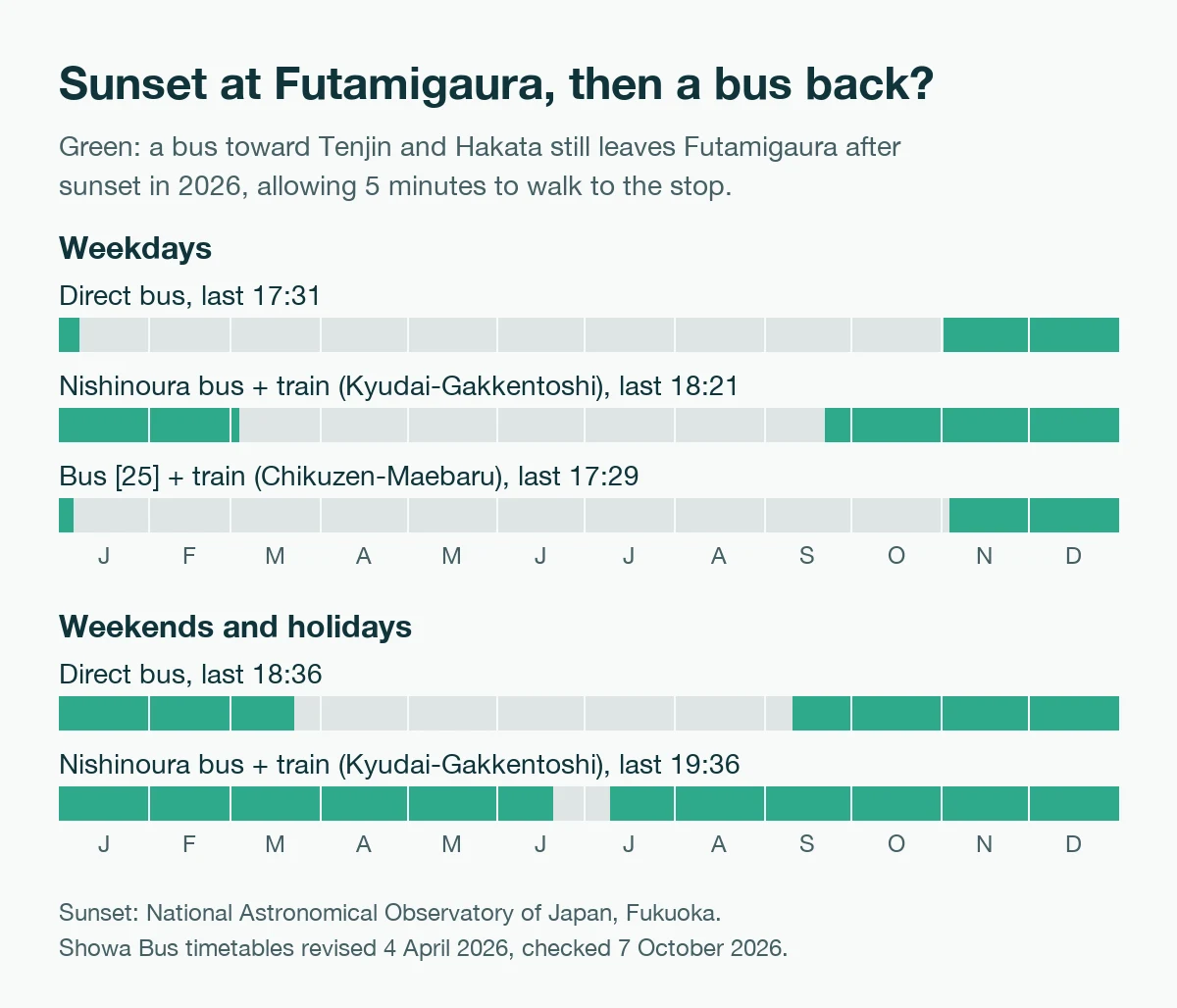
One gap in that table stands out. Around the June solstice, the tourism association says, the sun sets right between the two rocks. Plenty of people probably come for that one picture, and those are the only weeks of the year when even the last weekend Nishinoura bus leaves before you can watch the sunset and walk back to the stop. To see the solstice sunset, plan on a rental car, a taxi or a night nearby.
Late autumn and winter work the other way. From early November even the weekday direct bus leaves after sunset. The sun goes down early, so you can have the beach in daylight and the sunset without a long day.
Counting on the last bus carries one risk. Showa Bus says that when a bus is full, nobody else can board and passengers are sent to the next one. If everyone walks up from the beach at once after sunset, not all of them may fit. On weekends, missing the 18:36 direct bus still leaves the 19:36 Nishinoura bus. On weekdays, the 18:21 Nishinoura bus is the last one toward the city, and nothing comes after it. For a weekday sunset, get to the stop early and stand near the front of the line.
If everything has gone, take a taxi. On the Fukuoka City taxi tariff revised on 1 July 2026, a run in free-flowing traffic to Kyudai-Gakkentoshi Station (about 12.3 km by road) works out at about ¥4,600, and to Chikuzen-Maebaru Station (about 11.6 km) about ¥4,300. From 22:00 there is a 20% surcharge. These are our calculations from road distance, not quotes.
Going out: the direct bus, no changes
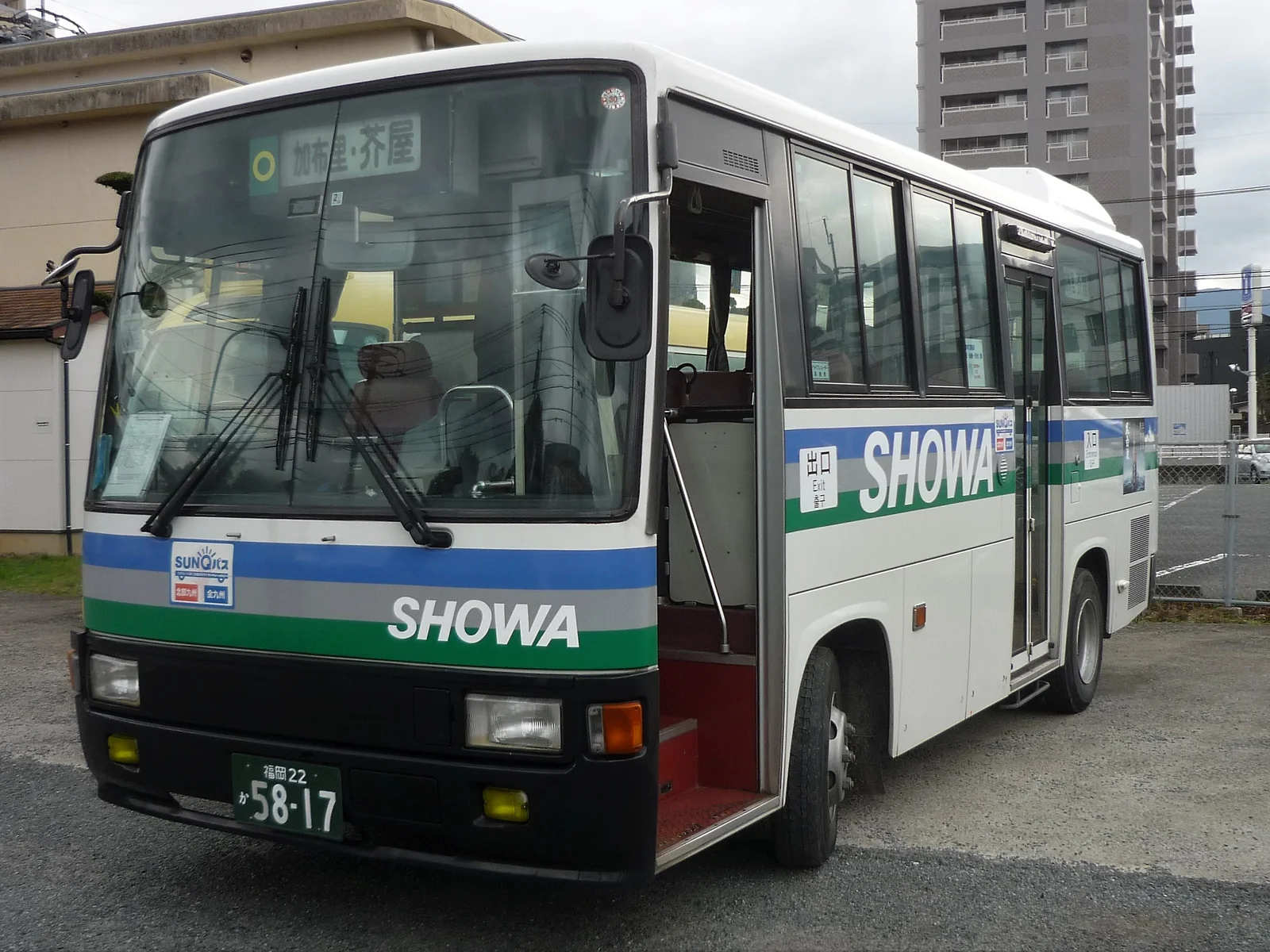

The West Coast Liner is Showa Bus’s direct express between Hakata, Tenjin and Futamigaura. It leaves from stand 32 at Hakata Bus Terminal and picks up at Gion-machi, Gofukumachi, Hakata-gocho, Nakasu, Tenjin 4-chome and Tenjin 3-chome. Weekday departures from Hakata are 08:48, 08:58, 09:28, 09:48, 10:08, 10:28, 10:58, 11:28, 11:58, 12:28, 13:28 and 14:28. On weekends and holidays, 09:18 and 12:58 are added.
The first bus at 08:48 (and the weekend 09:18) does not stop between Hakata-gocho and Tenjin 3-chome. From Tenjin, catch the next one. It takes 59 to 62 minutes from Tenjin 4-chome to Futamigaura, and usually about 70 from Hakata Bus Terminal. The fare from 1 October 2026 is ¥1,400 each way. Any post quoting less is using the fare from before 1 October 2026.
There are two beach stops. Going out, the bus calls at Futamigaura / PALMBEACH-mae first and at Sabo-mae a minute later. For the torii, get off at the second; the tourism association puts the walk from there at about 4 minutes. If an older post mentions a Futamigaura / Meotoiwa-mae stop, it was abolished on 4 April 2026, and a new stop, Oguchi / Sakurai-jinja Nishiguchi, opened nearby.
The bus has one rule. On the way out it only picks up in the city and only sets down on the coast; on the way back it is the reverse. You cannot use it to hop between stops along the coast. Showa Bus tells passengers to use the Nishinoura Line for that.
The way back has its own trap. The Sabo-mae stop serves both the direct bus to Tenjin and Hakata and the Nishinoura bus to Kyudai-Gakkentoshi Station. In September 2024, a Hong Kong traveler on a solo trip finished a meal at a restaurant facing the rocks and ran for the stop, thinking the bus waiting there was the express to Hakata. It was the Showa bus to Kyudai-Gakkentoshi, and the next express was nearly an hour away. The traveler took that bus anyway and changed to the JR Chikuhi Line at the station. The stops have been reorganized since then, but the two routes still share this one. Check the destination sign for city names such as 天神 (Tenjin) or 博多 (Hakata) before you step on.
By train and local bus
The direct bus is not the only way. Subway Airport Line trains run straight through onto the JR Chikuhi Line at Meinohama. From Tenjin or Hakata you can ride to Kyudai-Gakkentoshi or Chikuzen-Maebaru and take a local bus to the coast. Board a train bound for Chikuzen-Maebaru, Chikuzen-Fukae, Karatsu or Nishi-Karatsu, not one that ends at Meinohama.
Use an IC card or a ticket for the train. Tapping a credit card at the Fukuoka subway gates does not work for journeys continuing onto the JR Chikuhi Line.
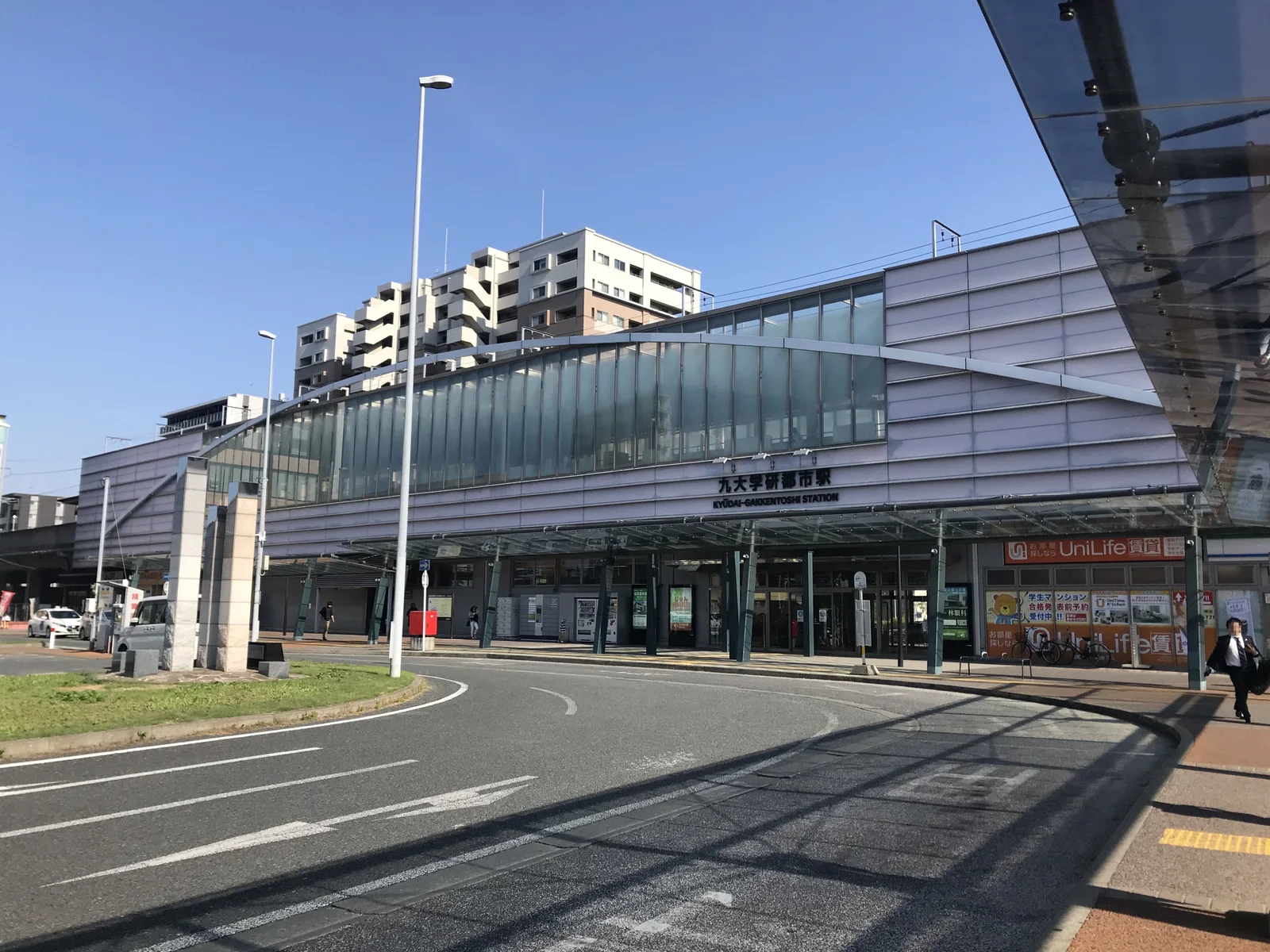
Via Kyudai-Gakkentoshi. ¥570 from Tenjin or Hakata. The Nishinoura bus leaves from stand 2 at the station. Buses 5B-2, 5A-2 and the 56 rapid go on to Futamigaura; a 5A-1 stops short at Nishinoura. The ride takes just over 30 minutes and costs ¥800 from 1 October 2026. Frequency is the problem. On weekday mornings, the 09:37 is followed by the 10:25 and then the 11:09. However fast the train, a missed bus can mean more than 40 minutes at the stand.
Time the train to the bus and this route works well. On weekdays, a train reaching Kyudai-Gakkentoshi around 09:27 meets the 09:37 bus, which reaches Futamigaura at 10:09. On weekends, a train arriving around 09:48 meets the 10:03 rapid, which reaches the beach at 10:33.
Via Chikuzen-Maebaru. ¥640 from Tenjin or Hakata. Itoshima City’s community bus [25] runs from the stop at the station’s north exit, past Nogita beach, to Futamigaura in 30 minutes. It costs ¥200 wherever you board. This is the cheapest way in, but there are only six buses a day.
| Bus [25] | Weekdays | Weekends and holidays |
|---|---|---|
| Maebaru Station north exit to Futamigaura | 09:00, 10:30, 11:35, 13:05, 14:35, 16:05 | 09:05, 10:25, 11:35, 13:05, 14:35, 15:55 |
| Futamigaura to Maebaru Station north exit | 10:29, 11:59, 12:59, 14:29, 15:59, 17:29 | Same as weekdays |
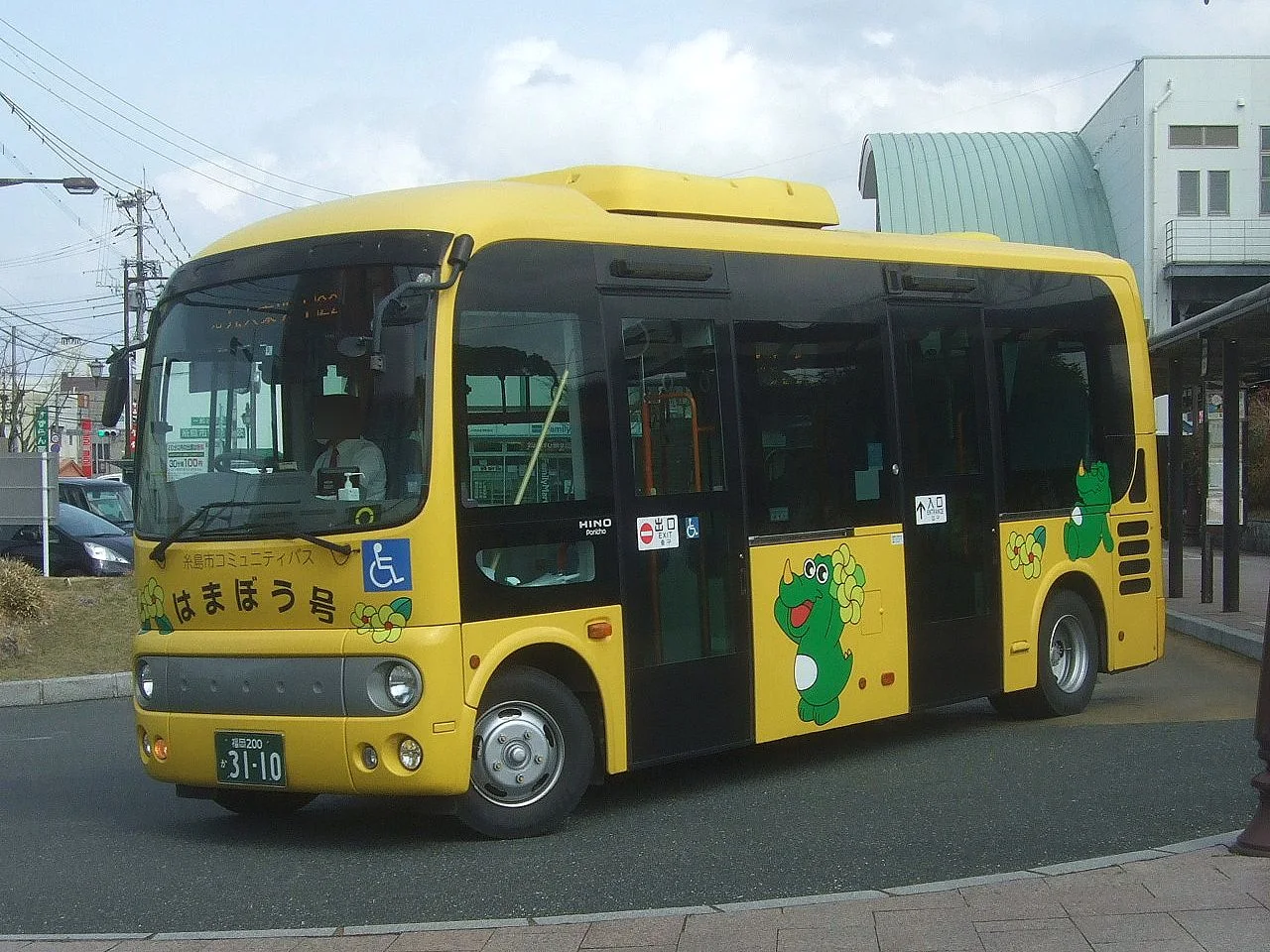

This bus does not take IC cards. Pay in cash or with PayPay, a Japanese payment app; most of the buses have no change machine. Carry ¥100 coins. On the way back, bus [25] reaches Nogita, a surf beach, 9 minutes after leaving Futamigaura. Get off there and catch the next [25], and another ¥200 buys you a second beach. The next bus comes an hour to an hour and a half later.
How much do the routes differ? We calculated it from the April bus timetables and JR Kyushu’s train-by-train times for a weekday (7 October 2026) and a Saturday (17 October 2026). Imagine arriving at the Tenjin bus stop or subway platform at any minute between 08:30 and 11:00; for each of those minutes we worked out how long it takes to reach Futamigaura. We allowed 3 minutes to change at Kyudai-Gakkentoshi and 5 at Maebaru, and left out traffic.
| Tenjin to Futamigaura (weekday, weekend in parentheses) | Average | Worst case |
|---|---|---|
| Direct bus | 73 min (75) | 98 min (98) |
| Train + Nishinoura bus | 89 min (83) | 124 min (113) |
| Train + bus [25] | 111 min (117) | 162 min (171) |
Coming back (leaving between 13:00 and 17:00), the weekday averages are similar: 75 minutes by direct bus and 97 by Nishinoura bus and train. Most of that time is waiting. The direct bus comes every 20 to 30 minutes in the morning; the Nishinoura bus runs about once an hour on weekdays. On a first visit, unless you are confident about making the connection, take the direct bus.
Fares and passes: what to buy

These are round-trip fares for one adult from Tenjin or Hakata, checked on 7 October 2026. The Showa Bus fares are the ones revised on 1 October.
| Option | Round trip | Good to know |
|---|---|---|
| Direct bus both ways | ¥2,800 | ¥1,400 each way |
| Itoshima Peninsula 1day pass, with express bus | ¥2,000 | my route app only; one direct-bus round trip plus unlimited Showa local buses that day |
| Train + Nishinoura bus both ways | ¥2,740 | ¥570 + ¥800 each way |
| Same route on the FUKUOKA TOURIST CITY PASS | ¥2,500 | Also covers the subway and city buses for the day; not the direct bus |
| Train + bus [25] both ways | ¥1,680 | ¥640 + ¥200 each way |
For a direct-bus round trip, the Itoshima Peninsula 1day pass with express bus costs ¥2,000, ¥800 less. Besides one round trip on the direct bus, it covers Showa local buses in Itoshima and western Fukuoka all day. There is also a ¥1,000 local-bus-only version, which does not include the direct bus.
The catch is that the pass is sold only in my route, a Japanese transport app. You pay with a credit card registered in the app and can buy for up to two adults at a time. Show the ticket screen to the driver when you get off. English and Korean purchase screens were added in February 2026, but Fukuoka City’s official tourist guide says the app is available only to visitors from South Korea, Taiwan and Thailand, because of privacy law. If you are coming from anywhere else, see whether your app store offers my route before you leave. If it does not, just pay the direct bus fare by IC card or in cash.
The FUKUOKA TOURIST CITY PASS (Fukuoka City area, ¥2,500 on 7 October 2026) is a one-day pass for overseas visitors on a short-term stay, bought by showing a passport. It is sold at counters including the Hakata Station General Information Center, the Fukuoka City Tourist Information Center in Tenjin, the Hakata and Tenjin bus terminals and the H.I.S. travel center in the International Terminal at Fukuoka Airport. The digital version is sold in the my route app. The pass covers the JR Chikuhi Line as far as Kyudai-Gakkentoshi and the Showa bus from there to Nishinoura and Futamigaura. It does not cover the direct bus. The train and Nishinoura bus round trip costs ¥2,740, so the pass saves ¥240 on the beach alone, and more with every subway ride in the city that day. If you use it, go both ways via Kyudai-Gakkentoshi.
Bus or tour?
You can also see Itoshima on a day tour. But a tour treats Futamigaura as one stop among several, and if the sea is why you are going, that matters.
Klook’s Yanagawa & Itoshima Day Tour leaves at 08:30 from the Lawson by the Oriental Hotel in front of Hakata Station and returns there at 18:10. It gives 30 minutes at the Meoto-iwa rocks and 30 at the palm-tree swing, then heads inland and south. In October that means the Ichiran ramen factory, Shiraito Falls, an optional Yanagawa river cruise and Dazaifu; from November it switches to a grilled-seafood lunch, Raizan Sennyoji temple and Miyajidake Shrine. Guides speak English and Chinese. When we checked on 7 October 2026, every date from 9 to 15 October was US$50.89 per person, marked 30% off. Free cancellation runs until 24 hours before, and participants must be under 70.
Another Klook product checked the same day, Fukuoka Day Trip: Shiraito Falls, Meoto Iwa, and Totoro Forest (US$50.89), leaves at 09:00 from the Lawson at Hakata Station’s Chikushi exit. On paper it reaches the palm-tree swing at 12:20, Futamigaura at 13:10 and Keya-no-Oto at 15:20, so it spends longer on the coast. The vehicle is small, so there is no room for suitcases, and travelers 70 or over need a medical certificate.
Do not take the itinerary times at face value. A Taiwanese traveler on a solo trip to Fukuoka in May 2025 joined a tour on another platform with a similar route: Shiraito Falls, Ichiran, Futamigaura, Keya and Fukuoka Tower. At the torii and the rocks there was a queue for photos, and Futamigaura, at about 40 minutes, was the one stop of the day that felt “too short”. The traveler’s verdict: take the bus to enjoy the sea at leisure, and take a tour to cover many places efficiently.
If Futamigaura is the reason you are going, I would take the bus. The 30 to 40 minutes a tour gives you at the sea is about the length of one photo queue at the torii. A tour suits a different traveler. If you want Itoshima, Yanagawa and Dazaifu in a single day and would rather not plan the connections, check prices by date and guide languages for the Yanagawa & Itoshima Day Tour on Klook. It does not suit travelers aged 70 or over, or anyone going for the sunset.
With more time
Sakurai Shrine. Futamigaura is part of the grounds of Sakurai Shrine. The bus stop toward the shrine is the new Oguchi / Sakurai-jinja Nishiguchi, opened in April 2026, 4 minutes from Sabo-mae on the Nishinoura bus or [25].
An e-bike at the beach. Itorito, right next to Itoshima Sabo at the Sabo-mae stop, rents electric-assist bikes for ¥1,650 for two hours, ¥2,200 for three, or ¥3,300 for the day (10:00–17:00). It takes cards or electronic payment only, and you need ID. To ride from Maebaru instead, the Itoshima Tourism Association also rents e-bikes, at ¥2,000 for up to four hours. Book by the day before; every rider needs original ID and a phone that can take calls. Rentals generally go out until 15:00, and returns after 17:00 cost ¥3,000 an hour.
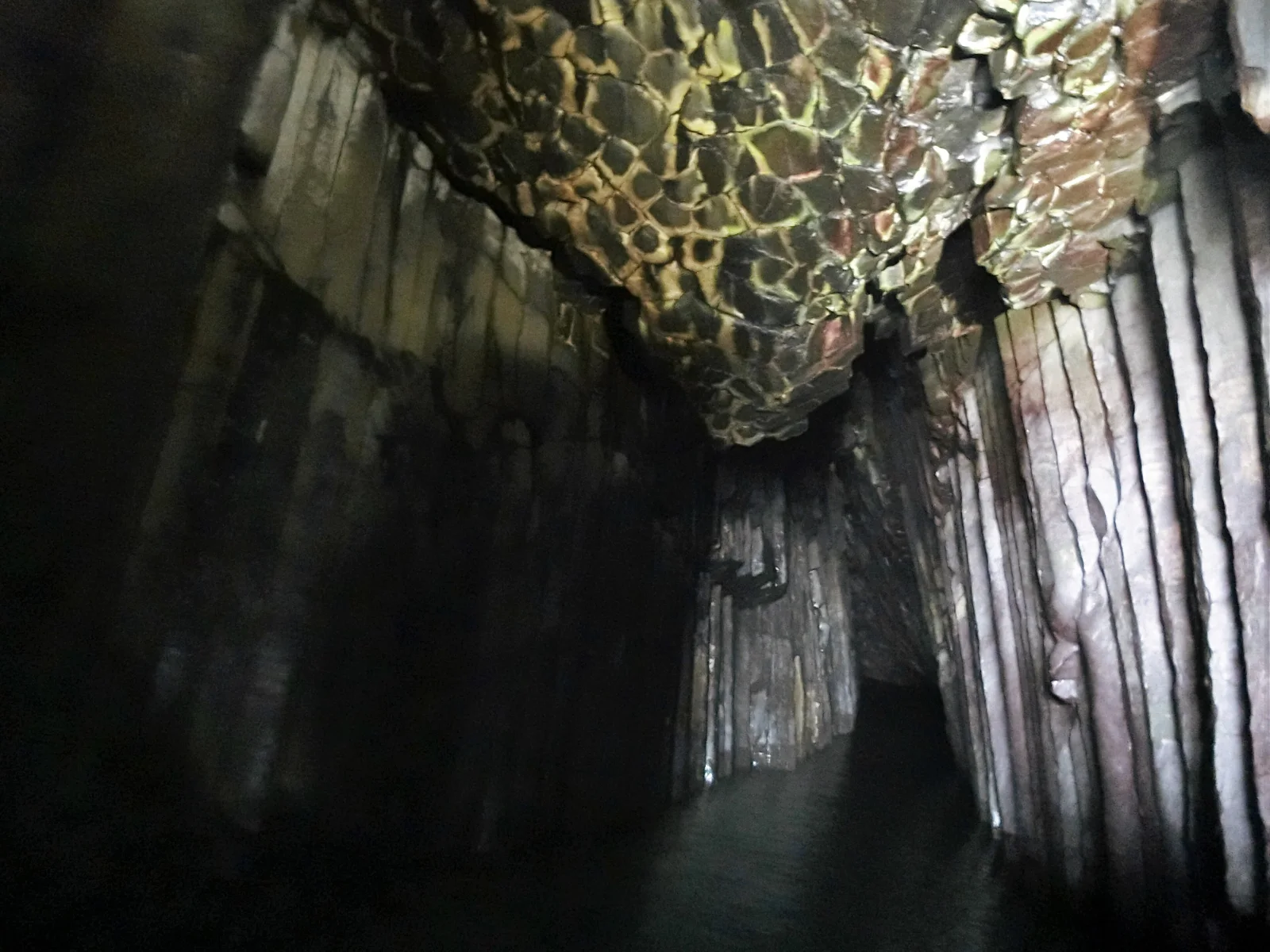

Keya. At the western tip of the peninsula, Keya-no-Oto is a basalt sea cave, and from April to November a sightseeing boat goes in on a trip of about 25 minutes. It is canceled whenever the wind is strong, even in fine weather; the tourism association says that happens about a third of the time. By bus, the 56 rapid or the Itoshima Sunset Line takes 20 minutes from Sabo-mae to Keya Kobaiten for ¥710. On weekdays there are only two, at 11:39 and 13:21; on weekends there are seven.
On a weekend, the day could look like this. Take the 10:03 rapid from Kyudai-Gakkentoshi and reach Futamigaura at 10:33. After lunch, the 13:21 bus gets you to Keya at 13:41. From Keya Kobaiten, bus [26] at 15:46 reaches Chikuzen-Maebaru at 16:13, and the 16:23 train takes you back to the city. With buses this far apart, about three stops is the limit for a day. Add the Futamigaura sunset and this route no longer fits.
What can change before you go
- Saturday 10 October 2026, Tour de Kyushu. Showa Bus has announced that the direct bus will not run at all that day (notice updated 24 September). Nishinoura buses leaving Kyudai-Gakkentoshi between 10:03 and 13:23 and some midday [25] buses are also canceled, and heavy delays are expected on the routes that do run. If you are going that day, read the special service notice first, and if you have booked a tour, ask the operator whether it will run.
- Fares. The direct bus and Nishinoura bus fares are those revised on 1 October 2026. Train fares come from the 1 April 2026 table, and the ¥200 [25] fare was not changed in this revision. Showa Bus warns that some route planners may still show the old fares.
- Timetables. The bus timetables are the 4 April 2026 revisions (the Keya Line [26] is from 1 October 2025). On 13–15 August and from 30 December to 3 January, buses run to the weekend timetable. Check train times for your date on JR Kyushu’s Kyudai-Gakkentoshi and Chikuzen-Maebaru station pages.
- Weather. Strong wind stops the Keya boat. If Futamigaura is the reason for your day, keep your plans loose enough to move it to the clearest day of your trip.
If you are giving Yanagawa and Dazaifu a day of their own, continue with the Yanagawa and Dazaifu guide.
Put these notes into a Fukuoka 2–3 day itinerary →
Sources & verification
A source-based guide. Check the linked operator information again before you travel.
- Showa Bus: West Coast Liner timetable (revised 4 April 2026, PDF)Sources checked:
- Showa Bus: West Coast Liner fare table from 1 October 2026 (PDF)Sources checked:
- Showa Bus: Nishinoura Line and Itoshima Sunset Line timetable (revised 4 April 2026, PDF)Sources checked:
- Showa Bus: Nishinoura Line and Itoshima Sunset Line fare table from 1 October 2026 (PDF)Sources checked:
- Showa Bus: Nogita–Futamigaura Line [25] timetable (revised 4 April 2026, PDF)Sources checked:
- Showa Bus: Keya Line [26] timetable (revised 1 October 2025, PDF)Sources checked:
- Showa Bus: Local bus fare revision from 1 October 2026Sources checked:
- Showa Bus: Revised fares in route search (25 September 2026)Sources checked:
- Showa Bus: Stop changes from 4 April 2026Sources checked:
- Showa Bus: Kyushu University line timetable from 1 October 2026 (other lines unchanged)Sources checked:
- Showa Bus: Service changes for the Tour de Kyushu on 10 October 2026Sources checked:
- Showa Bus: Itoshima Peninsula 1day free passesSources checked:
- my route: Itoshima Peninsula 1day pass FAQSources checked:
- Fukuoka City Official Tourist Guide: FUKUOKA TOURIST CITY PASSSources checked:
- Fukuoka City: FUKUOKA TOURIST CITY PASS guide map (PDF)Sources checked:
- Fukuoka City Subway: Fares including the JR Chikuhi Line (from 1 April 2026, PDF)Sources checked:
- JR Kyushu: Kyudai-Gakkentoshi Station timetableSources checked:
- JR Kyushu: Chikuzen-Maebaru Station timetableSources checked:
- Itoshima City: Community bus fares and accepted paymentSources checked:
- Itoshima Tourism Association: Sakurai FutamigauraSources checked:
- National Astronomical Observatory of Japan: Sunrise and sunset in Fukuoka, 2026Sources checked:
- Itorito: E-bike rental at FutamigauraSources checked:
- Itoshima Tourism Association: Rental bicyclesSources checked:
- Itoshima Tourism Association: Keya-no-Oto sightseeing boatSources checked:
- Klook: Yanagawa & Itoshima Day TourSources checked:
- Klook: Fukuoka Day Trip: Shiraito Falls, Meoto Iwa, and Totoro ForestSources checked:
- Fukuoka City Taxi Association: Fares (revised 1 July 2026)Sources checked:
Help us keep this note useful
A quick response helps us decide what to clarify or recheck. No account or email is needed.