
Plan a day in Nagasaki from a Fukuoka hotel and you tend to get stuck at the same point. The daytime part falls into place. Then there is the night view from Mount Inasa. Stay for the lights and you worry about the last train; catch a sensible train and it feels as if you are leaving halfway through the view. So you consider a night in Nagasaki, and then the thought of packing up and moving hotels again puts you off.
A calendar settles more of this than you might expect. Between October and February, do it as a day trip, night view included, and come back on the 21:18 Kamome. Between May and August, we would stay the night in Nagasaki. The 21:18 departure is from the timetable for 7 October 2026. For the months in between, it depends on what else you want from the day.
The reason is one number: sunset. In Nagasaki it falls at 17:16 in mid-December and at 19:33 at the end of June, more than two hours apart. The last trains leave at the same time all year while the dark arrives at a different time, so the same day trip buys you a very different amount of night on the summit. In June and July, catching the 21:18 train means heading down just as the sky finally goes dark.
The transport fits in one line too. From Tenjin, we think the best balance of time and money is the express bus out and the Kamome train back. The rest of this guide works through the times and fares.
Sunset decides the day trip
Start with what does not move. On the timetable for Wednesday 7 October 2026, the last train from Nagasaki that runs through to Hakata is Kamome 66 at 22:10, arriving at 23:41. The one before leaves at 21:18 and reaches Hakata at 22:47. There is also a Kamome at 23:30, but it terminates at Shin-Omura and will not get you back to Fukuoka.
The Mount Inasa ropeway runs until 22:00, with the last car up at 21:00. Cars leave every 15 to 20 minutes and the ride takes about five minutes. From Nagasaki Station, city bus and ropeway take 20 to 30 minutes to the top. So for the 21:18 train we plan to join the queue down from the summit at 20:00. That leaves room to miss one car and wait for a bus and still reach the train. For the 22:10 train, start down at 21:00 and take the 21:30 free shuttle bus.
What is left is when it gets dark. We allow about 30 minutes after sunset for the sky to darken. On that basis, here is how much night you get on the summit, month by month.
| Month (15th) | Sunset | 21:18 train (down at 20:00) | 22:10 train (down at 21:00) | Our call |
|---|---|---|---|---|
| October | 17:48 | about 1 h 40 min | about 2 h 40 min | Day trip, 21:18 train |
| November | 17:20 | about 2 h 10 min | about 3 h 10 min | Day trip, 21:18 train |
| December | 17:16 | about 2 h 15 min | about 3 h 15 min | Day trip, 21:18 train |
| January | 17:37 | about 1 h 50 min | about 2 h 50 min | Day trip, 21:18 train |
| February | 18:06 | about 1 h 25 min | about 2 h 25 min | Day trip, 21:18 train |
| March, September | 18:28, 18:27 | about 1 h | about 2 h | Day trip; 22:10 if you want longer |
| April | 18:50 | about 40 min | about 1 h 40 min | 22:10 train or stay |
| May, August | 19:12, 19:06 | around 20 min | around 1 h 20 min | Stay the night |
| June, July | 19:30 | almost none | about 1 h | Stay the night |
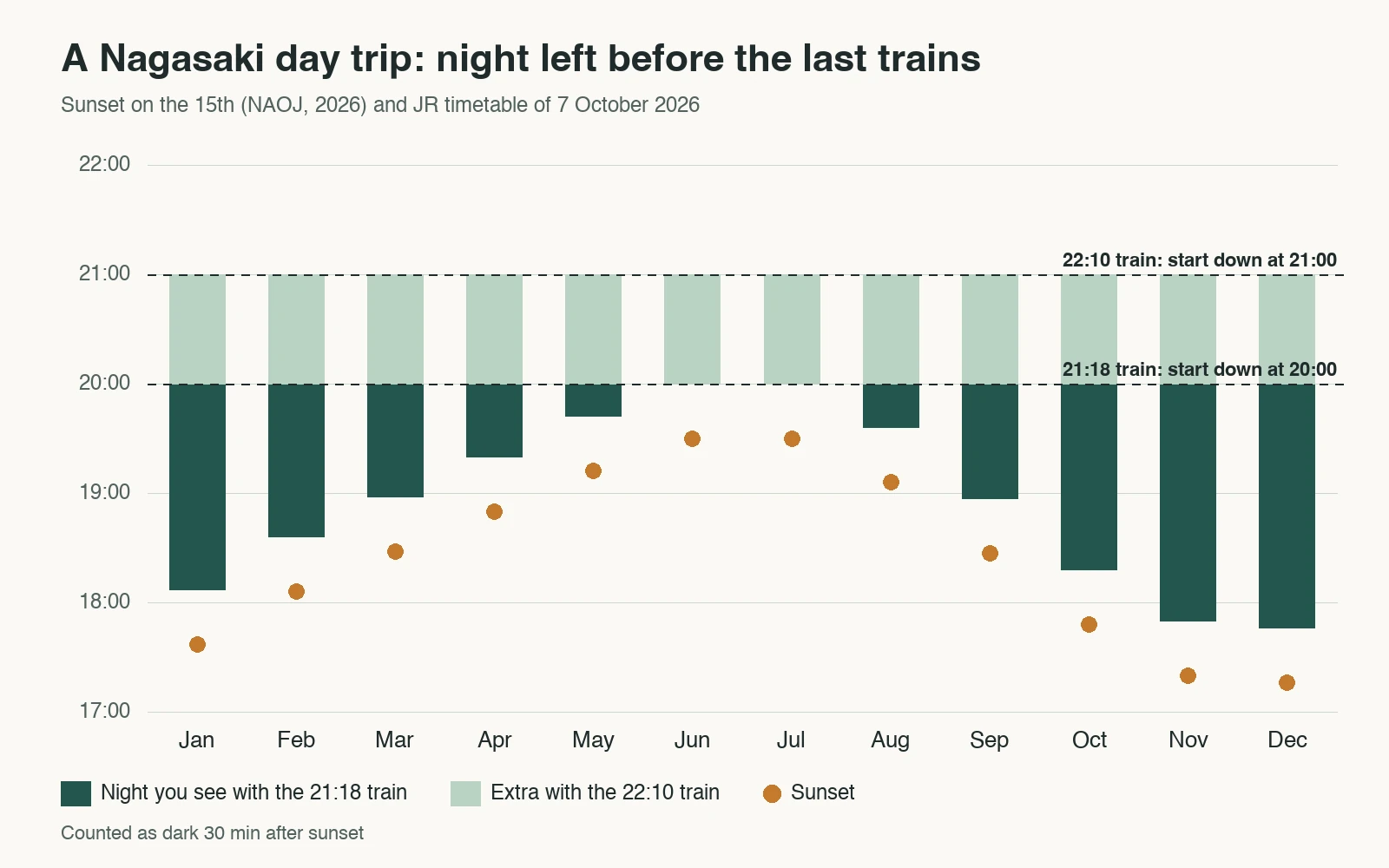
November and December make the cleanest day trips. The sun sets around 17:20, and by about 17:50 it is dark enough for the lights. Go up at dusk and you still have more than two hours before 20:00. That is reason enough to save the hotel money and the extra packing.
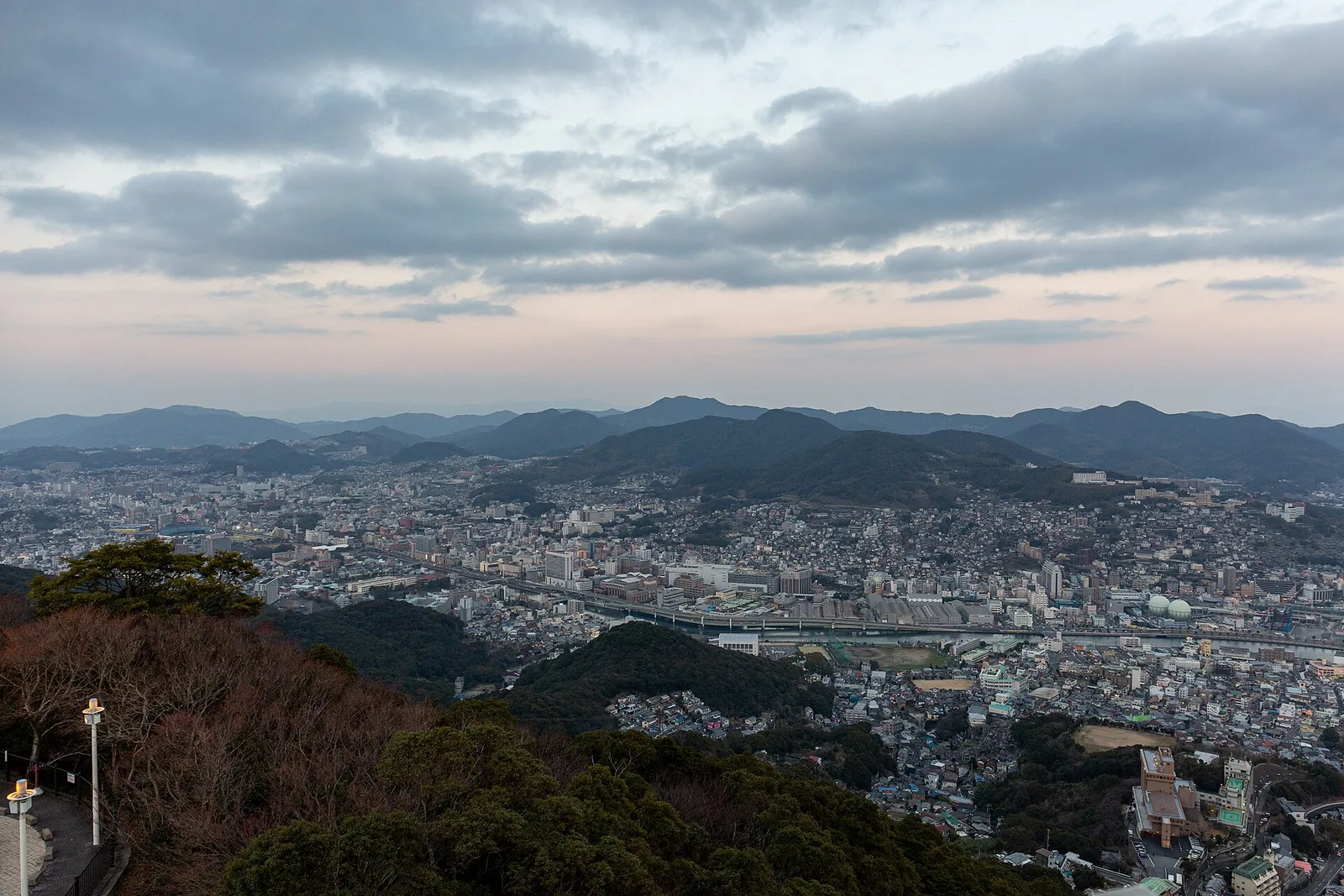

Summer is different. Aim for the 22:10 train and even in June you get about an hour on a dark summit. But you reach Hakata at 23:41, and a hotel in Tenjin or elsewhere is still a ride away. If an hour of night costs you a midnight return, we would rather book a room by Nagasaki Station and gain the next morning as well.
Decide when you come down first
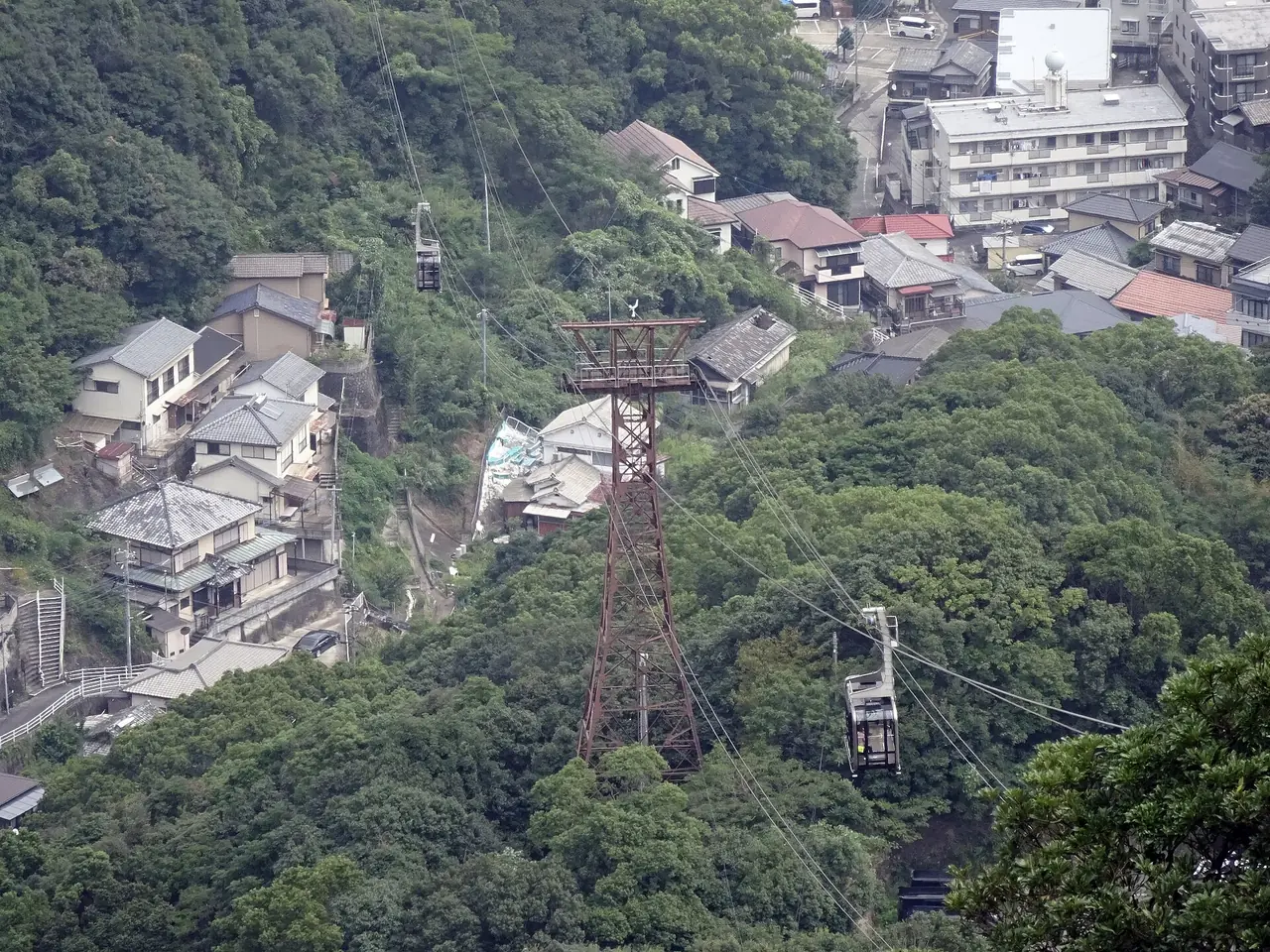

On a night-view day trip, fix the time you come down before the time you go up. Each car takes up to 31 people, and the operator warns that from the evening the wait to board can be long. You come down in the same cars, so expect to wait at busy times and plan around it.
For the 21:18 train, the evening looks like this.
- About 30 minutes before sunset, take city bus 3 or 4 from the Nagasaki Station stop to Ropeway-mae. Fuchi Jinja Station, the lower ropeway station, is about 3 minutes’ walk.
- Ride up for about 5 minutes and watch the sunset turn into the night view. The summit is 333 m high and the observatory looks out in every direction.
- Join the queue down at 20:00, then take the bus back to the station.
- Board Kamome 64 at 21:18. At Takeo-Onsen, cross to the Relay Kamome waiting on the opposite side of the same platform, and you are in Hakata at 22:47.
As checked on 7 October 2026, the ropeway costs ¥1,900 return for an adult.
There is also a free shuttle bus. It loops past several city hotels and JR Nagasaki Station to Fuchi Jinja Station and back. Run 1 leaves JR Nagasaki Station at 19:17 and reaches the ropeway at 19:25; run 2 leaves at 19:47 and arrives at 19:55. The return you may take is fixed: 20:30 or 21:00 if you came on run 1, 21:30 or 22:10 if you came on run 2. Go up on run 1 and come down on the 20:30 and you get less than 30 minutes on the summit. The 21:00 reaches the station at 21:09, leaving only 9 minutes for the 21:18 train.
So the shuttle pairs with the 22:10 train. Go up on run 1 or 2, come down on the 21:30, reach the station at 21:39 and board 31 minutes later. There is a separate booking page, you may not get a seat if it is busy, and the bus does not run when the ropeway is suspended. Once your date is set, start at the booking page.
Mount Inasa also has a slope car, about 9 minutes from the park’s mid-station to the summit, carrying up to 80 people on two cars. It stopped in April 2026. The Nagasaki Bay side (line B) came back on 3 October 2026, and line A is due to follow on 20 October, a date the weather could move. From 13 to 16 October, line B skips its daytime service (9:00–18:00) and runs only at night. It starts from the mid-slope park rather than the ropeway station, and bus plus slope car take 30 to 40 minutes from the station. When you are working to a last train, the ropeway makes the sums easier.
Bus out, Kamome back
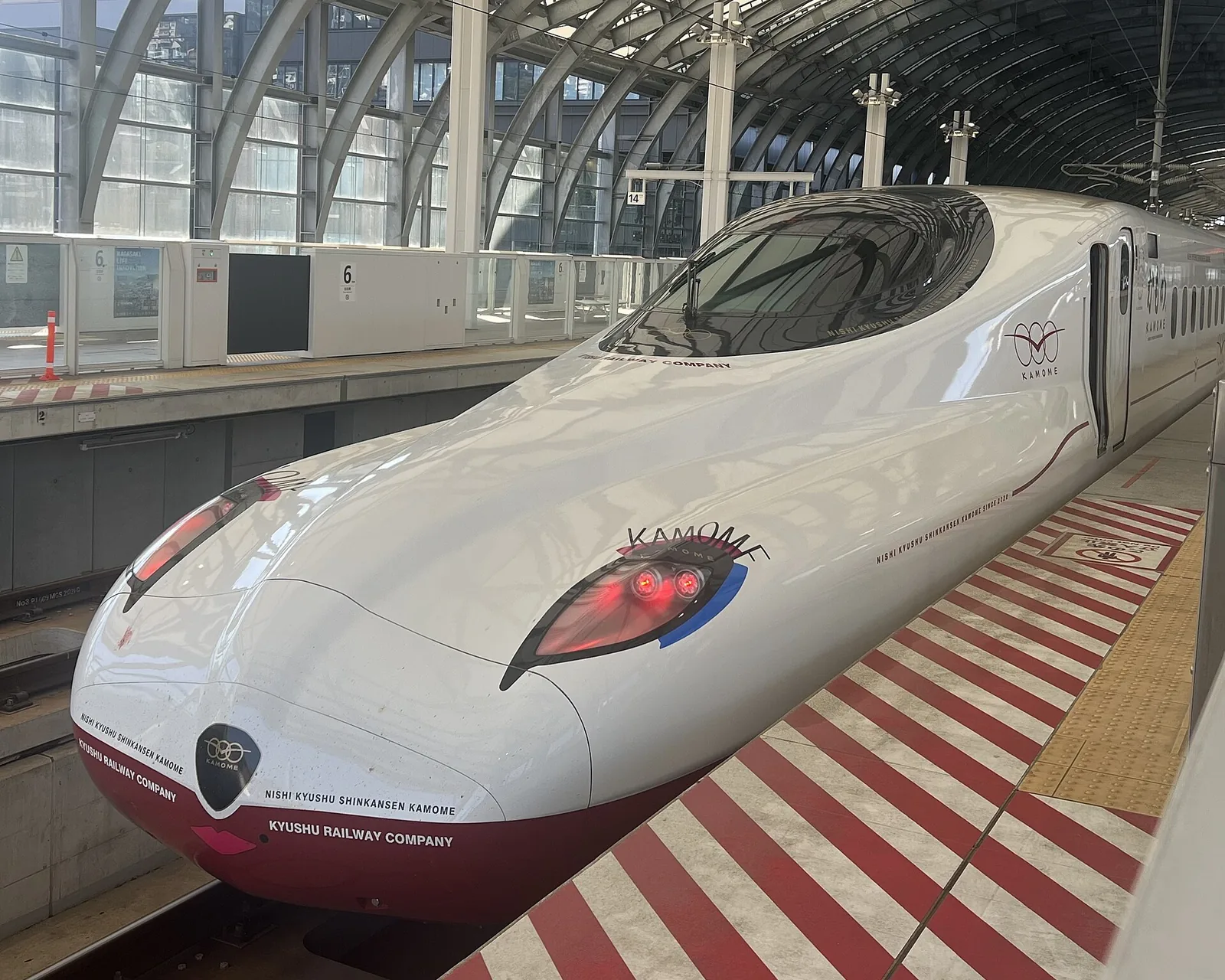

There are two ways between Fukuoka and Nagasaki: the Kyushugo express bus straight from Tenjin or Hakata, or the train, taking the Relay Kamome from Hakata and changing at Takeo-Onsen to the Nishi Kyushu Shinkansen Kamome. The fares and times below were checked on 7 October 2026.
| Kyushugo express bus | Relay Kamome + Kamome | |
|---|---|---|
| Departs from | Tenjin Expressway Bus Terminal, Hakata Bus Terminal | Hakata Station |
| Journey time | Tenjin to Nagasaki Station 2 h 7 min to 2 h 23 min | Hakata to Nagasaki from 1 h 20 min |
| Adult one way | ¥2,900 | ¥6,490 regular fare |
| Return | ¥5,400 return ticket, valid 10 days | ¥12,980, twice the regular fare |
| Last evening departure from Nagasaki | 20:45 daily (Tenjin 22:58); 21:15 Fri, Sat, Sun and holidays (Tenjin 23:28) | 22:10 (Hakata 23:41) |
The gap between ¥2,900 and ¥6,490 is the big one. JR Kyushu’s Japanese-language internet booking sells the same journey for ¥4,500 (up to the day), ¥3,850 (3 days ahead) and ¥3,400 (7 days ahead, no changes). The multilingual JR-KYUSHU Train Reservation, however, states that it handles regular-price tickets only. Unless you are confident with a Japanese-language sign-up and checkout, count the train at ¥6,490. Even the ¥4,500 fare leaves ¥1,600 between train and bus.
That is why, if you are staying in Tenjin, we suggest the bus there and the train back. Mornings have slack, and the bus leaves from Tenjin itself. The 8:25 from Tenjin stops at Peace Park at 10:33, six minutes before Nagasaki Station. If the Atomic Bomb Museum and Peace Park are your first stop, you do not have to ride to the station and double back. At night it flips. After the summit, a train that has you in Hakata in an hour and a half beats more than two hours on a coach. The combination costs ¥2,900 for the bus plus ¥6,490 for the regular train, ¥9,390 in all, which is ¥3,590 less than the train both ways.
Staying near Hakata Station, the train both ways is the natural choice. The 7:46 bus from Hakata Bus Terminal reaches Nagasaki Station at 10:12, close to two and a half hours, so the train saves you more than an hour in the morning. If saving money comes first, the ¥5,400 return bus ticket is ¥7,580 less than the regular train both ways.
To come back by bus and still see the night view, check the day of the week. The 21:15, which runs only on Fridays, Saturdays, Sundays and holidays, is easy to make if you head down from the summit at 20:00, and it reaches Tenjin at 23:28. For the daily 20:45 you need to start down around 19:30, which in October means a little over an hour on a dark summit. In Nagasaki the bus leaves from the prefectural (Kenei) bus terminal in front of the station, not from inside JR Nagasaki Station.
Every seat on the bus is reserved, and the operator itself says services are often full, mainly at weekends. Bookings open at 8:00 on the same date one month ahead. The operator’s web booking is through Highway Bus, which has English and Traditional Chinese booking pages. Those pages say they cover only some tourist routes, so if Kyushugo does not show up, buy at the Tenjin or Hakata terminal counter. When you board, give the driver your name and seat number and show your ticket; the fare or ticket is collected when you get off. With a web ticket, keep it ready to show again as you leave. Credit cards are not accepted on board. You can pay by card for web bookings and at the Tenjin, Hakata and Nagasaki Kenei terminal counters, and on board you can tap a transport IC card such as nimoca, except on extra relief coaches.
On the train, the change at Takeo-Onsen is nothing to worry about: the connecting train waits on the opposite side of the same platform. If you are weighing up a rail pass, we did the sums in the Northern Kyushu rail pass comparison. For one Nagasaki round trip, the ¥14,000 three-day pass costs ¥1,020 more than regular tickets at ¥12,980.
In daylight, work from north to south
The daytime part of a day trip is shorter than it looks. Off the 8:25 bus at Peace Park at 10:33 and on your way to the ropeway at dusk, you have a little under seven hours in October. Start in the north at Peace Park and the Atomic Bomb Museum and work south towards Dejima and Glover Garden, and you never double back.
The Atomic Bomb Museum closes at 17:30 in April and from September to March, with last entry at 17:00. Leave it for the afternoon and you will rush it, so go there first. Dejima is open until 21:00, last entry 20:40, so it can wait. Glover Garden usually closes at 18:00, but in autumn and winter 2026 it has evening openings: until 20:00 from 12 October to 31 December (18:00 on 21 October), and until 21:30 on some Fridays and Saturdays in October.
Those evening openings make a useful alternative on a day trip. The garden looks out over Nagasaki Harbour, and the operator itself promotes the night view from inside it. If the ropeway queue puts you off, you can end the evening here instead. It is a different view, though, from looking all round from a 333 m summit on Mount Inasa. If the night view is the reason for the trip, go to Mount Inasa.
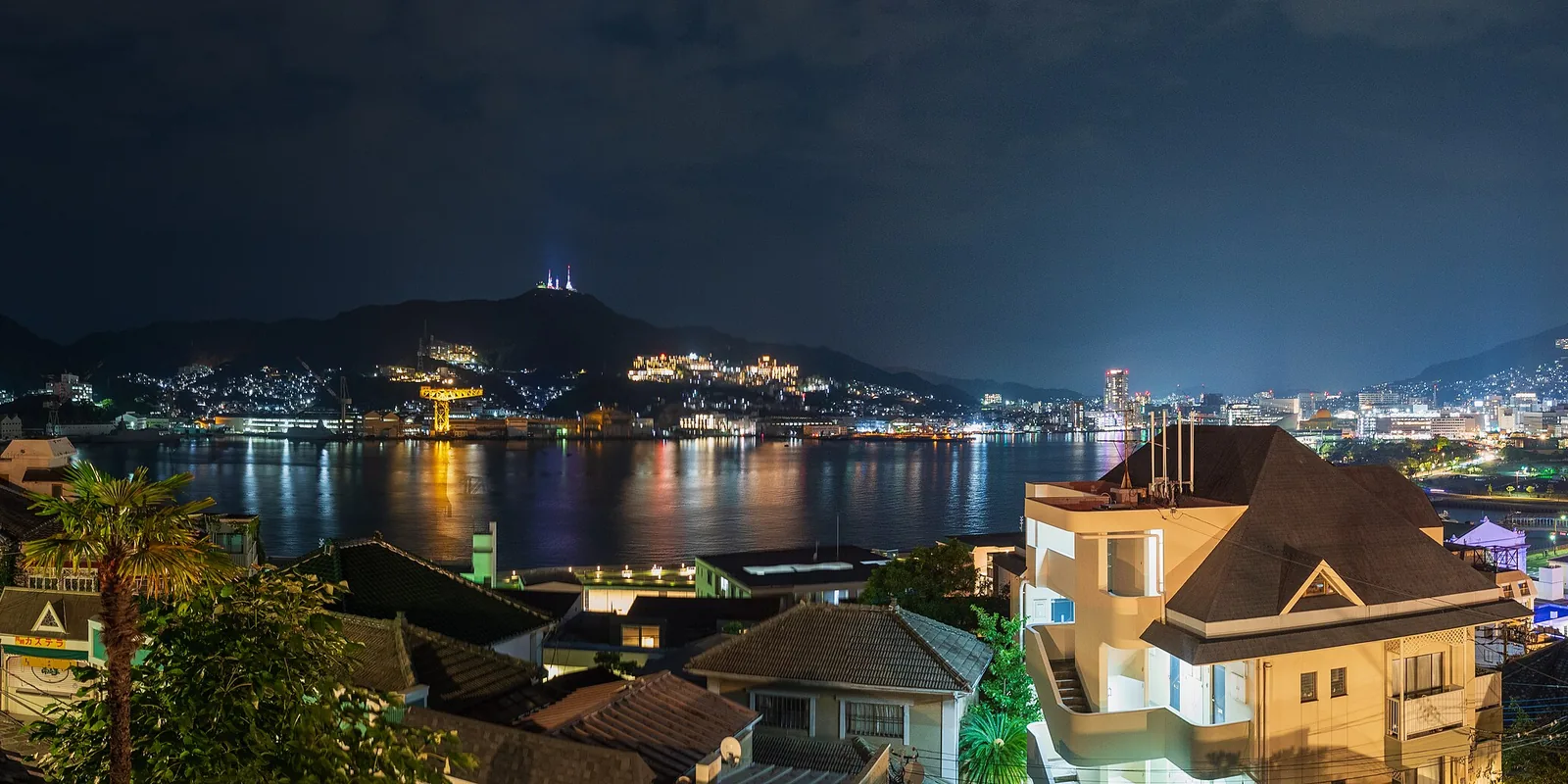

If it were our October day trip, we would take the morning bus to Peace Park and see the museum first, then come down into the city for lunch and Dejima. A little after 17:00, a bus from the station to the ropeway, and the sunset from the top. Glover Garden we would leave for another trip. Try to fit everything in and you end up watching the clock in the museum and on the summit alike. What this plan leaves out is an unhurried dinner. If that matters to you, it is one more reason to stay.
If you stay, stay by the station
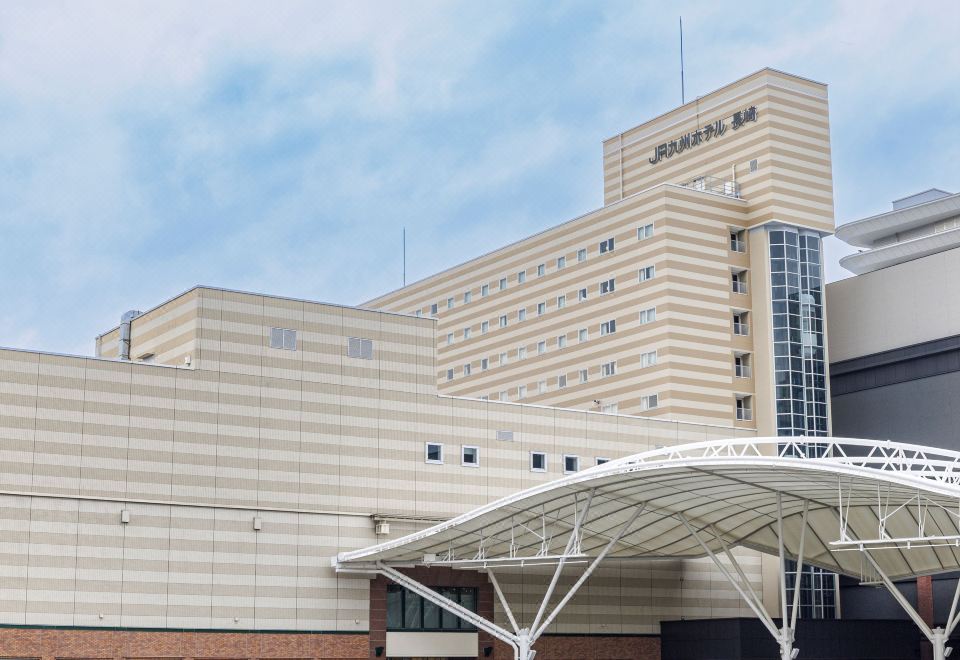
There are three cases where we would stay. You want the night view between May and August. You are travelling with children and a midnight return is too much. Or you want the Atomic Bomb Museum, Dejima, Glover Garden and Mount Inasa all in one visit. That last one holds in any season: give the city and the night view to the first afternoon and evening, and Glover Garden, which opens at 8:00, to the next morning.
Staying is when the free shuttle earns its keep. With no last train to catch, you can go up on run 2 and come down on the 22:10, which stops at JR Nagasaki Station at 22:19. If you are leaving by train the next morning, for Fukuoka or anywhere else, a hotel near the station is the easy choice. JR Kyushu Hotel Nagasaki is a 3 to 5 minute walk from JR Nagasaki Station’s East Exit, with reception on the second floor.
Choose the room by size. The Standard Double is 15 m² with one 140 cm bed; the Standard Twin is 21 m² with two beds. For three, there is the 25 m² Superior Twin with a sofa bed or the 28 m² Deluxe Twin, which sleeps up to three. Two people with suitcases may find the 15 m² double tight.
When we checked Trip.com on 7 October, availability varied a lot by date. For two adults on 21–22 October, nothing was bookable. For 11–12 November, only the Standard Double was listed, at US$127 including taxes as a first-booking deal, room only (breakfast ¥2,200 per adult extra), with free cancellation until 23:59 on 8 November. That price is for a first Trip.com booking, so it will show higher if you have booked before. Enter your dates and party and check JR Kyushu Hotel Nagasaki’s rooms and rates on Trip.com, then match the room name, breakfast, the total with taxes and the free-cancellation deadline. If you need twin beds and only the double is left, look at another date or another hotel.
If you are staying for the view, watch the weather too. The ropeway can stop in bad weather. Book a date whose free-cancellation deadline falls after you can see a reliable forecast, and you keep room to change plans.
Two decisions before you go
First, check which season your trip falls in. October to February, plan the day backwards from the 21:18 train; May to August, book a room by the station. Then choose transport. From Tenjin, bus in the morning and train at night gives up the least on time and on money.
Timetables change by date, so before you leave, open JR Kyushu’s Nagasaki Station timetable to confirm the 21:18 and 22:10 run that day, the Kyushugo timetable for the last bus, and the Mount Inasa ropeway page for service status.
Sources & verification
A source-based guide. Check the linked operator information again before you travel.
- Kyushugo: fares and discount ticketsSources checked:
- Kyushugo: timetable from 1 April 2026 (PDF)Sources checked:
- Kyushugo: boarding flow and booking FAQSources checked:
- Nishitetsu: Fukuoka–Nagasaki Kyushugo routeSources checked:
- Highway Bus: foreign-language reservationsSources checked:
- JR Kyushu: Nagasaki–Hakata by Nishi Kyushu Shinkansen and internet fares (Japanese)Sources checked:
- JR Kyushu: JR-KYUSHU Train Reservation (regular-price tickets only)Sources checked:
- JR Kyushu: Nagasaki Station departures, 7 October 2026Sources checked:
- JR Kyushu: Kamome 64 and Relay Kamome 64, 7 October 2026Sources checked:
- JR Kyushu: Kamome 66 and Relay Kamome 66, 7 October 2026Sources checked:
- Inasayama Park: Nagasaki Ropeway hours, fares and free shuttle busSources checked:
- Nagasaki Ropeway: free shuttle bus reservationsSources checked:
- Inasayama Park: slope car reopening from 3 October 2026Sources checked:
- Inasayama Park: slope carSources checked:
- Discover Nagasaki: getting to Mount InasaSources checked:
- National Astronomical Observatory of Japan: sunrise and sunset in Nagasaki, 2026Sources checked:
- Nagasaki City: Atomic Bomb Museum hours and feesSources checked:
- Dejima: opening hoursSources checked:
- Glover Garden: hours, evening openings and feesSources checked:
- JR Kyushu Hotel Nagasaki: accessSources checked:
- JR Kyushu Hotel Nagasaki: guest roomsSources checked:
- Trip.com: JR Kyushu Hotel NagasakiSources checked:
Help us keep this note useful
A quick response helps us decide what to clarify or recheck. No account or email is needed.