
In October 2026, anyone planning a cherry blossom trip for spring 2027 is stuck on one question. The first forecast of the 2026 season did not appear until 18 December 2025. Do you wait for it, or pick your dates and book a room now?
Most people fill the gap with the Japan Meteorological Agency’s “normal” full-bloom dates: 31 March in Tokyo, 4 April in Kyoto, 6 May in Sapporo. Those dates are averages of the 30 years from 1991 to 2020. Set them against the last ten springs (2017–2026) and, in all 11 cities compared here, the ten-year average full bloom came earlier than the normal. The gap is widest in Tohoku and Hokkaido.
So this guide picks dates from the last ten years instead. Tokyo on 26–30 March. Kyoto and Osaka from a single base on 31 March–6 April. Hokkaido in late April, not Golden Week. Until the forecasts arrive, hold those dates with free-cancellation rooms, then reassess the broad timing when forecasts begin. Use full-bloom forecasts and reports from the parks you want to visit before fixing individual sightseeing days. These are dates to hold while you wait for forecasts, not a 2027 bloom forecast. Autumn leaves come later in the guide.
If your travel dates are already fixed
Start with the week you can travel, then choose the city. Here are three examples using the same 2017–2026 records and a viewing window from the observed full-bloom day through four days later.
| Your stay | A base to consider | Overlap in 10 springs |
|---|---|---|
| 26–30 March | Tokyo | 8 |
| 31 March–6 April | Kyoto or Osaka | Kyoto 7; Osaka 9; either city 10 |
| 25–29 April | Sapporo | 8 |
A late spring can miss the Tokyo dates. In Kansai, choose each day’s city from the blossom reports. The Sapporo result refers to its sample tree, not every park or all of Hokkaido.
The counts are a look back at those ten springs, not the chance of success in 2027. Wind, rain, tree varieties and the particular park can change what you see. Before paying, check the cancellation deadline and its time zone, any prepayment and refund terms, and whether moving the dates would require a new price; “free cancellation” does not mean a free date change.
To hold rooms now, start from Klook’s city hotel lists for Tokyo, Kyoto, Osaka and Sapporo. They open without dates, so enter your stay and party size first, then read each room’s cancellation terms before you book.
Five days around the normal date worked half the time
The agency watches one sample tree in each city. First bloom is the day five or six flowers are open; full bloom is the day about 80% of the buds are open. Most are Somei-yoshino trees; parts of Hokkaido and Okinawa observe other species.
What a traveler needs to know is whether a tree in full bloom falls inside their trip. So we treated the full-bloom day and the four days after it as an assumed viewing window for this calculation, and tested every five-day stay from March to May against the ten springs from 2017 to 2026. A stay counts if any one of its days lands in the window. A longer window would make every stay look better, but it would also count days when petals are falling and new leaves are coming through.
Take Tokyo. A stay of 29 March–2 April, centered on the 31 March normal, caught full bloom in only 5 of the 10 springs. Move it three days earlier, to 26–30 March, and it caught 8. The two misses were the late years, 2017 (2 April) and 2024 (4 April). In those ten years Tokyo bloomed later than its normal only twice, and three times (2020, 2021 and 2023) it came nine days early. In that ten-year comparison, the earlier Tokyo stay missed fewer springs.
The table applies the same test to each city. The last column is the five-day stay that worked most often, and how many springs it worked.
| City | Normal full bloom | Full bloom 2017–2026 | Five-day stay (historical overlaps out of 10) |
|---|---|---|---|
| Fukuoka | 31 Mar | 22 Mar–5 Apr | 30 Mar–3 Apr (8) |
| Hiroshima | 3 Apr | 25 Mar–7 Apr | 1–5 Apr (8) |
| Osaka | 4 Apr | 26 Mar–6 Apr | 31 Mar–4 Apr (7); for a week, 31 Mar–6 Apr (9) |
| Kyoto | 4 Apr | 24 Mar–7 Apr | 3–7 Apr (7); for a week, 1–7 Apr (8) |
| Nagoya | 2 Apr | 27 Mar–7 Apr | 31 Mar–4 Apr (8) |
| Tokyo | 31 Mar | 22 Mar–4 Apr | 26–30 Mar (8) |
| Kanazawa | 8 Apr | 29 Mar–8 Apr | 2–6 Apr (8); for a week, 2–8 Apr (10) |
| Sendai | 13 Apr | 31 Mar–13 Apr | 7–11 Apr (7) |
| Aomori | 26 Apr | 11–22 Apr | 18–22 Apr (9) |
| Hakodate | 2 May | 20 Apr–1 May | 27 Apr–1 May (8) |
| Sapporo | 6 May | 21 Apr–3 May | 25–29 Apr or 28 Apr–2 May (8) |
Calculated from the agency’s 1991–2020 normals and its full-bloom records for 2017–2026, as of 7 October 2026.
On ten-year averages, Fukuoka, Osaka, Kyoto and Tokyo bloomed 1.5 to 4 days ahead of their normals; Sendai, Aomori, Hakodate and Sapporo 6 to 9 days ahead. The south has moved by a few days, the north by about a week.
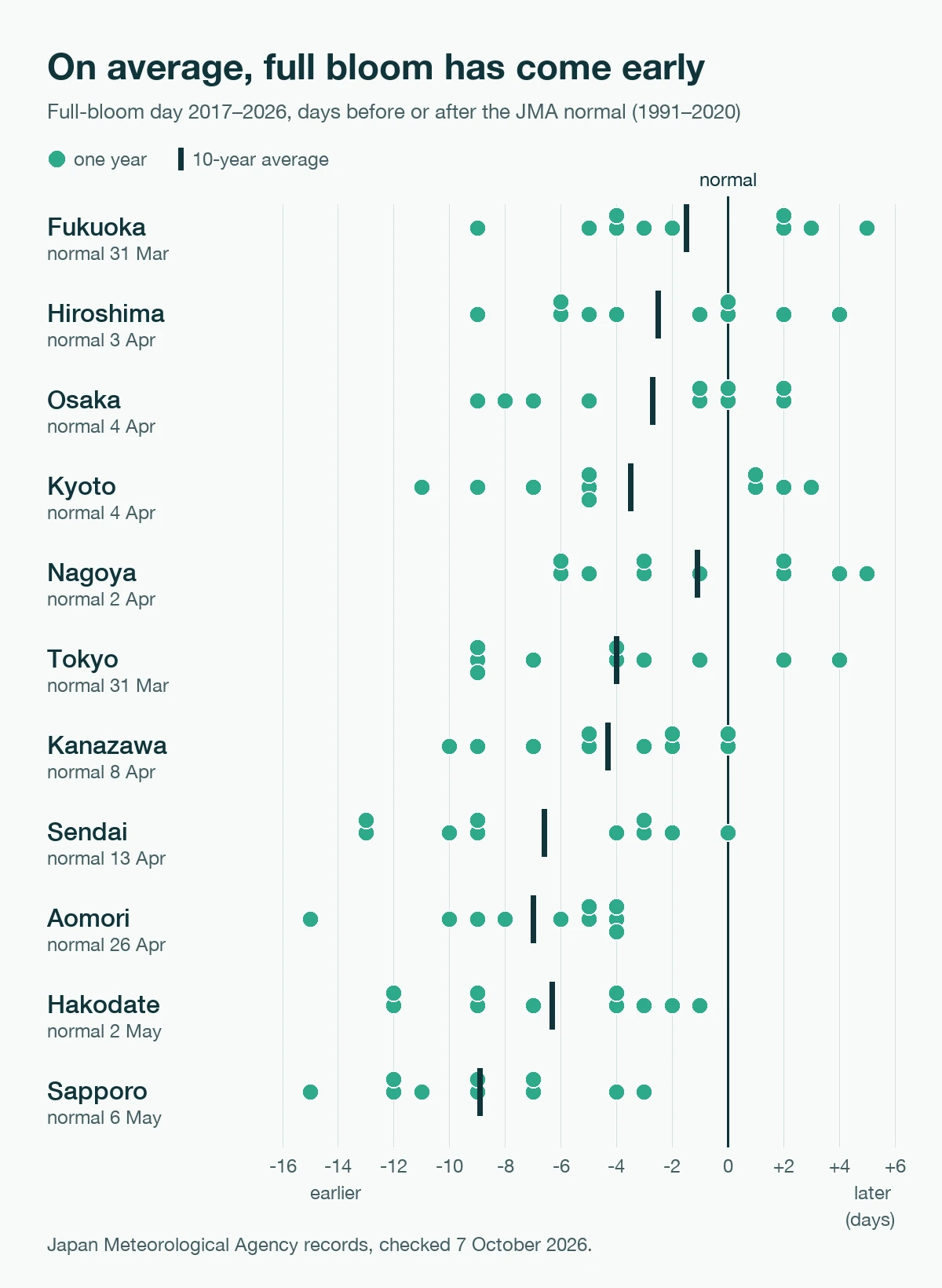
The table shows one more thing. Even in one city, full bloom moves across about two weeks from year to year, so any five-day trip misses some springs whatever dates you pick. Staying longer helps more than timing it perfectly. A week in Kanazawa on 2–8 April caught full bloom in all ten springs. So did ten days in Tokyo on 26 March–4 April, or ten days in Osaka on 28 March–6 April.
Kyoto: don’t move as early as Tokyo
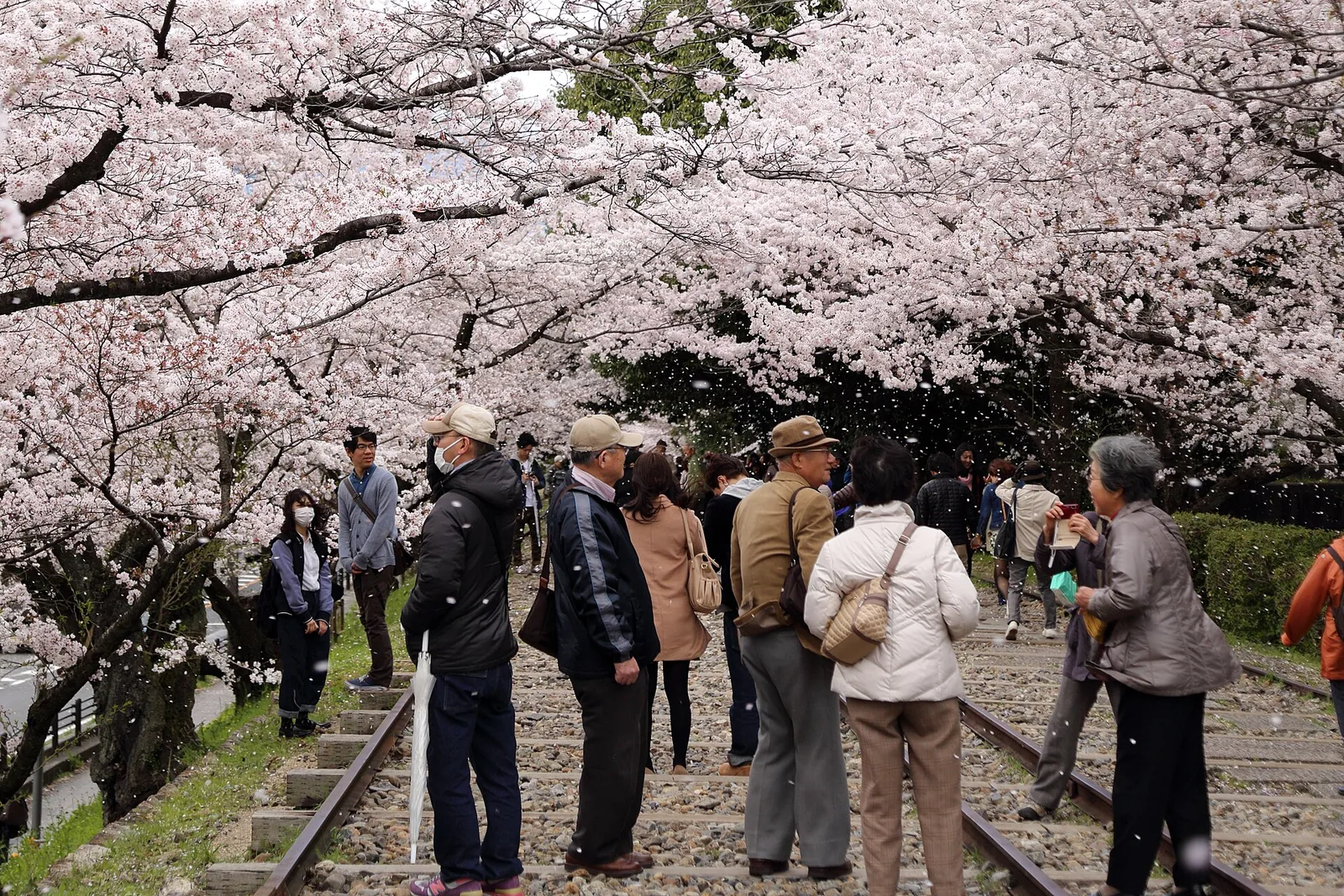
Kyoto works a little differently. In the last ten springs it bloomed later than its 4 April normal four times, twice as often as Tokyo. Pull your Kyoto dates as far forward as Tokyo’s and you miss the late years.
2025 was one of them. The agency recorded full bloom on 5 April in Kyoto and 4 April in Osaka. On 2 April, a user of the Taiwanese forum PTT, just back from eight days in Kyoto and Osaka, wrote that more than 80% of the blossoms had not opened, only a few were in full bloom, and fewer than five trees were out at Kiyomizu-dera. They added that full bloom would not come before next week at the earliest. Their trip ended before the full-bloom dates the agency recorded.
That is why, for Kansai, we suggest one hotel and both cities. Book 31 March–6 April and Osaka caught full bloom in 9 of the 10 springs, Kyoto in 7, and at least one of the two every year. In the three years the stay missed Kyoto (2017, 2021 and 2023), Osaka bloomed inside it; in 2018, when it missed Osaka, Kyoto did. The two cities are a short train ride apart, so each morning you can go wherever the trees look best.

Tokyo and Kyoto on one trip
What if the trip includes both Tokyo and Kyoto? We tested ten days split five and five. Tokyo on 26–30 March, then Kyoto on 31 March–4 April, found both cities at full bloom in 4 of the 10 springs and at least one in 8. However we moved the start date, no plan caught both cities in more than 5 of the 10.
Reverse the order and the plan changes character. Kyoto on 26–30 March and Tokyo on 31 March–4 April caught both in only 2 springs, but at least one city in all 10.
For a first cherry blossom trip, we would put Kyoto first. Both peaks overlapped the trip in only a few of those ten springs; putting Kyoto first caught at least one city in all ten. That historical result is not a guarantee for 2027. If both cities at their peak really matters, stretch the trip to 12 days or more, or book Kyoto rooms you can still move after the March forecasts.
If you will travel between the cities by Shinkansen, our JR Pass guide compares the pass with individual tickets. For a single Tokyo–Kyoto ride without a pass, you can compare Shinkansen times and seats on Klook. Klook shows the fare in US dollars; JR Central’s smartEX sells the same seats in yen, so compare the two totals before paying.
If a holiday sets your dates, choose the city to fit it
If you can only travel over a public holiday, the dates are already fixed. What you can choose is the city. We set the 2027 holidays against the same records. Holidays run three or four days, so they catch full bloom less often than a five-day stay.
| Holiday | 2027 dates | Cities that fit (springs caught of 10) | Cities to skip |
|---|---|---|---|
| Japan: Vernal Equinox Day holiday | 20–22 Mar | Tokyo (3) | Kansai (0) |
| Hong Kong: Easter | 26–29 Mar | Tokyo (7), Fukuoka (6) | Kyoto, Osaka, Nagoya (3); Kanazawa (1) |
| Hong Kong: Ching Ming | 3–5 Apr | Kyoto, Osaka, Nagoya, Hiroshima, Kanazawa (5 each) | Tokyo (3) |
| Taiwan: Children’s Day and Tomb Sweeping | 3–6 Apr | Osaka, Kanazawa (7); Kyoto (6) | Tokyo (3) |
| Taiwan: Labor Day | 30 Apr–2 May | Sapporo, Hakodate (5) | Aomori (0) |
| Japan: Golden Week | 29 Apr; 1–5 May | Sapporo (7), Hakodate (6) | Aomori (0) |
Holiday dates from the 2027 calendars of Japan’s Cabinet Office, the Hong Kong government and Taiwan’s Directorate-General of Personnel Administration.
Hong Kong’s Easter break lines up with Tokyo’s best days. Taiwan’s April break comes too late for Tokyo and suits Kansai. The same departure date can turn out very differently depending on the city. Holidays are also when everyone else travels, so book rooms earlier still.
Hokkaido and Tohoku: plan for late April
Sapporo’s normal full-bloom date is 6 May, the day after Japan’s Golden Week ends. Going by the normal alone, the end of Golden Week or just after looks right. But in the last ten years Sapporo reached full bloom between 21 April and 3 May. A stay of 4–8 May, centered on the normal, caught it in just 2 of the 10 springs.
Golden Week itself does reasonably well: 1–5 May 2027 would have caught full bloom in 6 of the 10. The trouble is pushing the trip into the second week of May on the strength of the normal. 25–29 April caught it in 8. If Hokkaido’s blossoms are the reason for the trip, go in late April.
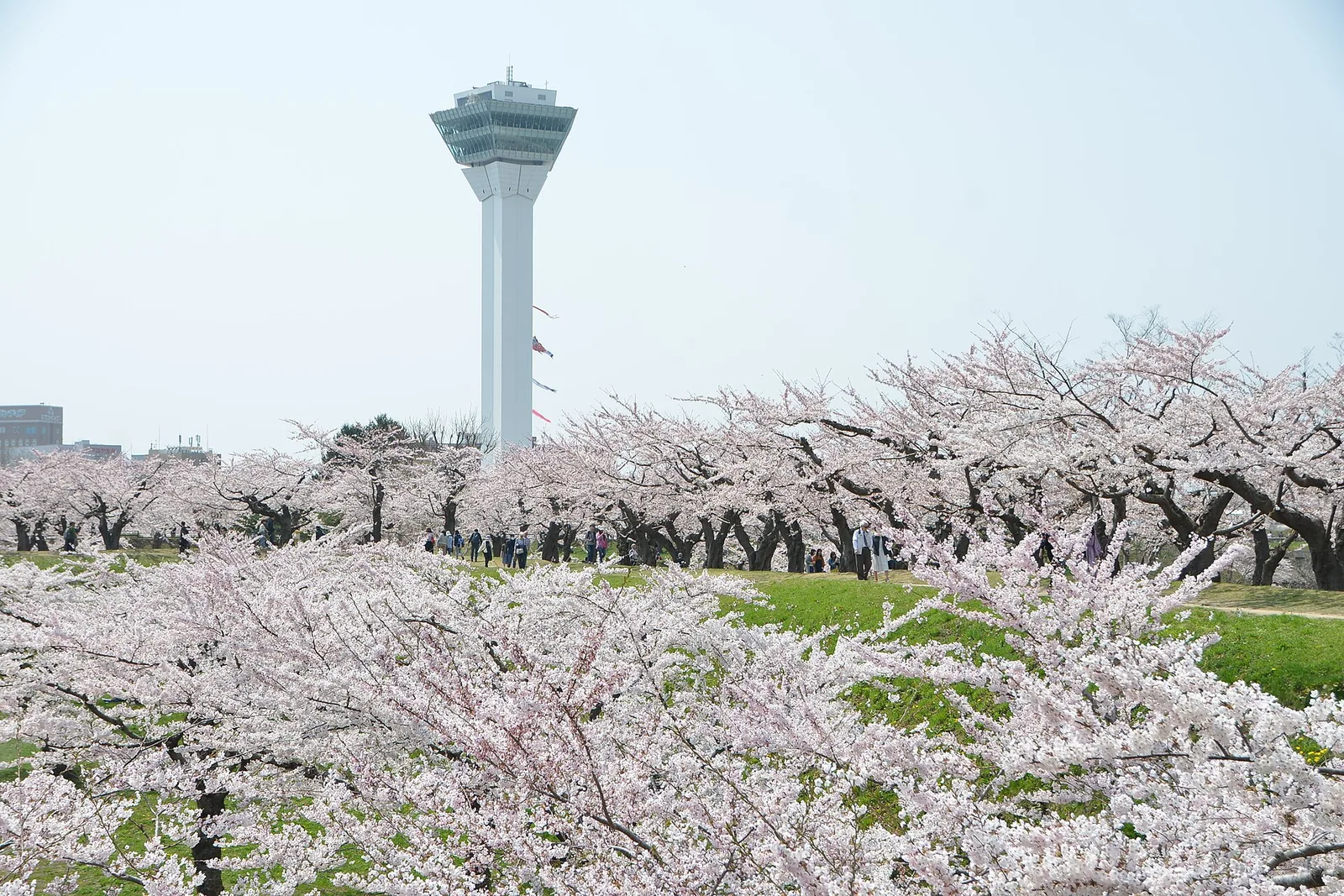

Aomori shows the same pattern. 18–22 April caught full bloom in 9 of the 10 springs; a stay centered on its 26 April normal caught 6. Golden Week never caught it.
When the forecasts come, and how close they got
The cherry forecasts travelers follow come from three private weather companies. For the 2026 season the first came from the Japan Meteorological Corporation on 18 December 2025 (both first bloom and full bloom), from Weathernews on 8 January 2026 and from the Japan Weather Association on 29 January. As of 7 October 2026, none of the three has published a 2027 forecast. Weathernews’ cherry page says next season’s information will be posted in February 2027.
How close was a first forecast? We compared the Japan Weather Association’s 29 January first-bloom forecast with the dates the agency recorded.
| City | Forecast on 29 Jan | Recorded first bloom | Difference |
|---|---|---|---|
| Fukuoka | 21 Mar | 24 Mar | 3 days later |
| Tokyo | 21 Mar | 19 Mar | 2 days earlier |
| Kochi | 22 Mar | 16 Mar | 6 days earlier |
| Nagoya | 22 Mar | 17 Mar | 5 days earlier |
| Hiroshima | 24 Mar | 19 Mar | 5 days earlier |
| Osaka | 25 Mar | 26 Mar | 1 day later |
| Kanazawa | 31 Mar | 29 Mar | 2 days earlier |
| Sendai | 4 Apr | 31 Mar | 4 days earlier |
| Aomori | 17 Apr | 13 Apr | 4 days earlier |
| Sapporo | 26 Apr | 18 Apr | 8 days earlier |
Eight of the ten came within five days. In eight cities the trees opened earlier than forecast, including both cities that missed by more than five days (Kochi by 6, Sapporo by 8). Use the early forecasts to reassess the broad timing; full-bloom forecasts and individual park reports are needed before fixing day trips.
Here is the order for a spring 2027 trip.
- October–November 2026: book free-cancellation rooms for the dates above.
- Mid-December to February: reassess the broad timing after the first forecasts; before changing a hotel booking, compare the new dates’ availability and price with the original cancellation terms. In the 2026 season they came on 18 December, 8 January and 29 January.
- March: in the 2026 season the Japan Weather Association issued full-bloom forecasts every Wednesday (Thursday if Wednesday was a holiday) from March. Settle your day trips then and cancel the rooms you no longer need.
- One month before each train: smartEX takes reservation requests for the Tokaido, Sanyo and Kyushu Shinkansen up to a year ahead, but trains and seats are confirmed only after 14:00 (Japan time) one month before the travel date. This is a paid reservation, not a free hold: smartEX’s rules say payment is taken when reserving and advance places are limited. Hayatoku fares and certain seat types are excluded from the one-year option. For weekend trains in blossom week, check your booking the day it is confirmed.
Autumn leaves: Kyoto’s temples run two weeks ahead of the agency’s tree
In autumn the agency watches one maple per city. The “coloring day” is the first day most of the tree has turned red with almost no green left, and the “leaf-fall day” is the first day about 80% of its leaves are down. In principle the sample tree stands on the weather office’s own grounds; if no suitable tree is there, one in a nearby park is used.
| City | Normal coloring day | Coloring day 2016–2025 | Ten-year average vs normal |
|---|---|---|---|
| Sapporo | 28 Oct | 2–11 Nov | 10 days later |
| Sendai | 21 Nov | 17–26 Nov | 2 days later |
| Tokyo | 28 Nov | 23 Nov–3 Dec | same |
| Kanazawa | 24 Nov | 22 Nov–3 Dec | 3 days later |
| Nagoya | 28 Nov | 25 Nov–8 Dec | 2–3 days later |
| Kyoto | 5 Dec | 1–20 Dec (9 years) | 5 days later |
| Osaka | 1 Dec | 24 Nov–10 Dec | same |
| Hiroshima | 22 Nov | 20 Nov–2 Dec | 2 days later |
| Fukuoka | 1 Dec | 30 Nov–10 Dec | 3 days later |
Calculated from the agency’s normals and its 2016–2025 records. Autumn 2026 has not been observed yet.
Unlike the blossoms, the leaves have run later than normal or on time. From coloring day to leaf-fall day, six of the nine cities had a median of 9 to 14 days, a wider window than cherry blossoms give you. Sapporo (4 days) and Kanazawa (6) are shorter, Hiroshima (23) longer. But this table is a timetable for trees in town. Temples on hillsides and mountain gorges can color weeks earlier.
Kyoto shows the difference most clearly. Kyoto City’s official tourist information says the leaves start to color at the end of October, peak around mid-November and are past their peak by the end of November, with Mount Hiei, Ohara and Takao a little earlier. The agency’s Kyoto maple, on the other hand, reached its coloring day around 10 December on average in 2016–2025.
The temples fell in between. In 2025 the agency’s Kyoto coloring day was 10 December. In a post on 29 November that year, a PTT user reported excellent color at Tofukuji and Toji on 26 November and at Nanzenji, Eikando and Shinnyodo on 27 November, while the leaves at Kibune and Kurama were already falling on the 26th, though the slow scenic stretch of the train line there was still pretty. Two weeks ahead of the tree.
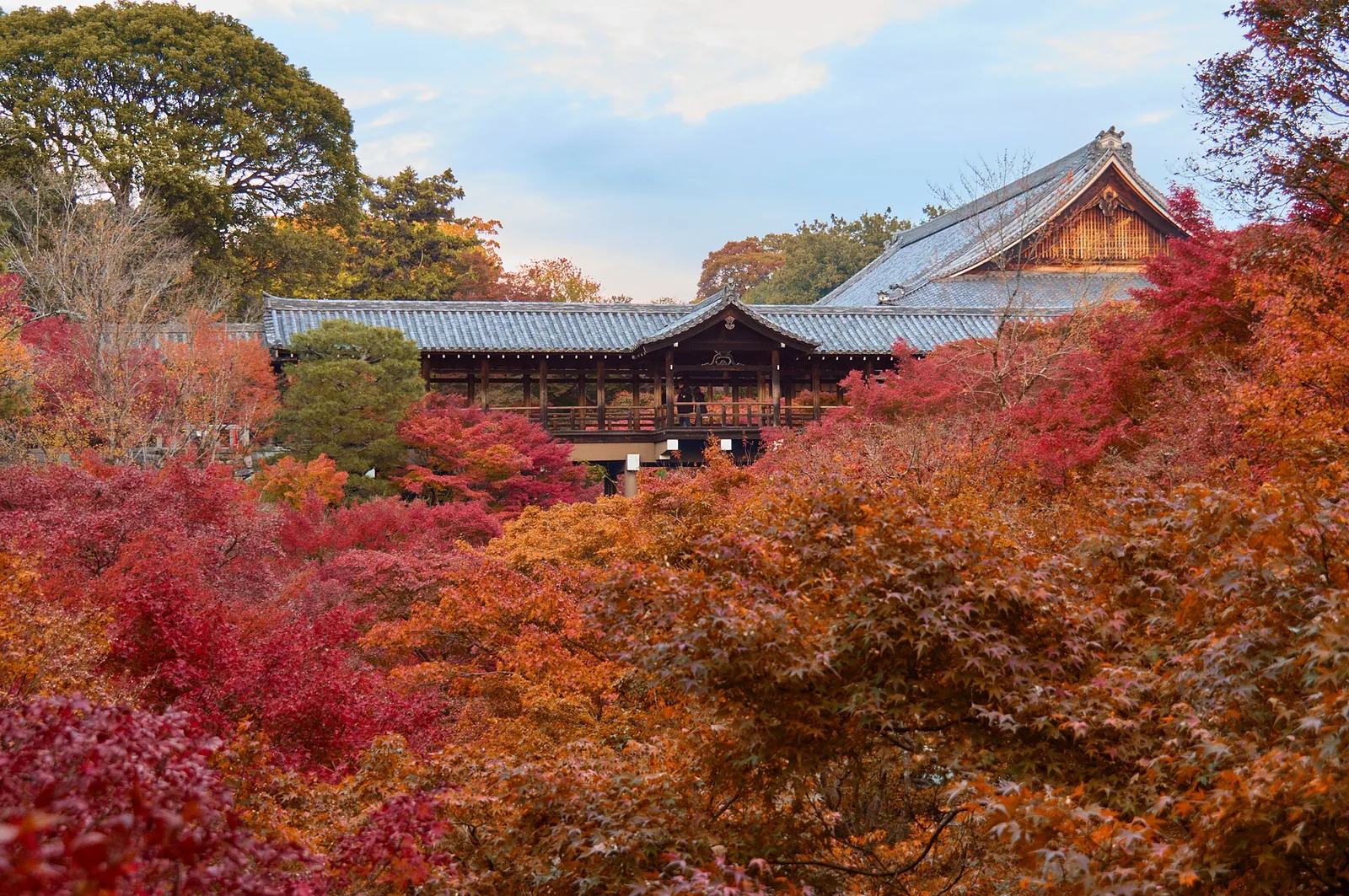

The official guide points to mid-November, but the 2025 reports and the 2026 spot forecasts cluster in late November. So for Kyoto, book 24 November–2 December, and put the northern hills such as Kurama and Kibune at the start of that window. If you have mid-November free, spend that week at the Fuji lakes below.
You may see a figure like “Kyoto autumn leaves: 11 December” in an app or news story. That is the Japan Meteorological Corporation’s 1 October 2026 forecast for the city tree. As shown on 7 October 2026, Weathernews’ spot forecasts put Tofukuji at 23 November, Eikando at 24 November and Kiyomizu-dera at 25 November. If you are going for the temples, follow the spot dates.
Tokyo, the Fuji lakes and Nikko
Tokyo’s parks and ginkgo avenues: 27 November–3 December. The agency’s Tokyo maple has averaged its 28 November normal in 2016–2025, and in all ten years this week overlapped the span from coloring day to leaf-fall day. Weathernews’ 2026 forecasts (as shown on 7 October) agree: the Meiji Jingu Gaien ginkgo avenue on 29 November, Rikugien on 3 December and Shinjuku Gyoen on 5 December. Showa Kinen Park (17 November) and Mount Takao (22 November) come a little earlier. In early November, most of central Tokyo is still green.
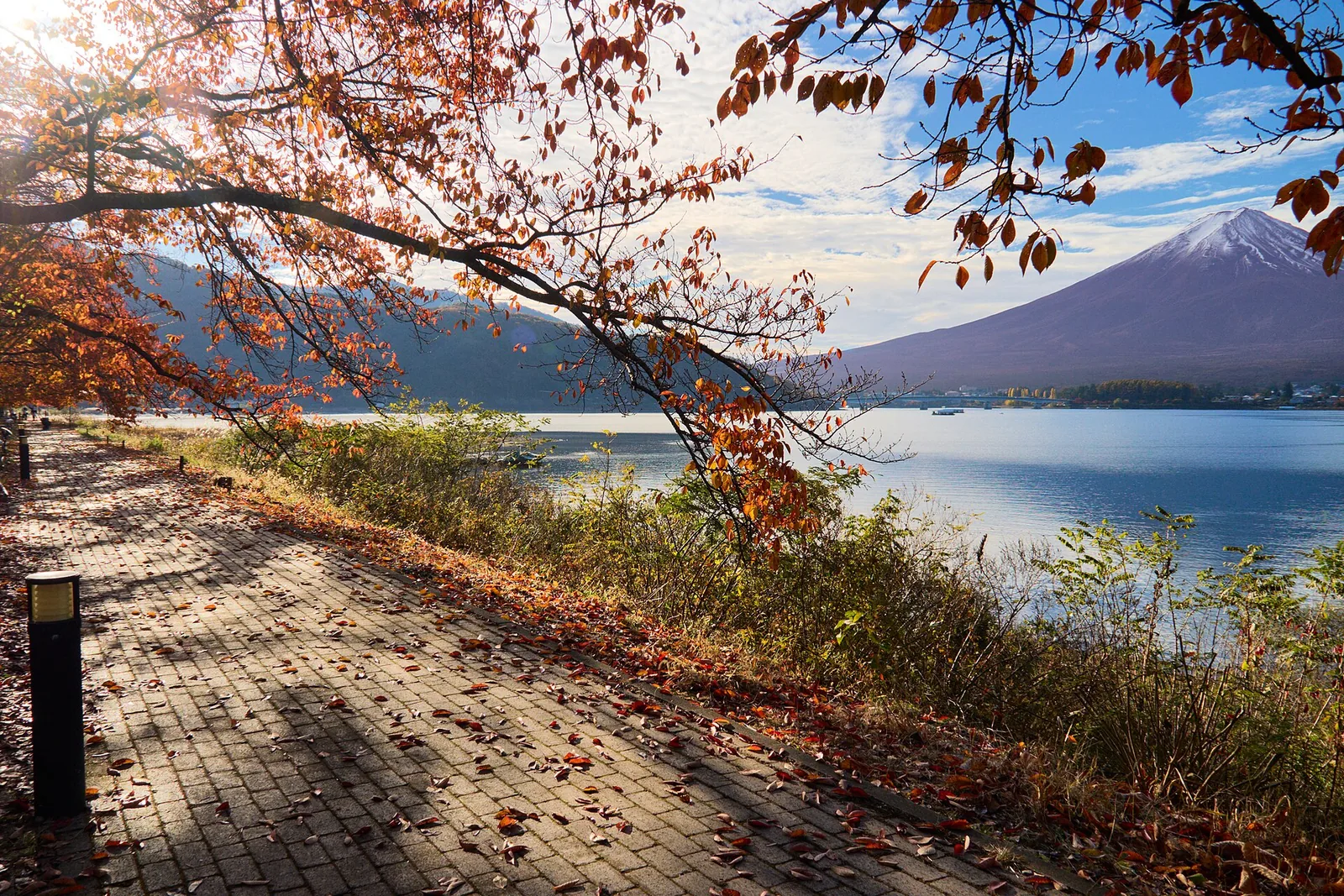
Lake Kawaguchi below Mount Fuji: mid-November. In a post on 15 November 2025, a user of the Hong Kong forum LIHKG said it was their fourth year in a row at Kawaguchiko and that this year they had aimed for the 14th to 16th, which was just right; the 10th to 12th would be slightly early and the 20th to 22nd slightly late. They called this year the best of the four. Weathernews’ 2026 forecast for the Lake Kawaguchi shore is 15 November. For 2027 we would book 13–20 November.

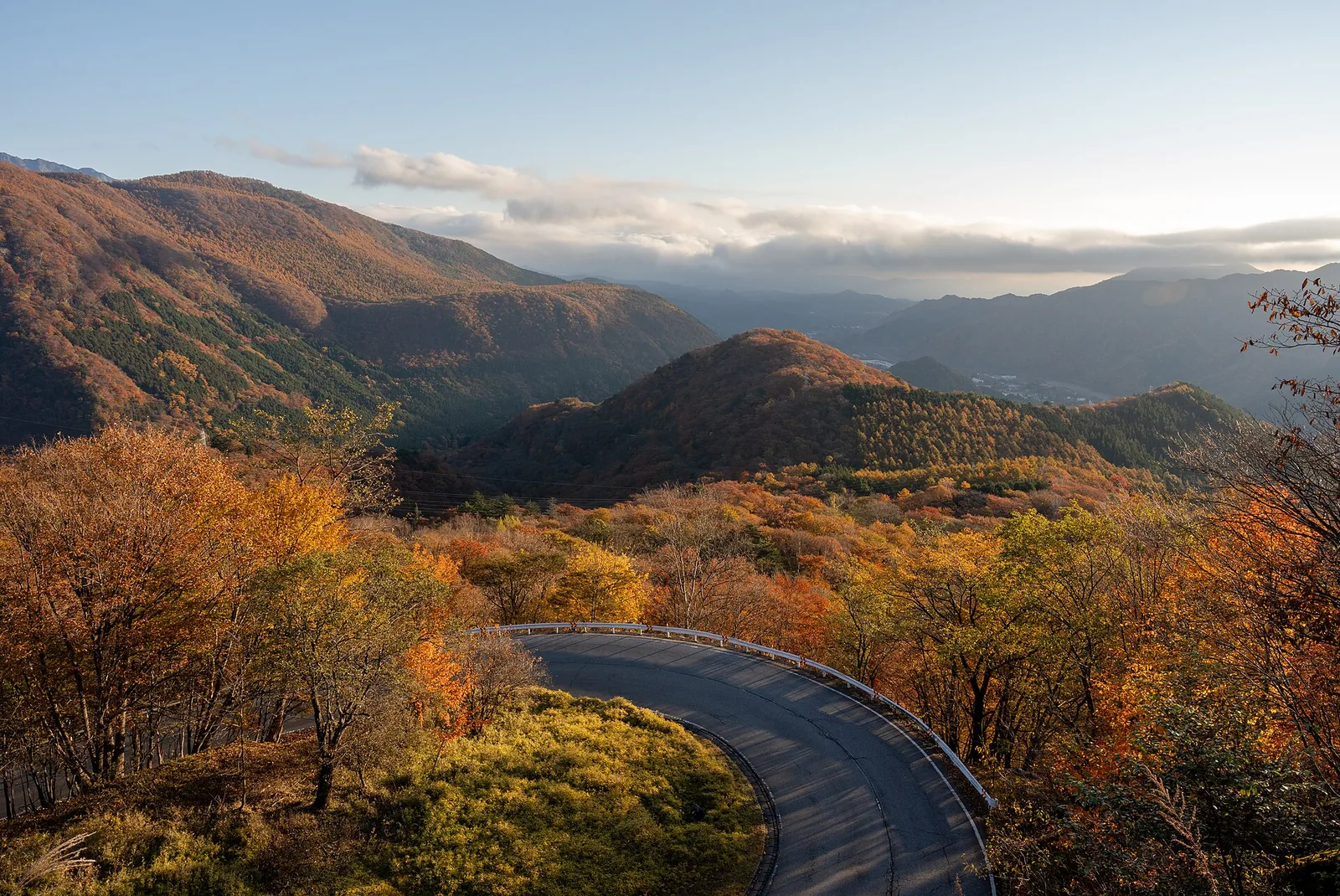
Nikko’s Irohazaka road: mid to late October. Tochigi’s official tourism site gives the usual peak on the Irohazaka as mid to late October, and early to mid October for the higher Senjogahara and Yunoko. The same page says the drive, normally about 20 minutes, can take two to six hours in foliage-season traffic. Weathernews’ 2026 forecast for the Irohazaka is 23 October.
October holidays matter here too. Taiwan’s 23–25 October 2027 long weekend lands on the Irohazaka’s usual peak. Hong Kong’s National Day (1–3 October) and Chung Yeung (8–10 October) breaks and Taiwan’s National Day weekend (9–11 October) come too early for the Irohazaka and suit the higher areas such as Senjogahara and Yunoko instead. 9–11 October is also Japan’s Sports Day weekend (11 October is the Monday holiday). If you drive to Nikko, set off early in the morning.

If you are weighing Korea as well, our Korea foliage guide covers the 2026 forecasts there, mountain by mountain.
If you are going in November or December 2026
For trips this autumn, here are the forecasts available on 7 October 2026. The Japan Meteorological Corporation’s 1 October forecast for city maples: Sapporo 4 November, Tokyo 28 November, Hiroshima 28 November, Nagoya 2 December, Osaka 4 December, Fukuoka 7 December and Kyoto 11 December, with the next update planned for early November. As above, the Kyoto temples are forecast for late November and Kawaguchiko for mid-November.
For Kyushu, Weathernews’ 3 September outlook expects viewing from early November to mid-December, with many places later or slightly later than usual. It adds that low summer rainfall and heat may leave the leaves in poorer condition, and that some roads are closed after the earthquake in Kumamoto in late July. For Aso, check the closures first in our Aso October guide.
Weathernews’ spot forecasts around Fukuoka, as shown on 7 October: Nomiyama Kannonji 7 November, Hikosan 15 November, Raizan Sennyoji in Itoshima 18 November, Kamado Shrine in Dazaifu 28 November and Momiji Hachimangu in the city 3 December. The mountains go first and the city last. Kamado Shrine is in Dazaifu, so pair it with our guide to getting to Dazaifu.
Blossoms or leaves, you will still be watching forecasts after you book. Use the historical records to choose a starting plan, then revisit it as the new forecasts and local reports arrive.
Sources & verification
A source-based guide. Check the linked operator information again before you travel.
- Japan Meteorological Agency: past cherry full-bloom dates by city, 2021–2026Sources checked:
- Japan Meteorological Agency: past cherry first-bloom dates by city, 2021–2026Sources checked:
- Japan Meteorological Agency: phenology records from 1953 and 1991–2020 normals (CSV)Sources checked:
- Japan Meteorological Agency: 2026 cherry full-bloom observationsSources checked:
- Japan Meteorological Agency: 2026 cherry first-bloom observationsSources checked:
- Japan Meteorological Agency: maple coloring observations 2025–2026Sources checked:
- Japan Meteorological Agency: phenological observation guidelines (PDF, Japanese)Sources checked:
- Japan Meteorological Agency: phenology FAQ (Japanese)Sources checked:
- Japan Weather Association: 2026 cherry forecast, first round (29 January 2026, Japanese)Sources checked:
- Weathernews: 2026 first cherry forecast (8 January 2026, Japanese)Sources checked:
- Japan Meteorological Corporation: 2026 first-bloom and full-bloom forecast, first round (18 December 2025, Japanese)Sources checked:
- Weathernews: cherry blossom page (next season from February 2027, Japanese)Sources checked:
- Japan Meteorological Corporation: 2026 autumn leaves forecast, second round (1 October 2026, Japanese)Sources checked:
- Weathernews: 2026 western Japan autumn leaves outlook (3 September 2026, Japanese)Sources checked:
- Weathernews: Kyoto autumn leaves spot forecasts 2026 (Japanese)Sources checked:
- Weathernews: Tokyo autumn leaves spot forecasts 2026 (Japanese)Sources checked:
- Weathernews: Yamanashi autumn leaves spot forecasts 2026 (Japanese)Sources checked:
- Weathernews: Tochigi autumn leaves spot forecasts 2026 (Japanese)Sources checked:
- Weathernews: Fukuoka autumn leaves spot forecasts 2026 (Japanese)Sources checked:
- Kyoto City official tourist information: when is the best time to see the autumn leaves?Sources checked:
- Tochigi Prefecture official tourism: Irohazaka (Japanese)Sources checked:
- Cabinet Office, Japan: national holidays for 2026 and 2027 (Japanese)Sources checked:
- GovHK: general holidays for 2027Sources checked:
- Directorate-General of Personnel Administration, Taiwan: 2027 government office calendar (Chinese)Sources checked:
- smartEX: reservation acceptance timesSources checked:
Help us keep this note useful
A quick response helps us decide what to clarify or recheck. No account or email is needed.